

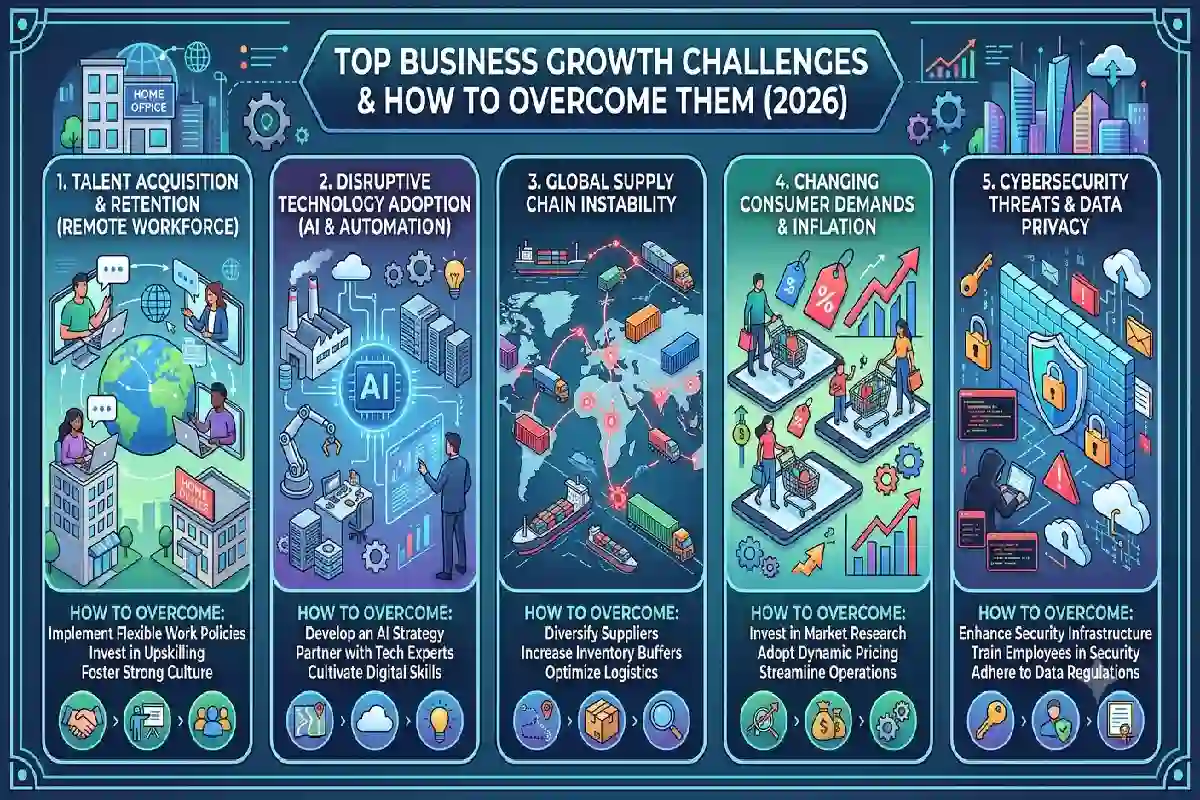
Top Business Growth Challenges & How to Overcome Them (2026)
Last Updated: September 21, 2026
Business growth challenges are the obstacles and difficulties that companies face while trying to expand their operations, increase revenue, attract new customers, or enter new markets. Although growth is a sign of success, it often brings new problems that can strain a business’s resources, finances, workforce, and operational systems.
As businesses scale, managing the daily functions of their operation becomes more complicated. They will likely face issues that include cash flow limitations, finding suitable employees, retaining satisfied customers, scaling workflows, keeping up with the market, maintaining a balance between growth and profits, and so on. If not effectively navigated, these may stunt their growth efforts.
Here are some of the typical business growth challenges:
- Cash flow management while expanding
- Hiring qualified staff and retention
- Rising competition in the marketplace
- Keeping up the organization’s culture as it scales
- Managing rapid expansion
- Optimizing workflows and processes
- Customer retention
- Adapting to technology and market shifts
- Growth versus profitability
To successfully navigate these challenges of business growth, businesses need thorough strategic planning, effective management teams, robust systems and constant observation of the business operations. Companies which look to prepare in advance of such issues stand a better chance of achieve sustained growth and consistent profitability.
Cash Flow Management while Expanding
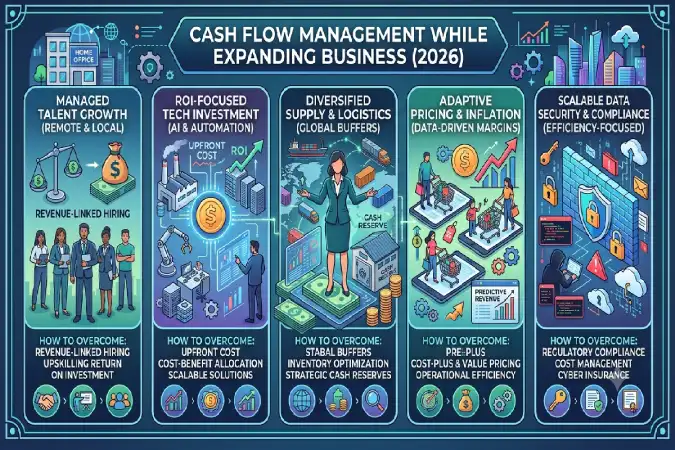
Cash Flow and Financing Scaling typically results in cash flow strain as cash goes out faster than it comes in. The biggest pain points are delayed customer payments, costs of upfront hires, and new infrastructure, along with increased working capital tied up in inventory and receivables.
Why it happens
The majority of expenses spike immediately when you scale, while revenue comes in later. The lag between money going out and coming back in is often so significant that you look profitable on paper but still short on cash.
Common pressure points
- Receivables stretch as bigger clients demand payment terms stretch.
- Payroll, marketing, systems costs all spike before new revenue is realized.
- Taxes, suppliers, and debt service still hit on their fixed schedules.
2. People and Leadership
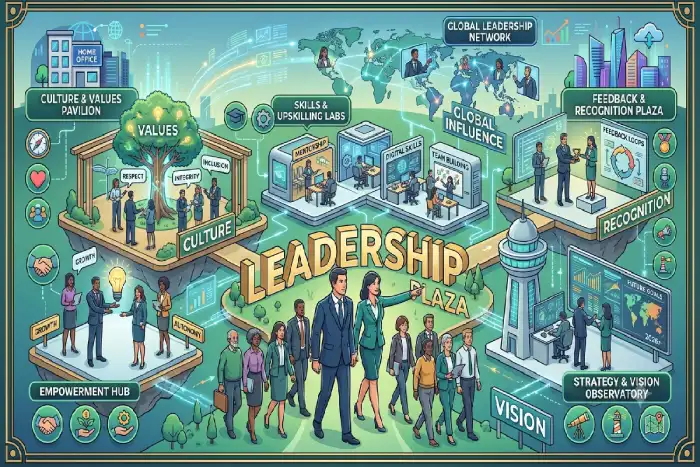
People and leadership are often the toughest parts of scaling as a founder can no longer rely on informal coordination and direct oversight. As teams grow, the business needs clearer roles, delegated decision-making, stronger communication, and more deliberate culture-building.
>The bigger a company gets, the clearer roles need to be, and the more delegation must happen; you can’t have everyone going to the founder.
Points
- Role confusion develops as duties that were previously informal are no longer explicit.
- Decision-making becomes bottlenecked because decisions still flow through the founder.
- Communication becomes inefficient and delays or misinterprets messages as they move through more layers.
- Feedback becomes insufficient because casual check-ins are replaced with less meaningful interactions.
- Culture may become diluted or inconsistent if it isn’t defined and consistently reinforced.
What good scaling leadership looks like
Leaders must transition from doing it themselves to setting the strategy and the guardrails to let teams take initiative. “The greatest challenges when scaling is often people and organizational in nature,” writes McKinsey’s senior partner Bret Mickum, adding “Companies can solve many of the other growth-based challenges by simply letting individuals at lower levels in the organization make many of the key decisions.” Fixes Define accountability for every major decision and workflow. Delegate authority, not just tasks.
Practical fixes
- Clarify who owns each major decision and workflow.
- Delegate authority, not just tasks.
- Use regular communication cadences instead of ad hoc updates.
- Rather than informal ad-hoc updates, opt for structured communication cadences.
- Fostering psychological safety to enable people to speak up, documented hiring and promotion processes, management processes.
Hiring Challenges for Growing Companies
Recruiting great talent is the biggest hiring challenge for any growing business. The danger is finding yourself stuck in a pattern of growth that drives frantic hiring decisions which could potentially negatively impact service or product quality, lead to high staff turnover, and increase the costs that are associated with high staff turnover.
The reality is that while you might find you have time, a growing small or medium sized business has to compete with large companies who have more money and can afford to compete with competitive wages, comprehensive benefit plans and clearer career progression paths.
If you are to hire, make your company’s key selling points such as growth, flexibility in terms of work-life balance, or work purpose central to your offer. You should try and identify where there are gaps and try to fill them.
A strong recruitment process, coupled with a robust employer brand, investment in employee development and learning, and a robust recruitment pipeline will prove invaluable when trying to manage demands for hiring during your company growth.
Maintaining Company Culture While Scaling
One of the first elements of any business that is victim of growth is company culture. Once new staff are onboard and hierarchy structure becomes more formalized, it is hard for management to hold on to the close relationships and common purpose shared by small company staff.
With a focus on growth, rapid staff recruitment can quickly dilute a company’s foundational values as individuals get lost and fail to engage, and are less able to deliver cohesive customer service, engagement levels decline, team members fail to get along and company culture erodes.
By clearly define company values and integrate them in daily life and across all hiring and employee processes, then you are able to recognise people who most strongly reflect and live these values. Regular and open communication, and managers that are approachable are both important in order to ensure culture is maintained as the company grows.
Managing Rapid Growth
The reality of rapid growth can put a severe strain on operational capacities, available staff and resources. Due to sudden, escalating demand on customer services, production processes, and inventory, it may prove difficult for a company to fulfil its obligations to clients or customers, leading to significant drops in service quality or product standard.
There can be significant financial costs associated with growth that is unmanaged, financial losses can result, or you might risk losing staff who get burnout.
The process of managing growth requires careful and thoughtful strategy, the construction of processes and systems that scale to demand, as well as constant performance monitoring.
Growth vs Profitability Balance
Balancing Growth and Profitability As a result of investing more in business growth activities such as expanding markets and increasing investment in sales and marketing. Companies also experience an increase in operational expenses that include staffing, technology and infrastructure.
Companies that focus on growth to the extent where they expand their revenue line significantly. But are often unaware of what this could be costing the business. This comes about by placing more emphasis on acquisition over client retention or operations, and this can be a significant business growth problem. For profitable growth to be attained, you must be focusing on cash flow and revenue both at the same time.
Conclusion
Business expansion does come with its fair share of challenges but these don’t always need to be a setback for the organisation. From ensuring a healthy cash flow. To hiring the right employees, protecting company culture, optimizing processes, and ensuring that growth isn’t at the expense of profit. Businesses are facing a unique set of obstacles during growth phases. The businesses that thrive will identify potential risks before they impact operations or growth trajectory. Through investment in scaling systems, workforce management, and constant review of cashflow. Leaders can ensure that growth is as manageable as it needs to be.