

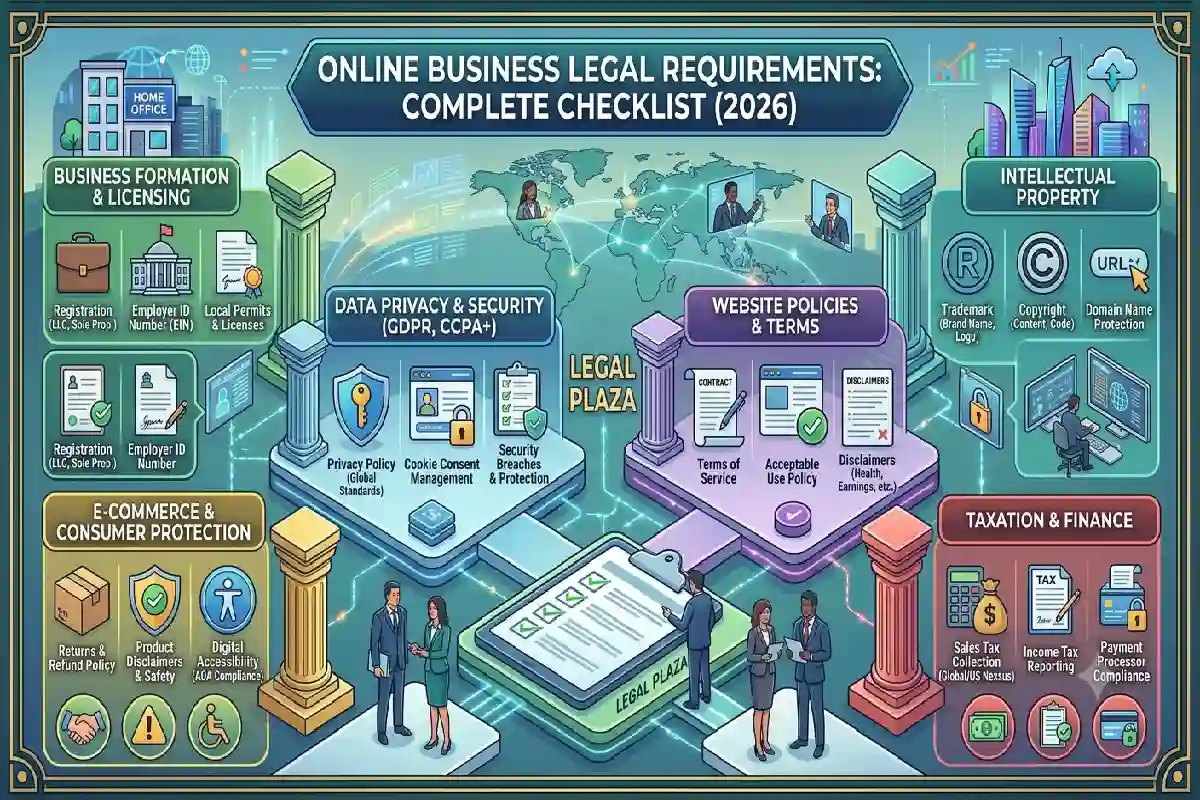
Online Business Legal Requirements: Complete Checklist (2026)
Last Updated: September 15, 2026
How to Register an Online Business
Register Online business You want to make sure to go through this early legal requirement in your business before selling. The process can depend on your state, but the general process of registering an online business can involve choosing a business structure, selecting a business name and filing necessary registration documents with government officials. Popular structures include a sole proprietorship, partnership, limited liability company (LLC) and corporation.
Each structure has its own tax benefits, its own personal liability benefits, and other business operations. Business owners may wish to ensure their business names are not taken and are in accordance with the country’s/state’s rules and regulations. Registering your business with the correct government agencies will result in your receiving a tax identification number and possibly your state and local business registration number.
Online Business Tax Requirements
Taxes for an Online Entrepreneur The world of taxes for online entrepreneurs may seem a bit scary, but in reality this is one of the fundamental things to do in order to operate your business both legally and to optimize operations. Regardless of your niche such as e-commerce, dropshipping, affiliate sites, freelancing business, SaaS or digital product creation business, in many countries taxes will need to be declared.
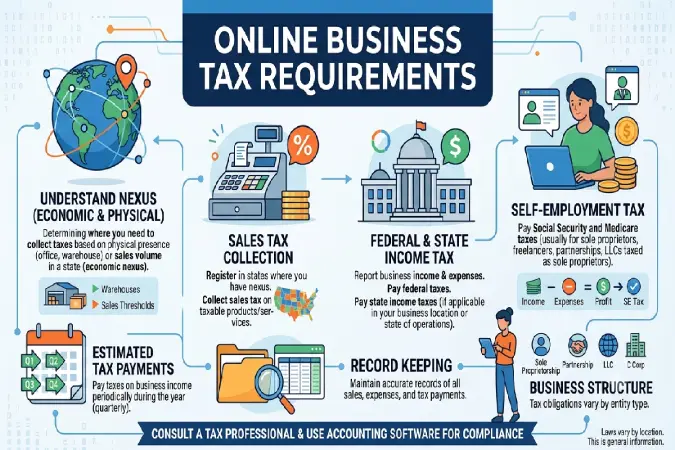
Reporting business income
For most countries, online business owners are responsible for reporting the income they generate. This will include sales revenue, digital products, subscriptions, ads, affiliate marketing, sponsorships and consulting fees etc. Keeping accurate records of both income and expenditures is extremely important when filing.
Sales tax, VAT, and GST for online businesses
If your online business is selling products or services to customers in the same state/country, then there is the obligation to collect sales tax, VAT, or GST depending on the destination country/state. This requirement will come into play when you’ve sold over a certain amount to customers, and will need to be registered with the relevant tax authorities.
Common tax obligations include:
- * Sales tax collection for physical products
- * VAT on digital products and services
- * GST registration and reporting
- * Cross-border tax compliance for international sales
- * Marketplace facilitator tax rules for third-party platforms
Business Expense Deductions
Many online business expenses can be deducted to reduce taxable income. Eligible deductions often include:
- Website hosting and domain registration
- Marketing and advertising costs
- Software subscriptions and tools
- Office supplies and equipment
- Professional services such as legal or accounting fees
- Internet and communication expenses
- Employee and contractor payments
Properly organized records and receipts can help substantiate any deductions you plan to take when you file your taxes.
Paying Taxes Based on Estimated Income
Most of the country requires online business owners to make estimated payments throughout the year rather than paying everything on the back end when you submit your taxes. This is key for self-employed, freelancers and business owners because taxes aren’t withheld from paychecks for self-employment tax, federal and state taxes. Failure to make those payments results in interest and likely additional taxes.
Tax Documentation and Record-Keeping
A solid accounting is the one of the most crucial parts for tax compliance. Companies that have online businesses need to have :
- Income statements
- Sales records
- Expense receipts
- Bank statements
- Tax filings
- Payroll records (if applicable)
- Customer invoices
Using accounting software can simplify bookkeeping and make tax preparation easier.
International Tax Considerations
Businesses with customers located in other countries may have other taxes to consider. In some instances, these might include requirements for international tax registration, foreign tax reporting, or the digital service tax. Knowing the rules for every country your business serves can prevent problems and legal complications down the line.
Best Practices for Tax Compliance
Whether a local business or an online enterprise, keeping up with tax obligations can seem challenging. When considering best practices for managing these requirements:
* Distinguish personal vs business financial matters
* Document all your expenses, each with clear descriptions
* Be aware of local tax registration thresholds
* Stay current with your tax filings and reports
* Retain relevant documentation within legal limits
* When in doubt,seek advice from a qualified tax specialist
When executed well, tax planning enables small businesses and online operations to meet tax compliance needs while ensuring sound financial health and a strong trajectory for growth.
Online Business Privacy Policy
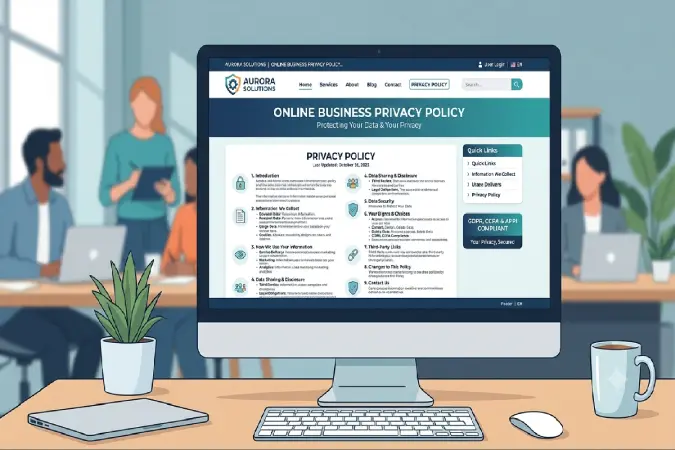
A privacy policy is a formal statement that explains to your customers what information you collect about them and what you do with it. As the majority of online operations collects some sort of personally identifiable information, be it customer names, e mail addresses, financial transactions and other similar data, customers have a right to know how and what is collected from them. Depending upon where your business is headquartered, certain local, regional and international laws are in effect which will stipulate certain elements you are legally required to include in your privacy policy statement. This often relates to information sharing and usage as well as how a client may opt out of such data collection and sharing practices.
Website Terms and Conditions
A page detailing your Terms and Conditions of use for your website is essential, if for nothing more than to ensure that users do not take illegal or otherwise harmful actions while visiting your site. While not required by all legal frameworks, an online businesses use of an explicit list of the rules of the road to your Web presence may well prevent disputes, misuses of your services and even legal action against your company by those individuals who might engage in such behaviour.”””
Privacy Policy for Your Online Store
Every online business is in possession of some information pertaining to its customers; it could be their names, emails, browsing history, or even their payment information. A privacy policy is a statement by a company outlining what information is collected about customers, how the company uses that information, how it is stored, and what steps are taken to secure it. The vast majority of jurisdictions in many countries mandate companies provide detailed information to customers regarding how their data will be used.
Rights of user and how user can exercise them Measures used for data security Contact information Privacy policies not only serve as important compliance documents that can keep businesses out of trouble with regulatory bodies, but also help foster trust and transparency with customers. They need to be reviewed and updated from time to time to ensure businesses remain compliant.
Terms and Conditions for Websites
Terms and Conditions (otherwise referred to as the Terms of Service or Terms of Use) is a legally binding document detailing a website’s rules, responsibilities, and expectations to its visitors. Although these documents are not legally necessary, clear and concisely written terms and conditions provide an establishment with defense against claims of misuse and potential legal liabilities.
Importance of Terms and Conditions
Terms and Conditions ensures that the website owner and its users have a clear and understood relationship between each other and that all visitors know what they can and cannot do.
Key benefits include:
- Limiting business liability
- Protecting intellectual property rights
- Defining acceptable website use
- Setting payment and refund policies
- Reducing the risk of legal disputes
- Providing procedures for account suspension or termination
Website Use Rules
This part tells you what visitors are allowed to do and not do with the website and also defines what kind of behaviour is not tolerated like hacking, spamming, infecting the computer, etc. Nor breaking the law. The Website Intellectual Property rights A business must highlight all intellectual property of website content, logos, images, pictures, videos, trademarks as intellectual property law protects all of them.
User Accounts
Account Information If you allow website visitors to create an account on your website. Then you must state the responsibilities of users and ensure that passwords remain secure and mention the events under. Which you can block the user or terminate your website account.
E-commerce Terms and conditions When it is an e-commerce website then you should include details of the payments, billing information, subscription terms, shipment policy and terms of payment refund or cancellations. Disclaimer of Liability This clause is used by website owners to free themselves from liability caused by service disruption, errors in your website, other linked resources and user behaviour. Third Party Links In most cases there are many website that link to many other sites. By including this clause in your T&Cs then you protect yourself from the other site’s policy and their services.
Which Law Will Apply to the website This statement clearly indicates which state or country law will govern your T&Cs and where the legal action would be taken.
Best Practices for Website Terms and Conditions
When you’re crafting the website terms and conditions for your online business, make sure to keep the following points in mind.
Make sure your document is easy to find When a user wants to find your terms and conditions, it’s important they can do so relatively quickly without too much effort. The terms and conditions should be linked to your website where possible.
Use clear language The website terms and conditions you include on your website, terms and conditions should be written in language that any user of the site should understand and that does not make any of your terms or conditions unreasonable in terms of their scope or language.
Update when business or law changes Terms and conditions are not a static document. It’s your responsibility to ensure your terms and conditions reflect your business operations, and that your terms reflect changing law.
This includes ensuring you include specific terms relevant to your business operations such as specific payment, warranty and delivery terms, all clearly addressed within your website terms and conditions.
Ensure users accept these terms and conditions You’ll have noticed most website offer a tick-box during account creation or purchasing that requests users tick the box if they accept the terms and conditions before they proceed with either of these actions.
This helps to give your online terms and conditions the weight they carry.
Online Business Licenses and Permits
Licenses and Permits for your Online Business The Common Misconception “Do I need a license or permit for my online business?” I see this question posed online frequently and my first thought usually is, it depends! Depending on your business type, the products or services that you sell, and your location, there could be some general business licensing requirements, some more specialized ones and possibly even some local licenses or permits needed.
Some examples might include professional licensing (if you are a lawyer, counselor or other professional, you already likely have one for your practice), sales permits/tax licenses if you are selling products (whether online or in person) and other industry-specific licenses. Such as for finance or health care related fields.
Even home based businesses can have home based business permits required depending on local zoning regulations. Do a little research on federal. State and local regulations to make sure your online business is in compliance.
Conclusion
In order to run a successful and lawful online business, you need to ensure you follow all the necessary guidelines. By following the laws regarding business formation, taxes, and creating legal policies such as the privacy policy and terms & conditions. You protect both your company and the privacy of your customers.
Failure to observe these rules can cause issues, including financial penalties, litigation, and interruptions that impact your growth. Online business owners. Who remain updated on relevant regulations can significantly decrease their risks and expand their businesses with confidence.
Regardless of whether you run a digital service, online shop or publish blogs. Prioritizing the legal aspects of online business ensures a solid foundation for sustainable and respected growth.