

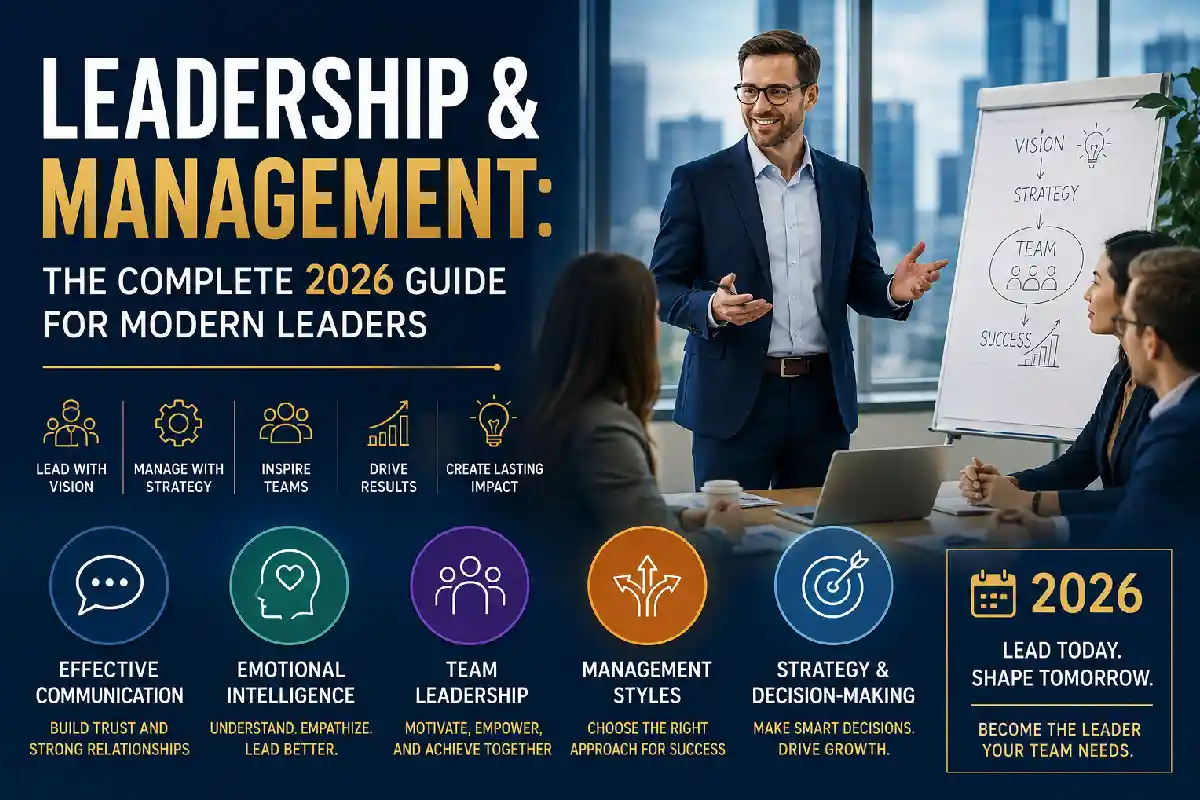
Leadership & Management: The Complete 2026 Guide for Modern Leaders
Last Updated: September 15, 2026
Leadership and Management These two are closely related and they have the objective to lead people in the achievement of particular objective or set of goals, support individuals in the decisions-making at strategic levels and direct the execution of tasks in organizations. Management vs Leadership. Leadership and management seem similar as they aim at getting the results that you want within your team, but they’re applied in different ways.
Management directs the way in which resources (people, equipment, money, etc) are used so that activities and operations occur as planned.
Leadership is the skill to motivate people to go with you toward achieving a vision or mission. An organization must utilize some processes of leadership and also a good managing practice to make it easier to generate a creativity outcome, to optimize procedures and guarantee the success for the long term.
What is Leadership?
Leadership is the act of influencing, inspiring and guiding others to help achieve common goals. Leader will provide direction to groups, inspire people to have trust and set up a better, clearer direction and empowers others to bring forth their very best work. Leadership has no authority that can directly direct other but influence people to be able to do better, outperforming beyond normal boundaries through a communication skill, high empathy and leading by example.
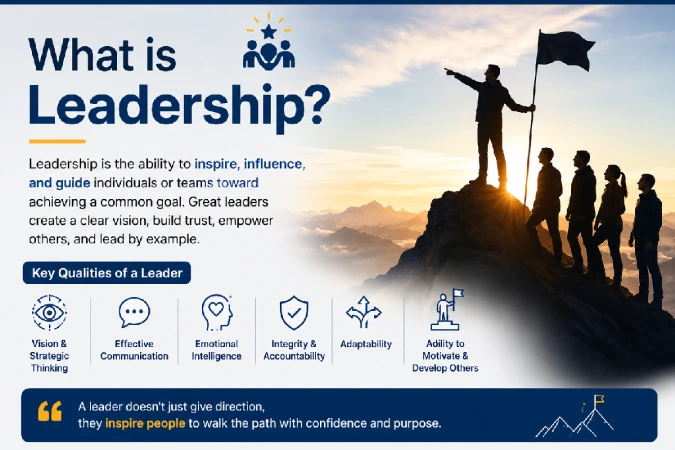
The following core traits/competencies represent Leadership include
- Vision And Strategic Planning
- Leadership
- Communication
- High Empathy; High Honesty
- High Accountability
- Resilience To Changes/Pressure
- Motivation Skills To Support Development.
- A Best Practice Case Study
A team leader would promote to explain benefits of introducing a new product, support teams working together in task completion, delegating and rewarding employees for their success and team efforts.
What is Management?
Management is a disciplined function of guiding the work performed by people in an organization toward a specific purpose or goal by using resources like human, financial, and natural to achieve a specific goals at the lowest cost. The management ensures plans will materialize, is responsible for task and operation, procedures and guidelines are followed by all members of organization.
Roles and responsibilities of a Manager typically include
- setting of goals and priorities
- planning tasks and resource allocation
- staffing and deployment
- directing activities performance
- budget and resource management
- problem solving
- performance
A best practice case study project manager could lead in organizing schedules, activities, budget and staffing to assure the successful completion of projects.
“Why Leadership and Management Matter”
When these two skillsets are well-blended together in an organization, this ensures preparedness for any business challenges, a high adaptability in various business environment, and sustained support for a high-performing team. Leader, ideally, should be innovativeness and focused to inspire employees with a motivational work atmosphere, while Manager provide the framework and discipline for motivation to flourish.
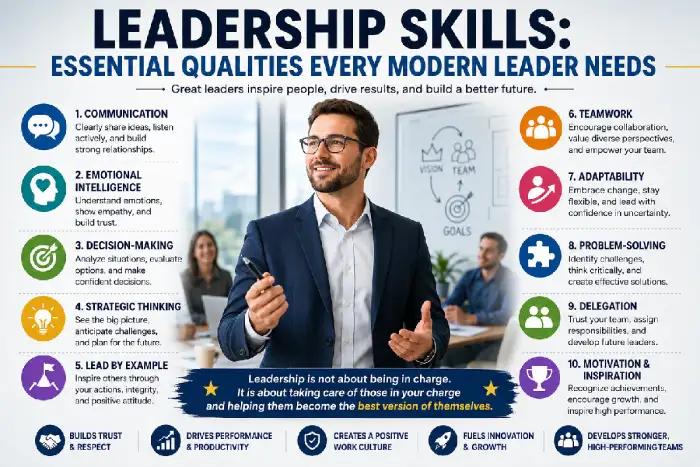
Leadership Skills: Essential Qualities Every Modern Leader Needs
A good team leader has to have the good leading and motovating skills to lead and run a team. Whether it is being born lucky or gaining it through practice and skills, good leaders have good leading skills. Modern good team leaders are a mixture of technical and person skills. These features make for a positive and healthy workplace in which everyone is reaching their potential and feeling valued and able to develop. What are some of the key leadership skills has today? Listed below.
Decision-Making
Decision-making is one of the key things one manages well as a leader. Good leaders make good decisions taking other peoples’ views on board, analysing the information, assess the risk, weighing up the options and choosing the best course of action. Good leaders are able to cope with pressure and take well thought through decisions in the most uncertain situation.
Emotional Intelligence
Emotional Intelligent (EQ)- is comprised of the ability to recognize, understand, and take into account your own emotions and those of others. Leaders with high EQ are able to build successful relationships, avoid and resolve conflicts and establish a positive environment.
The key components of emotional intelligence include:
- Self-awareness
- Self-regulation
- Empathy
- Motivation
- Social skills
Strategic Thinking
Great leaders see beyond the daily business. They recognize potential challenges down the road, where the opportunities lie, and develop long-range plans that align with the company‘s vision. Strategic thinkers are better at prioritizing resources and making decisions that lead the organization on a path of stable success.
Problem-Solving
Difficulties are a fact of life in any employment. Good leaders treat these problem as an opportunity to encourage true ‘thinking outside the box’ and should involve their teams and work together in finding feasible solutions.
Delegation
Delegation is not simply giving jobs to your subordinates. It is about trusting your team members with extra responsibilities that matter. An effective manager knows where each employee can shine and decomposes the work into individual tasks for the team to learn and to be more efficient.
Effective delegation helps:
- Reduce workload for leaders.
- Develop employees’ skills and confidence.
- Improve efficiency and accountability.
- Prepare future leaders within the organization.
Adaptability
Rapid changes in today‘s business climate driven by technology, customer needs and market competition is a competitive advantage for a dynamic business. The flexible and adaptable leader accepts the change and influences his team to be confident in a time of uncertainty.
Conflict Resolution
Disputes are inevitable in a team environment. A good team leader controls disputes in an impartial and efficient manner. he will listen to all agitated individuals, establish the basis of the problem, and, if at all possible, compromise to reach the best resolution for the concerned parties.
Integrity and Accountability
My leadership was grounded in trust. The leader who was open and truthful, her commitments, and was willing to shoulder the burden of decision-making gained my adherers’ respect. Expecting my subordinates to produce excellent work and behave appropriately also added to my integrity.
Motivation and Inspiration
Guidance motivates people to work together to reach a common goal. (The effective leader) promotes a spirit of team work and,… responds to the accomplishments of his or her individuals by giving positive reinforcement, shows an appreciation for achievement, And, recognizes the effort of his or her teams and inspires individuals to learn.
Key Leadership Skills at a Glance
| Leadership Skill | Why It Matters |
| Communication | Builds trust and keeps teams aligned |
| Decision-Making | Helps solve problems and seize opportunities |
| Emotional Intelligence | Strengthens relationships and teamwork |
| Strategic Thinking | Supports long-term organizational success |
| Problem-Solving | Overcomes challenges effectively |
| Delegation | Increases productivity and develops employees |
| Adaptability | Enables leaders to manage change confidently |
| Conflict Resolution | Maintains a positive and collaborative workplace |
| Integrity | Builds credibility and employee trust |
| Motivation | Inspires high performance and engagement |
Management Styles: Choosing the Right Approach to Lead Your Team
A management style is a method used by a manager to lead, direct and motivate staff with a view to achieving the companies objectives. A manager‘s management style can affect many aspects of the business including workforce productivity, employee motivation, the working atmosphere and ultimately the success of the company.
Autocratic Management Style
In an autocratic management style, the manager makes decisions independently with little or no employee input. This approach emphasizes authority, structure, and clear direction.
Advantages:
- Fast decision-making.
- Clear expectations and responsibilities.
- Effective during emergencies or crises.
Disadvantages:
- Can reduce employee motivation.
- Limits creativity and innovation.
- Employees may feel undervalued.
Best suited for: Manufacturing, military operations, emergency response teams, and high-risk environments.
Transformational Management Style
Transformational managers inspire employees to exceed expectations by focusing on innovation, personal development, and a shared vision. They encourage continuous improvement and embrace change.
Advantages:
- Motivates employees to perform at their best.
- Promotes innovation and creativity.
- Builds a strong organizational culture.
- Supports long-term growth.
Disadvantages:
- Can be demanding in fast-paced environments.
- Requires strong communication and leadership skills.
Best suited for: Technology companies, growing businesses, and organizations undergoing transformation.
Transactional Management Style
Transactional management is based on structured processes, performance standards, and rewards or consequences. Managers focus on achieving measurable objectives through clear expectations.
Advantages:
- Clearly defined roles and responsibilities.
- Easy performance measurement.
- Consistent productivity.
Disadvantages:
- Limited flexibility.
- May discourage creativity.
- Employees may focus only on rewards.
Best suited for: Sales teams, customer service departments, and organizations with standardized processes.
Coaching Management Style
A coaching manager focuses on developing employees’ skills, strengths, and long-term career growth. Instead of simply assigning tasks, they mentor team members and provide continuous feedback.
Advantages:
- Improves employee performance.
- Builds confidence and leadership skills.
- Increases employee retention.
- Creates future leaders.
Disadvantages:
- Requires significant time and patience.
- May not be practical during tight deadlines.
Best suited for: Professional services, education, healthcare, and organizations that prioritize employee development.
Servant Leadership Style
Servant leaders prioritize the needs of their employees before their own. Their goal is to support, empower, and help team members succeed while creating a positive workplace culture.
Advantages:
- Builds trust and loyalty.
- Encourages teamwork.
- Improves employee well-being.
- Increases engagement.
Disadvantages:
- Decision-making may be slower.
- Can be challenging in highly competitive environments.
Best suited for: Non-profit organizations, healthcare, education, and people-focused businesses.
Laissez-Faire Management Style
Laissez-faire managers provide employees with a high level of autonomy and minimal supervision. Team members are trusted to make decisions and manage their own work.
Advantages:
- Encourages independence.
- Supports innovation.
- Builds employee confidence.
- Ideal for experienced professionals.
Disadvantages:
- Lack of direction can reduce productivity.
- Not suitable for inexperienced teams.
- Accountability may become unclear.
Best suited for: Research teams, creative agencies, software development, and highly skilled professionals.
Situational Management Style
Examples of practical applied skills. Situational leadership – adjusting your style of leadership to the give team‘s experience, the difficult of the task and the nature of business at any given moment. Good managers realize that:
For example:
- A new employee may need close guidance and regular feedback.
- An experienced team member may thrive with greater independence.
- During a crisis, a more directive approach may be necessary.
This flexibility helps managers respond effectively to changing circumstances while supporting employee growth
Comparison of Popular Management Styles
| Management Style | Employee Involvement | Decision Speed | Best For |
| Democratic | High | Moderate | Creative and collaborative teams |
| Autocratic | Low | Fast | Crisis situations and structured environments |
| Transformational | High | Moderate | Innovation and organizational growth |
| Transactional | Moderate | Fast | Performance-driven organizations |
| Coaching | High | Moderate | Employee development and mentoring |
| Servant Leadership | High | Moderate | People-focused organizations |
| Laissez-Faire | Very High | Slow | Skilled and self-motivated teams |
| Situational | Varies | Varies | Dynamic workplaces with changing needs |
How to Choose the Right Management Style
Selecting the best management style depends on several factors:
- Within the team, experience counts: Newcomers require closer supervision, whereas experienced staff have more to contribute and can work more independently.
- Organizational culture: Collaborative organizational environments are more conducive to democratic and servant leadership models, while more heavily regulated industries may necessitate more control orientated leadership models.
- Business objectives: A company interested in the innovative side of business will use transformational, while an efficient operation will require transactional management.
- Work environment: Remote and hybrid teams require effective communication, trust, and flexibility.
- Type of task: Standardised tasks require defined procedures, whereas innovative work involves trial and error.
Tips for Becoming a More Effective Manager
- Learn to adapt your style to different scenarios, not to stick to one.
- Communicate expectations clearly and.
- Content Faculty must allow employees to provide feedback and take part in the process.
- Acknowledge success and celebrate. Invest in coaching and professional development.
- Establishing credibility and trust by being transparent and accountable.
- Assess your management attitude periodically and make corrections.
Team Leadership: How to Build, Motivate, and Manage High-Performing Teams
Team leadership is the ability to guide, motivate, and support a group of people toward achieving shared goals. An effective team leader creates a positive work environment where employees feel valued, trusted, and empowered to contribute their best. Rather than simply assigning tasks, great leaders inspire collaboration, encourage innovation, and help team members grow both personally and professionally.
In today’s fast-paced and increasingly hybrid workplaces, strong team leadership is essential for improving productivity, employee engagement, and long-term organizational success.
What is Team Leadership?
Team leadership is the process of influencing and coordinating a group of individuals to accomplish common objectives. A team leader provides direction, resolves challenges, facilitates communication, and ensures everyone works together effectively.
Unlike traditional management, which often focuses on processes and performance metrics, team leadership emphasizes building relationships, fostering trust, and creating an environment where people can succeed together.
The Role of a Team Leader
A successful team leader wears many hats. Their responsibilities extend beyond supervising daily tasks to developing a culture of accountability and collaboration.
Key responsibilities include:
- Setting clear goals and expectations
- Delegating tasks based on individual strengths
- Encouraging teamwork and collaboration
- Providing coaching and constructive feedback
- Resolving conflicts fairly and promptly
- Motivating employees to achieve their best
- Monitoring progress and removing obstacles
- Recognizing achievements and celebrating success
By balancing strategic thinking with people management, leaders help teams stay focused while maintaining high morale.
Characteristics of Effective Team Leaders
Strong leaders share several qualities that help them earn the trust and respect of their teams.
Excellent Communication
Clear communication ensures everyone understands expectations, responsibilities, and organizational goals. Effective leaders actively listen, encourage open discussions, and provide regular updates that keep everyone aligned.
Emotional Intelligence
Leaders who understand and manage emotions create stronger relationships with their teams. They demonstrate empathy, remain calm during challenges, and support employees through difficult situations.
Integrity and Trustworthiness
Trust is the foundation of every successful team. Leaders who are honest, transparent, and accountable inspire confidence and encourage employees to do the same.
Adaptability
Modern workplaces evolve rapidly. Effective leaders embrace change, adjust strategies when necessary, and help their teams navigate uncertainty with confidence.
Decision-Making
Strong leaders make informed decisions after evaluating available information, considering potential risks, and consulting team members when appropriate.
How to Build a High-Performing Team
Creating a successful team requires more than hiring talented employees. Leaders must establish an environment where collaboration and continuous improvement thrive.
1. Set Clear Goals
Every team member should understand:
- The team’s mission
- Individual responsibilities
- Performance expectations
- Project deadlines
- Success metrics
Clearly defined objectives keep everyone focused and aligned.
2. Build Trust
Trust encourages employees to share ideas, admit mistakes, and collaborate openly.
Ways to build trust include:
- Being transparent about decisions
- Following through on commitments
- Treating everyone fairly
- Respecting different opinions
- Encouraging honest conversations
Teams built on trust are more resilient and productive.
3. Encourage Collaboration
High-performing teams succeed because members work together rather than competing against one another.
Leaders can encourage collaboration by:
- Promoting knowledge sharing
- Creating cross-functional projects
- Organizing brainstorming sessions
- Using collaborative digital tools
- Recognizing team achievements instead of only individual success
4. Delegate Effectively
Delegation demonstrates confidence in employees while allowing leaders to focus on strategic priorities.
Effective delegation involves:
- Assigning work according to strengths
- Providing necessary resources
- Setting clear expectations
- Offering support without micromanaging
- Holding team members accountable
Delegation also helps employees develop new skills and prepares future leaders.
5. Foster Continuous Learning
Successful leaders encourage professional growth by providing opportunities for learning and development.
Examples include:
- Online training courses
- Leadership workshops
- Mentorship programs
- Job shadowing
- Skill development sessions
Continuous learning keeps teams adaptable and competitive.
Motivating Your Team
Employee motivation directly influences productivity, innovation, and retention.
Recognize Achievements
Celebrating accomplishments boosts morale and reinforces positive behavior.
Recognition can include:
- Public appreciation
- Performance bonuses
- Professional development opportunities
- Personalized thank-you messages
- Employee awards
Even simple acknowledgment can significantly improve engagement.
Empower Employees
People perform better when they feel trusted.
Empower your team by:
- Involving them in decision-making
- Encouraging ownership of projects
- Supporting creative problem-solving
- Giving autonomy where appropriate
Empowered employees are often more confident, innovative, and committed.
Provide Regular Feedback
Feedback should be timely, constructive, and balanced.
Effective feedback includes:
- Specific examples
- Actionable suggestions
- Recognition of strengths
- Opportunities for improvement
- Follow-up discussions
Regular coaching helps employees grow and stay motivated.
Managing Team Conflicts
Conflict is inevitable whenever people work together. Effective leaders address disagreements early before they affect morale or productivity.
Common Causes of Conflict
- Miscommunication
- Unclear expectations
- Personality differences
- Resource limitations
- Competing priorities
- Workplace stress
Conflict Resolution Strategies
- Listen to every perspective.
- Focus on facts instead of emotions.
- Identify the root cause.
- Encourage respectful discussion.
- Develop mutually beneficial solutions.
- Follow up to ensure lasting resolution.
Addressing conflict promptly strengthens trust and promotes a healthier work environment.
Leading Remote and Hybrid Teams
Modern organizations increasingly rely on remote and hybrid work arrangements. Leading distributed teams requires intentional communication and relationship building.
Best practices include:
- Schedule regular virtual meetings.
- Set clear communication guidelines.
- Use collaboration platforms effectively.
- Focus on outcomes instead of constant supervision.
- Encourage informal social interactions.
- Support employee well-being and work-life balance.
Successful remote leaders prioritize trust, transparency, and flexibility.
Common Team Leadership Mistakes
Even experienced leaders can make mistakes that reduce team performance.
Avoid these common pitfalls:
- Micromanaging employees
- Poor communication
- Ignoring employee feedback
- Avoiding difficult conversations
- Failing to delegate responsibilities
- Showing favoritism
- Neglecting employee recognition
- Resisting change
- Setting unrealistic expectations
Recognizing these mistakes early allows leaders to adjust their approach and maintain a positive team culture.
Best Practices for Effective Team Leadership
Follow these strategies to become a more effective team leader:
- Lead by example in both actions and attitude.
- Communicate openly and consistently.
- Build strong relationships based on trust.
- Encourage innovation and creative thinking.
- Celebrate both individual and team achievements.
- Invest in employee development.
- Adapt your leadership style to different situations.
- Promote diversity, inclusion, and respect.
- Maintain accountability while showing empathy.
- Continuously seek feedback and improve your leadership skills.
Benefits of Strong Team Leadership
Organizations with effective team leadership often experience:
- Higher employee engagement
- Increased productivity
- Better collaboration
- Improved problem-solving
- Greater innovation
- Lower employee turnover
- Stronger workplace culture
- Higher customer satisfaction
- Improved organizational performance
When employees feel supported and inspired, they are more likely to contribute their best work and remain committed to the organization’s goals.
Effective Communication in Leadership: How Great Leaders Inspire, Influence, and Build Trust
Effective communication in leadership is the ability to clearly share ideas, expectations, and feedback while actively listening to others. It is one of the most important leadership skills because it helps leaders build trust, strengthen relationships, resolve conflicts, and keep teams aligned with organizational goals. Whether leading a small team or a global organization, communication determines how well leaders motivate employees, manage change, and achieve results.
Research consistently shows that organizations with strong communication practices experience higher employee engagement, better collaboration, and improved productivity. Leaders who communicate openly create an environment where employees feel informed, valued, and confident in their work.
Why Communication Is Essential for Leaders
Leadership is more than making decisions—it is about helping others understand the vision, embrace change, and work together toward common objectives. Without effective communication, even the best strategies can fail because employees may not fully understand their roles or expectations.
Strong communication helps leaders:
- Build trust and credibility
- Align teams with organizational goals
- Improve collaboration and teamwork
- Increase employee engagement
- Reduce misunderstandings and workplace conflicts
- Support better decision-making
- Inspire confidence during periods of change
Employees are more likely to stay motivated and committed when leaders communicate honestly, consistently, and respectfully.
Key Elements of Effective Leadership Communication
1. Active Listening
Communication begins with listening. Great leaders pay close attention to what employees say, ask thoughtful questions, and seek to understand different perspectives before responding.
Active listening involves:
- Giving full attention during conversations
- Avoiding interruptions
- Asking clarifying questions
- Observing non-verbal cues
- Summarizing key points to confirm understanding
When employees feel heard, they are more willing to share ideas and concerns.
2. Clear and Concise Messaging
Leaders should communicate expectations in simple, straightforward language. Unclear instructions often lead to confusion, missed deadlines, and unnecessary mistakes.
To improve clarity:
- Focus on one message at a time.
- Avoid unnecessary jargon.
- Explain the purpose behind decisions.
- Confirm that everyone understands expectations.
- Provide written follow-ups for important discussions.
Clear communication keeps teams aligned and productive.
3. Transparency and Honesty
Honest communication builds trust. Even when delivering difficult news, employees appreciate leaders who are open about challenges, decisions, and organizational changes.
Transparent leaders:
- Share relevant information promptly.
- Explain the reasons behind decisions.
- Admit mistakes when necessary.
- Keep promises and follow through on commitments.
- Encourage questions and honest discussions.
Trust grows when employees believe their leaders are genuine and dependable.
4. Non-Verbal Communication
Body language often communicates as much as words. Facial expressions, eye contact, posture, gestures, and tone of voice influence how messages are received.
Positive non-verbal communication includes:
- Maintaining eye contact
- Using open body language
- Speaking with confidence
- Smiling when appropriate
- Matching tone with the message
Leaders should ensure their actions reinforce, rather than contradict, their words.
5. Emotional Intelligence
Leaders with strong emotional intelligence communicate with empathy and respect. They recognize their own emotions, understand how others feel, and respond appropriately.
Emotionally intelligent leaders:
- Stay calm during difficult conversations
- Show empathy for employees’ concerns
- Manage conflict professionally
- Build stronger workplace relationships
- Create psychologically safe environments
Empathy strengthens communication and encourages open dialogue.
Giving Constructive Feedback
Feedback helps employees improve performance, develop new skills, and stay engaged. Effective leaders provide feedback regularly rather than waiting for annual performance reviews.
Good feedback should be:
- Timely
- Specific
- Balanced
- Respectful
- Focused on behavior rather than personality
- Action-oriented
Communicating During Change
Organizational change often creates uncertainty. Employees look to leaders for guidance and reassurance during transitions such as restructuring, mergers, new technologies, or policy updates.
Effective communication during change involves:
- Explaining why the change is necessary
- Sharing the expected benefits
- Addressing employee concerns honestly
- Providing regular progress updates
- Encouraging feedback and questions
- Recognizing the emotional impact of change
Frequent communication reduces resistance and helps employees adapt more confidently.
Improving Team Communication
Strong communication creates stronger teams. Leaders can improve collaboration by encouraging open discussions and making communication a daily priority.
Strategies include:
- Holding regular team meetings
- Scheduling one-on-one conversations
- Encouraging knowledge sharing
- Using collaborative digital tools
- Recognizing employee contributions
- Promoting respectful discussions
- Creating opportunities for feedback
Teams that communicate effectively solve problems faster and work together more efficiently.
Communication Challenges Leaders Face
Even experienced leaders encounter communication barriers that can affect team performance.
Common challenges include:
- Misunderstandings due to unclear instructions
- Information overload
- Cultural and language differences
- Remote and hybrid work communication gaps
- Poor listening habits
- Lack of timely feedback
- Emotional reactions during difficult conversations
Recognizing these challenges allows leaders to adjust their communication strategies before problems escalate.
Tips to Improve Leadership Communication
Developing strong communication skills requires continuous practice.
Here are practical ways to improve:
- Listen more than you speak.
- Ask open-ended questions.
- Tailor your communication to your audience.
- Be honest and transparent.
- Provide consistent feedback.
- Improve public speaking skills.
- Observe your body language.
- Encourage employee participation.
- Confirm understanding before moving forward.
- Continue learning through books, courses, and coaching.
Small improvements in communication can significantly strengthen leadership effectiveness.
Common Communication Mistakes to Avoid
Avoid these habits that weaken leadership credibility:
- Interrupting employees
- Giving vague instructions
- Ignoring feedback
- Using overly technical language
- Avoiding difficult conversations
- Making assumptions instead of asking questions
- Delivering criticism publicly
- Sending inconsistent messages
- Failing to follow up on commitments
Replacing these habits with clear, respectful communication helps create a more positive and productive workplace.
Benefits of Effective Communication in Leadership
Organizations with strong leadership communication often experience:
| Benefit | Impact |
| Higher employee engagement | Teams feel valued and motivated |
| Better collaboration | Stronger teamwork across departments |
| Increased productivity | Clear expectations reduce confusion |
| Faster problem-solving | Open communication encourages innovation |
| Greater employee trust | Transparency builds credibility |
| Improved conflict resolution | Issues are addressed before they escalate |
| Higher retention | Employees are more likely to stay in supportive workplaces |
| Stronger organizational culture | Shared values and goals unite teams |
Effective communication in leadership is the foundation of successful teams and organizations. Leaders who communicate with clarity, empathy, honesty, and confidence build trust, inspire action, and create workplaces where employees can thrive. By practicing active listening, providing constructive feedback, encouraging open dialogue, and adapting communication to different situations, leaders can strengthen relationships, improve collaboration, and achieve lasting organizational success. In today’s rapidly evolving workplace, communication is not just a leadership skill—it is the bridge that connects vision, people, and results.
Emotional Intelligence in Leadership: Why EQ Is the Key to Effective Leadership
Emotional intelligence in leadership is the ability to recognize, understand, and manage your own emotions while also understanding and influencing the emotions of others. Leaders with high emotional intelligence (EQ) build stronger relationships, communicate more effectively, resolve conflicts with empathy, and create positive work environments where employees feel respected and motivated.
While technical expertise and intelligence (IQ) are important, emotional intelligence often determines how successfully a leader manages people, handles pressure, and inspires teams. In today’s collaborative and fast-changing workplaces, EQ has become one of the most valuable leadership skills for building resilient, high-performing organizations.
What is Emotional Intelligence?
Emotional intelligence (EQ) refers to a person’s ability to identify, understand, and manage emotions in themselves and others. The concept became widely recognized through psychologist Daniel Goleman, who identified emotional intelligence as a critical factor in effective leadership and workplace success.
Leaders with strong emotional intelligence remain calm during challenges, communicate with empathy, make thoughtful decisions, and foster a culture of trust and collaboration. Instead of reacting impulsively, they respond with self-awareness and emotional control.
The Five Components of Emotional Intelligence
1. Self-Awareness
Self-awareness is the ability to recognize your emotions, strengths, weaknesses, values, and how your behavior affects others. Self-aware leaders understand their leadership style and continuously seek opportunities for personal growth.
Self-aware leaders:
- Accept constructive feedback.
- Recognize emotional triggers.
- Understand their strengths and limitations.
- Reflect on decisions before taking action.
- Learn from mistakes.
Self-awareness helps leaders make better decisions and build stronger relationships with their teams.
2. Self-Regulation
Self-regulation is the ability to manage emotions and remain composed under pressure. Leaders who control their emotional responses create stability and confidence within their teams.
Self-regulated leaders:
- Stay calm during stressful situations.
- Avoid impulsive decisions.
- Adapt to change effectively.
- Handle criticism professionally.
- Demonstrate patience and professionalism.
Employees are more likely to trust leaders who remain steady and composed during difficult times.
3. Motivation
Emotionally intelligent leaders possess strong internal motivation. They focus on achieving meaningful goals, overcoming obstacles, and inspiring others through their commitment and enthusiasm.
Highly motivated leaders:
- Set ambitious but realistic goals.
- Encourage continuous improvement.
- Maintain a positive attitude during setbacks.
- Celebrate progress and achievements.
- Inspire others through their actions.
Their optimism and determination often influence the entire team’s mindset.
4. Empathy
Empathy is the ability to understand and appreciate the emotions, perspectives, and experiences of others. It is one of the most valuable qualities of an effective leader because it strengthens relationships and improves communication.
Empathetic leaders:
- Listen without judgment.
- Consider employees’ viewpoints before making decisions.
- Offer support during challenging situations.
- Recognize individual needs and strengths.
- Foster an inclusive and respectful workplace.
Employees who feel understood are generally more engaged, loyal, and willing to contribute their best work.
5. Social Skills
Social skills involve building positive relationships, communicating effectively, resolving conflicts, and collaborating with diverse teams.
Leaders with strong social skills:
- Build trust quickly.
- Encourage teamwork.
- Manage conflicts constructively.
- Influence others positively.
- Create strong professional networks.
Excellent social skills help leaders unite teams around shared goals and maintain a healthy workplace culture.
Why Emotional Intelligence Is Important in Leadership
Emotional intelligence influences nearly every aspect of leadership. Leaders who understand emotions make better decisions, strengthen employee relationships, and create workplaces where people feel motivated to succeed.
Benefits of emotional intelligence include:
- Stronger communication and active listening
- Increased employee trust and engagement
- Better teamwork and collaboration
- Improved conflict resolution
- More effective decision-making
- Higher employee retention
- Greater adaptability during change
- Enhanced organizational culture
Organizations with emotionally intelligent leaders often experience higher productivity and stronger employee satisfaction.
How Emotional Intelligence Improves Leadership
Builds Trust
Trust develops when leaders communicate honestly, act consistently, and demonstrate empathy. Employees are more likely to share ideas and concerns with leaders they trust.
Improves Decision-Making
Emotionally intelligent leaders balance logic with empathy. They consider both business objectives and the impact decisions have on employees, leading to more thoughtful and balanced outcomes.
Strengthens Communication
Leaders with high EQ communicate clearly, actively listen, and adapt their communication style to different individuals and situations. This reduces misunderstandings and promotes collaboration.
Encourages Employee Engagement
Employees are more motivated when they feel respected, supported, and appreciated. Emotionally intelligent leaders recognize achievements, provide constructive feedback, and create opportunities for growth.
Helps Manage Conflict
Conflict is inevitable in any workplace. Leaders with strong emotional intelligence address disagreements calmly, encourage open dialogue, and work toward solutions that benefit everyone involved.
Signs of an Emotionally Intelligent Leader
You may have strong emotional intelligence if you:
- Remain calm during stressful situations.
- Listen more than you speak.
- Welcome constructive feedback.
- Show empathy toward others.
- Build positive workplace relationships.
- Resolve disagreements respectfully.
- Accept responsibility for mistakes.
- Encourage collaboration and inclusion.
- Adapt to change with confidence.
- Inspire others through your actions.
These behaviors help create a culture of trust, accountability, and continuous improvement.
How to Develop Emotional Intelligence
Like any leadership skill, emotional intelligence can be strengthened with consistent practice.
Practice Self-Reflection
Take time to evaluate your reactions, decisions, and leadership behaviors. Consider what went well and what could be improved.
Improve Active Listening
Give your full attention during conversations. Avoid interrupting and ask thoughtful questions to better understand others’ perspectives.
Seek Constructive Feedback
Invite feedback from colleagues, mentors, and team members to identify blind spots and opportunities for growth.
Develop Empathy
Try to understand situations from another person’s point of view before making judgments or decisions.
Manage Stress Effectively
Practice techniques such as mindfulness, exercise, or time management to remain calm during challenging situations.
Strengthen Communication Skills
Communicate clearly, provide regular feedback, and encourage open discussions that make employees feel heard and valued.
Common Emotional Intelligence Mistakes
Even experienced leaders can unintentionally undermine their emotional intelligence.
Avoid these common mistakes:
- Ignoring employees’ concerns
- Reacting emotionally without thinking
- Avoiding difficult conversations
- Failing to listen actively
- Resisting constructive feedback
- Showing favoritism
- Dismissing different perspectives
- Allowing stress to affect decision-making
Recognizing these habits is the first step toward becoming a more emotionally intelligent leader.
Emotional Intelligence vs. IQ in Leadership
| Emotional Intelligence (EQ) | Intelligence Quotient (IQ) |
| Manages emotions effectively | Measures cognitive ability |
| Builds strong relationships | Solves analytical problems |
| Encourages collaboration | Focuses on technical knowledge |
| Resolves workplace conflicts | Supports logical reasoning |
| Inspires and motivates teams | Helps process complex information |
Both EQ and IQ contribute to leadership success, but emotional intelligence often determines how effectively leaders work with people, especially in collaborative and high-pressure environments.
Benefits of Emotional Intelligence in Leadership
Organizations benefit significantly when leaders demonstrate high emotional intelligence.
| Benefit | Organizational Impact |
| Better communication | Stronger collaboration across teams |
| Higher employee engagement | Increased motivation and productivity |
| Improved conflict resolution | Healthier workplace relationships |
| Greater trust | Stronger employee loyalty |
| Better adaptability | Smoother change management |
| Stronger decision-making | More balanced and thoughtful leadership |
| Positive workplace culture | Higher retention and job satisfaction |
Emotional intelligence in leadership is no longer an optional skill—it is a defining characteristic of successful modern leaders. Leaders who develop self-awareness, self-regulation, motivation, empathy, and strong social skills create workplaces where employees feel respected, engaged, and empowered to perform at their best. By continuously improving emotional intelligence, leaders can strengthen communication, build trust, navigate challenges with confidence, and inspire teams to achieve lasting success. In today’s people-centered workplace, emotional intelligence is the foundation of effective leadership and sustainable organizational growth.
Conclusion
These are the pillars of successful businesses. Leadership involves inspiration, vision and positive influence, whereas management entails organized, coordinated execution and measurement of goals. Leaders of businesses use management and leadership in a mutually complementary and efficient manner, making the businesses successful in their pursuit.
In the first section of this guidance document we covered a range of essential leadership qualities – communication and creative reasoning are only a few.
The following discussion covered several of the different styles of leadership that might be useful to managers of different businesses; as already noted there is not always just one leadership style. Many will find a one-size-fits-all approach isn’t appropriate as they should be willing to adapt to various situations or their employees or employees’ work style. The importance of good leadership skills (communication and emotional intelligence included) are more apparent today than ever before. As businesses continue to become more global and digital, and as teams grow more culturally diverse, it will be important for businesses to hire leaders that develop trust, open up channels of communication and communicate with sensitivity to encourage team productivity and inspire growth, development and confidence in employees and within organizations in general.
Whether you’re an entrepreneur, business leader, an employee on the management training programme, aspiring manager, executive or simply leading team in your organisation you must continue to take advantage of every opportunity to continue to develop your skills as a leader and manager.