

How to Build a Personal Brand From Scratch in 2026 (Full Guide)
Last Updated: September 15, 2026
In today‘s world of digital everything, your personal brand is one of your most important assets. Whether a freelancer, entrepreneur, video creator, job hunter, consultant or a business owner – your name will most probably be googled before someone ever considers working with you.
Creating a personal brand isn‘t about being famous today. It‘s about consistently showcasing who you are and what you do and what you know so that it is crystal clear to others.
The great thing is you don‘t require hundreds of thousands of followers and a ton of marketing platforms in order to develop a prosperous personal mark. In 2026, truthfulness, stability, and high-value information more than likely have a lot more relevance than a viral article.
What is a Personal Brand?
Your personal brand is the way the world perceives who you are both professionally and personally. It‘s the sum of your skills, experience, values, personality and online presence.
Why Personal Branding Matters in 2026
Never has there been so much competition. Thanks to advances in the development of Artificial Intelligence, producing content has become a lot easier which means that consumers are now bombarded with more online content than at any time in history.
A strong personal brand can help you:
| Benefit | Impact |
| Build trust | People buy from those they trust |
| Generate leads | Attract clients organically |
| Increase career opportunities | Recruiters notice visible experts |
| Grow authority | Become recognized in your niche |
| Create multiple income streams | Consulting, courses, sponsorships |
| Expand your network | Connect with industry leaders |
Personal Brand Basics
Personal branding is consciously managing the perception of you that others have based on the skills that you possess, your knowledge, values, personality and your online presence.
The core elements of a personal brand include:
- A well defined niche or core area of specialization.
- There was a common message directed at platforms.
- Real communication: we all communicate with each other; however, this does not imply that we communicate authentically.
- Content that‘s useful to your audience
- An identity; to be noticed online, to gain a professional profile.
- Big network and good relationship skills.
Ultimately, a successful personal brand is one that is built over time with consistency, credibility and value.
Define Personal Brand
What makes up your personal brand? Your abilities and experiences, who you are as a person, what is your reputation and values, what is the common thread or theme running through your life your personal call and how you wish to be perceived, why others should select or trust you.
A personal brand is not the same as a company brand; it is about you, it is your strengths and it’s about how you present the world with a new perspective. It defines enabling important career opportunities to happen.
For example, if a person is identified and branded by being able to make complex technology topics accessible through simple and easy tutorials, such ability is a part of the personal brand.
Personal Brand Statement
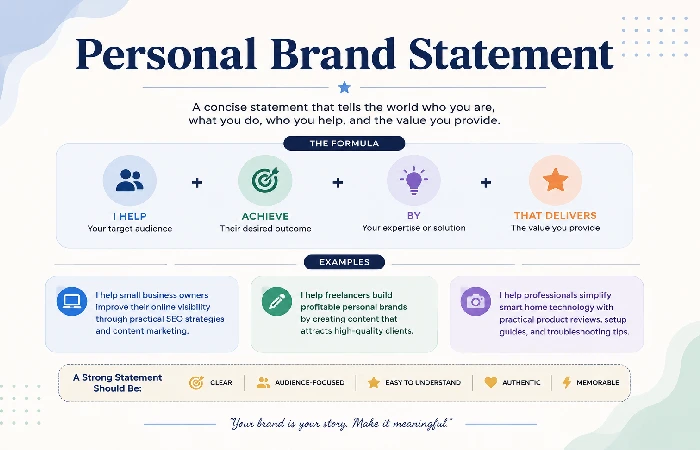
A personal brand statement is a short paragraph that communicates: who you are, what do you do, who you help and the value you offer. Think of it as your elevator pitch on your website, social media channels and in networking events.
Formula
I serve [target audience] in [achieving desired result] through [your knowledge or solution].
Example 1:
As an SEO/content marketer I work with small business owners to help them get more visible online.
Example 2:
I support freelancers in building lucrative personal brands through producing content that brings in great clients.
Example 3:
I assist those working with smart home technology by providing straightforward product reviews, setup instructions and common problem solving advice to make their lives easier.
A strong personal brand statement should be:
- That was clearly and specifically.
- Audience-focused
- Easy to understand
- Authentic
- Memorable
Unique Value Proposition (UVP)
UVP (Unique Value Proposition): describes what separates you from others. Advantages, expertise and knowledge you provide.
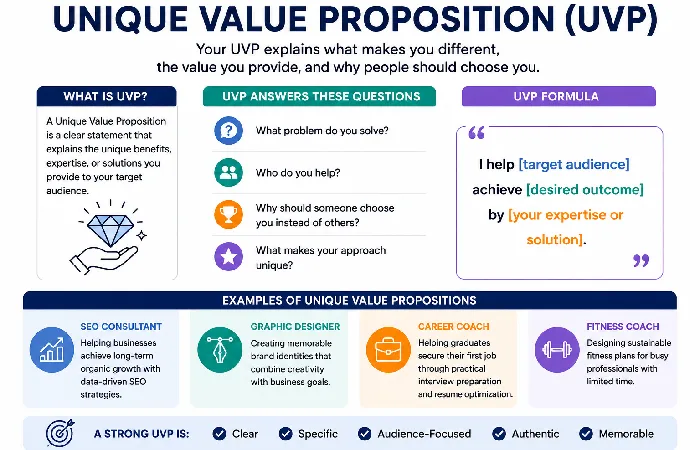
Your UVP answers these important questions:
- What issue do you address?
- Who is your target?
- In what way is your work more suitable than the work done by others?
- Are you doing anything new? What‘s new about your work?
Example UVP
| Profession | Unique Value Proposition |
| SEO Consultant | Helping businesses achieve long-term organic growth with data-driven SEO strategies. |
| Graphic Designer | Creating memorable brand identities that combine creativity with business goals. |
| Career Coach | Helping graduates secure their first job through practical interview preparation and resume optimization. |
| Fitness Coach | Designing sustainable fitness plans for busy professionals with limited time. |
Personal Branding Steps
Starting from zero, take note of the key steps outlined below to establish your personal brand:
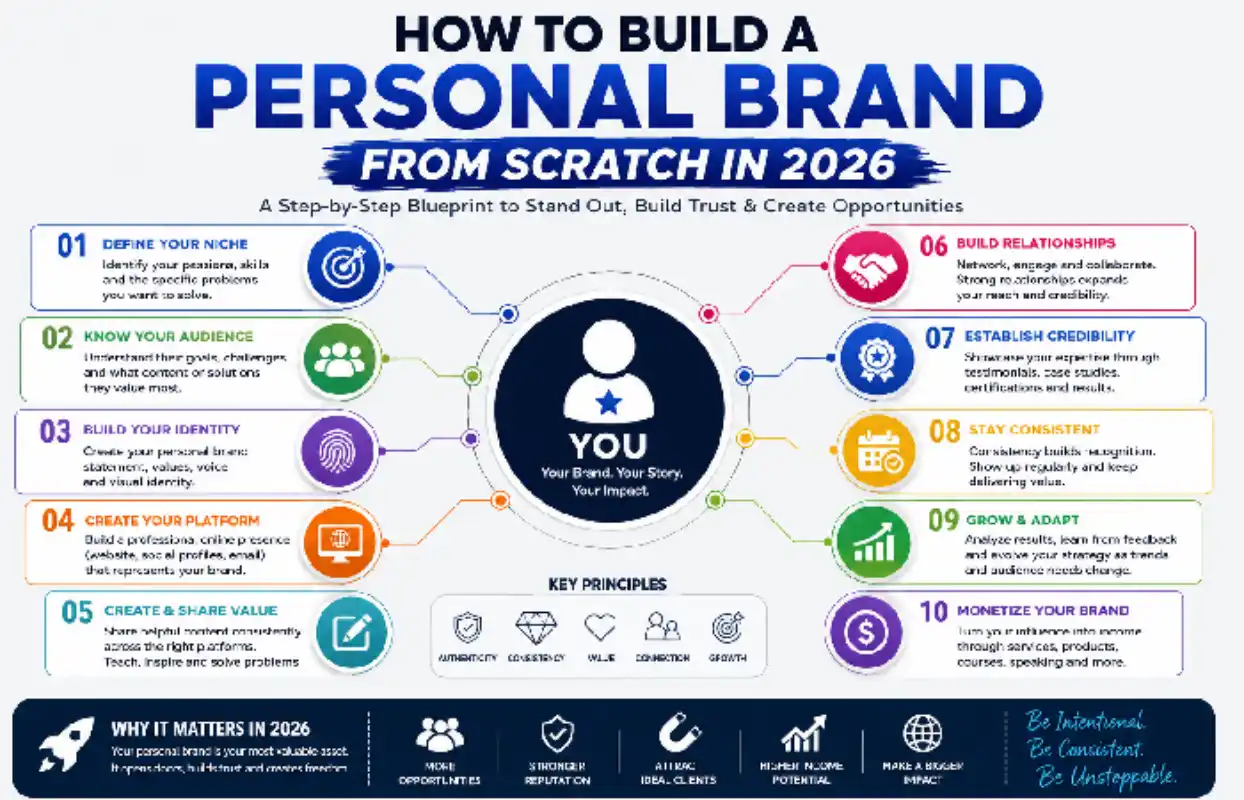
Step 1: Identify Your Niche
Pick a subject/topic/area you are familiar with/trained in/love writing about! You want to choose a narrow topic so that people will know what you do immediately.
Step 2: Define Your Target Audience
Know your audience. Knowing what your target audience is and what they want will help you to write appropriate material. If you are aware of what objectives they have, the problem they have and their areas of interest, you will be able to produce actual information.
Step 3: Develop Your Brand Identity
Develop your mission, values, tone of voice and identity. Your appeal will be reinforced if consistency is maintained across websites, face book and other social mediums.
Step 4: Create a Strong Online Presence
Develop professional profiles on sites where your audience can be found. Maintain the same profile photo, bio and message consistency.
Step 5: Create Valuable Content
Share educational content like articles, videos, tutorials, case studies, and problems or issues you are good at solving.
Step 6: Network and Build Relationships
Get to work with industry people, have them brainstorming, getting together with your friends or even members of your community.
Step 7: Build Credibility
Demonstrate your proficiency with: expression of customer / trade references, map of qualifications or take pride in your experience with any of the following: recommendations, accreditation, case reports, previous work, presentation experience or academic publication.
Step 8: Stay Consistent
Posting on a consistent basis, engaging an audience and evolving as a person will help cement your authority in the long run.
Step 9: Measure Your Progress
Monitor metrics including website traffic, social media engagement, email opt-ins, inquiries, or search rankings to measure your progress and improve your plan.
Branding yourself is a continual process. The more value you offer and the clearer your message is, the more you will position yourself in your industry as a trustworthy authority and develop your professional brand.
Monetizing Your Personal Brand
Once you‘ve established trust with your readers and built up a loyal audience, you can begin to monetize your knowledge through various methods.
Common monetization methods include:
- Independent services ( Freelance services)
- Consulting, coaching
- Digital Products
- Distance learning courses
- Membership communities
- Affiliate marketing
- Brand partnerships
- Public speaking
- Sponsored newsletters
- Books and eBooks
The most viable income source is actually working on real issues for a targeted audience rather than working out a business plan to get the maximum ad revenue.
Frequently Asked Questions
What is the timeframe for establishing a personal brand?
For the majority of people, they will start to see results 6–12 months after they constantly provide really high quality content and really engage with their readers (but building a recognizable brand takes time).
Is it necessary for me to have a huge network of supporters?
No. A dedicated team of reviewers is always more powerful than swarming multitudes. Building trust and providing relevant content is more essential than amassing a large audience.
Are introverts capable of establishing a personal branding?
One of the biggest success stories of personal branding is actually variable content while not even appearing on camera, such as books, newsletters, podcasts, and training videos.
Conclusion
Starting your personal brand from an empty slate in 2026 shouldn‘t make you an internet hero but rather earn people‘s trust through providing consistent value. By selecting an accessible niche, outlining your plot, producing useful material, building communities, and maintaining consistency one can build credibility.
Keep in mind, personal branding is a marathon, not a race. Concentrate on providing value to others, being honest about your reality, and enhancing your skills. Eventually, your reputation will turn into a valuable asset for your career, enabling it to blossom and flourish.