

Emergency Fund Planning: How Much to Save and Where to Keep It
Last Updated: September 21, 2026
No one expects it. An unplanned medical expense, a sudden job loss, or the furnace breaking, along with a family emergency or costly car repair. Anything that can quickly throw a monkey wrench into any budget. That’s exactly why planning for an emergency fund may be the most critical aspect of financial responsibility.
What is a Medical fund?
A medical fund is simply money that is designated for unexpected necessities. With your emergency money, the important thing here isn’t having an abundance of it for the future, just having enough to use for unexpected needs readily accessible.
Your emergency fund isn’t meant to be accumulated quickly. Begin saving whatever you are able to, try automating this process as much as possible, and build as much financial safety for unexpected expenditures as is possible.
Why You Need an Emergency Fund
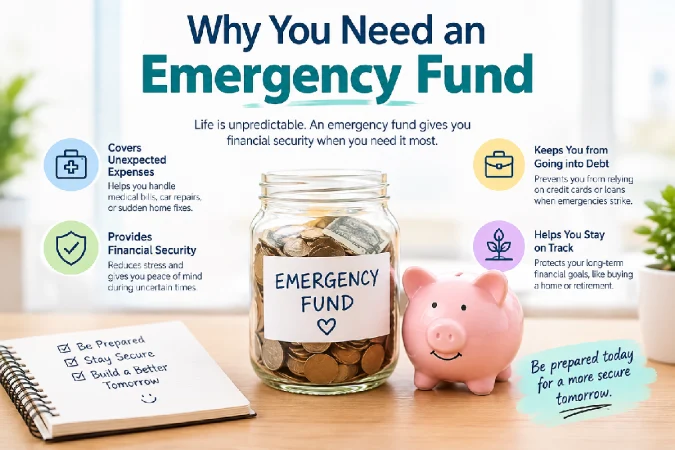
An emergency fund helps you sail through in the face of adversity. A sudden emergency without an emergency fund might compel you to swipe your credit card or take an unsecured personal loan from a bank or borrow from your friends or family.
Suppose your total minimum mandatory expenses are 40,000 per month and an unforeseen emergency arises. A sum of 1,00,000 is required in the face of that emergency. Now, if you have some funds at your disposal, it might be relatively easy to absorb without upsetting your budget to a great extent.
If there are no savings at your disposal, the entire thing could become a debt!
Key Benefits of an Emergency Fund
| Benefit | How It Helps |
| Handles unexpected expenses | Covers urgent bills without disrupting your regular budget |
| Reduces financial stress | Gives you confidence when something goes wrong |
| Prevents high-interest debt | Reduces the need to depend on credit cards or expensive loans |
| Protects investments | You may not have to sell investments during a downturn |
| Supports job-loss periods | Provides essential cash while you search for another income source |
| Improves financial flexibility | Gives you more options during difficult situations |
An emergency fund is especially crucial if you have an erratic income stream, if you are freelancing, if you are the primary wage earner in your household, or if you have dependants.
Emergency Fund vs. Regular Savings
Both types of savings have different uses.
Everyday savings can go towards goals where you plan in advance for what you want- like a vacation or a new phone, school costs, or something you know you want to buy eventually.
Emergency savings can only go towards something you couldn’t reasonably expect would happen.
By keeping the categories separate, you’re less tempted to dip into your emergency savings to buy non-emergency-related items.
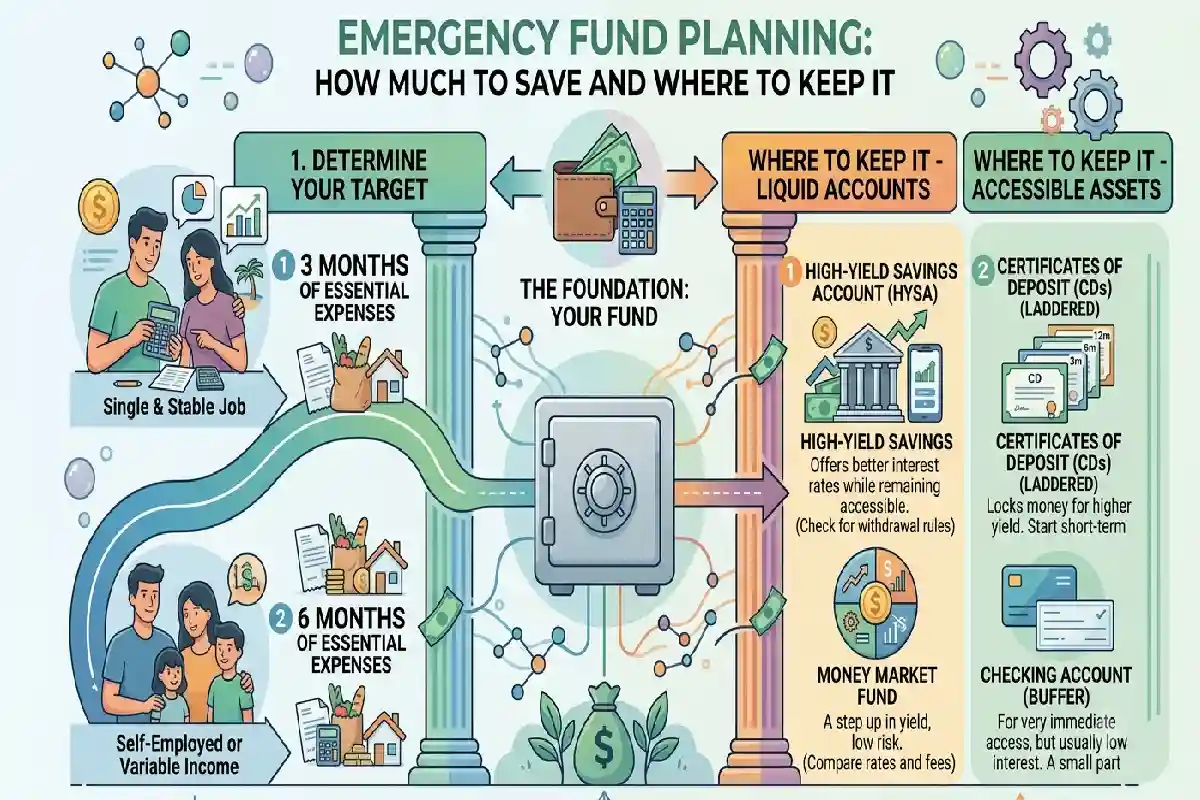
How Much to Save: The 3–6 Months Rule
Another frequent recommendation on how much money to put aside for an emergency fund is three to six months’ worth of living expenses.
Notice the word necessary. You do not have to take into account six months of ALL of your living expenses. Calculate six months of the living expenses that you could NOT do without if your paycheck somehow went dry. These would include:
- Rent or home loan payments
- Groceries
- Utilities
- Insurance premiums
- Transportation
- Essential medications and healthcare costs
- Minimum debt payments
- Childcare or other necessary family expenses
Example Emergency Fund Calculation
Let’s assume your necessities each month would require the following amounts of money:
| Expense | Monthly Amount |
| Rent | ₹20,000 |
| Groceries | ₹8,000 |
| Utilities | ₹4,000 |
| Transportation | ₹4,000 |
| Insurance | ₹2,000 |
| Minimum debt payments | ₹2,000 |
| Total essential expenses | ₹40,000 |
Your target would be:
| Savings Goal | Calculation | Target |
| 3 months | ₹40,000 × 3 | ₹1,20,000 |
| 6 months | ₹40,000 × 6 | ₹2,40,000 |
| 9 months | ₹40,000 × 9 | ₹3,60,000 |
Should You Save 3 or 6 Months?
Three months’ worth of expenses may be a good initial benchmark, especially if you have stable job security and predictable spending patterns. Six months or more may be advisable if your income sources are unreliable, job replacement is potentially time-consuming, or if you carry significant family obligations. Self-employed people, contract workers, entrepreneurs, and single-income households probably will require a larger fund. The goal of six months need not be intimidating: some emergency savings is always better than zero emergency savings.
Where to Keep Your Emergency Fund
An emergency fund has a purpose different from long-term investment vehicles, where safety, accessibility, and liquidity are favored over yield.
You don’t want to have to realize your emergency fund is locked in at a time of immediate need.
Common Places to Keep Emergency Savings
| Option | Accessibility | Risk | Suitable For |
| Savings account | Very high | Low | Core emergency savings |
| High-interest savings account | Very high | Low | Accessible savings with potentially better interest |
| Short-term fixed/term deposit | Moderate to high | Low | Part of a larger emergency fund |
| Money market-type cash vehicle | Varies | Low to moderate | People seeking liquidity and diversification |
| Stocks/equity funds | High in theory, but value fluctuates | High | Generally unsuitable for core emergency savings |
| Long-term investments | Often accessible but may require selling | Varies | Not ideal for immediate emergencies |
The type of products available and the terms of deposit protection vary by country – make sure you find out what’s relevant to you in your home country.
Keep Your Emergency Fund Separate
Think of having a separate savings account specifically for emergencies, instead of having the emergency funds in the same account as your spending money. It sets up a mental barrier between the funds you’re supposed to dip into and those that you shouldn’t. If your emergency fund is significant, you may want to also have it split between ready and available savings and readily available, relatively low-risk funds.
Building an Emergency Fund Fast
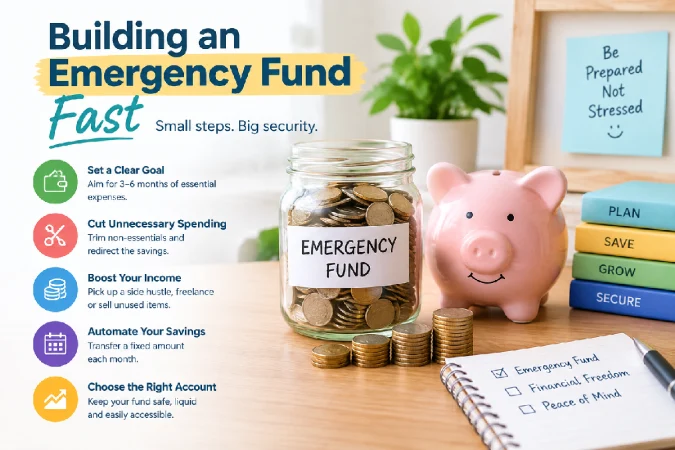
You might feel a bit daunted by all the months to add expenses, but especially as the total is zero. It’s not the large total, but it has to be built up with smaller targets to aim for.
Start With a Mini Emergency Fund
Your first target amount might be a modest figure, for a common emergency expenditure:
For Example:
₹10,000 → ₹25,000 → ₹50,000 → 1 month of expenses → 3 months → 6 months
Every milestone you hit brings extra padding for when the unexpected occurs.
Automate Your Savings
Schedule an automatic transfer of money to an emergency account soon after your next paycheck is received (or on any other regular pay cycle) Instead of saving what’s left over at the end of the month (there might not be anything left over), designate emergency savings as a planned expense.
Find Extra Money in Your Budget
Find some expenses that can be cut back in the short term.
| Strategy | Example |
| Reduce subscriptions | Cancel services you rarely use |
| Cook more meals at home | Reduce restaurant and delivery spending |
| Review insurance | Compare coverage and premiums |
| Limit impulse purchases | Use a waiting period before nonessential purchases |
| Sell unused items | Convert unused possessions into cash |
| Save windfalls | Direct bonuses, gifts, or refunds toward your fund |
| Increase income | Freelance, take extra shifts, or pursue temporary work |
And you really shouldn’t get rid of everything that’s fun to spend on. Most sustainable savings strategies are more easily maintained than excessively stingy ones.
Use a Simple Savings Formula
Imagine that you wish to make an emergency fund of Rs 1,20,000 within the next 12 months.
₹1,20,000 ÷ 12 = ₹10,000 per month
If ₹10,000 isn’t realistic, extend the timeline.
For example:
₹1,20,000 ÷ 18 = about ₹6,667 per month
The goal is consistency, not perfection.
When to Use Your Emergency Fund
Remember to only touch your emergency fund for necessary and out-of-the-ordinary expenses-especially when the costs are hefty! Do not treat it like an extension of your checking account for nonessential purchases and leisure activities.
Good Reasons to Use It
Examples include:
- Sudden job loss
- Urgent medical expenses
- Essential home repairs
- Necessary vehicle repairs
- Emergency travel because of a family situation
- Unexpected essential bills
- Necessary replacement of an important household item
A useful test is to ask:
“Is this expense unexpected, necessary, and difficult to cover with my normal monthly cash flow?”
If that answer is yes, your emergency fund is likely adequate.
What Usually Isn’t an Emergency?
| Expense | Emergency Fund? | Better Approach |
| Planned vacation | No | Travel savings |
| New smartphone because of an upgrade | No | Regular savings |
| Holiday shopping | No | Seasonal budget |
| Restaurant spending | No | Monthly spending budget |
| Planned home renovation | No | Sinking fund |
| Unexpected medical bill | Usually yes | Emergency savings |
| Essential car repair | Usually yes | Emergency savings |
| Sudden loss of income | Yes | Emergency savings |
Rebuild After Using It
“It’s not an admission that your savings have failed. That’s what it’s for! Just focus on getting that emergency fund back up. Temporarily putting some extra spending money toward it will sort that out.”
A Simple Emergency Fund Planning Strategy
If you don’t know where to start, the next five steps should assist you.
Here’s another version for a slightly different feel:
- Identify how much you absolutely need in a month to survive.
- Set a preliminary emergency savings goal.
- Work toward a goal of three months’ worth of basic expenses.
- If necessary due to your specific situation, build toward a savings goal of six months.
- Remember to make the money accessible for use only in emergencies.
Emergency Fund Checklist
| Task | Completed? |
| Calculate essential monthly expenses | ☐ |
| Set your first savings target | ☐ |
| Open or designate a separate savings account | ☐ |
| Automate monthly contributions | ☐ |
| Review your progress every month | ☐ |
| Increase contributions when income rises | ☐ |
| Rebuild the fund after withdrawals | ☐ |
| Reassess your target after major life changes | ☐ |
Final Thoughts
Planning for an emergency fund is not an act of psychic precognition about when things are going to fall apart. Rather, it is creating sufficient financial flexibility so that when unexpected issues arise, they aren’t automatically a financial disaster. Begin with what’s realistic to save in the short term.
Make up a little safety net: Aim for a fund sufficient to cover a minimum of 3 months’ living expenses and then consider if 6 months’ worth, or more, is appropriate for your life circumstances. Your emergency cash should be safe and accessible and removed from any funds that you use for normal expenses or to invest for the long term. An appropriate emergency fund can provide something intangible but truly precious: financial breathing room during the challenging times of life.