

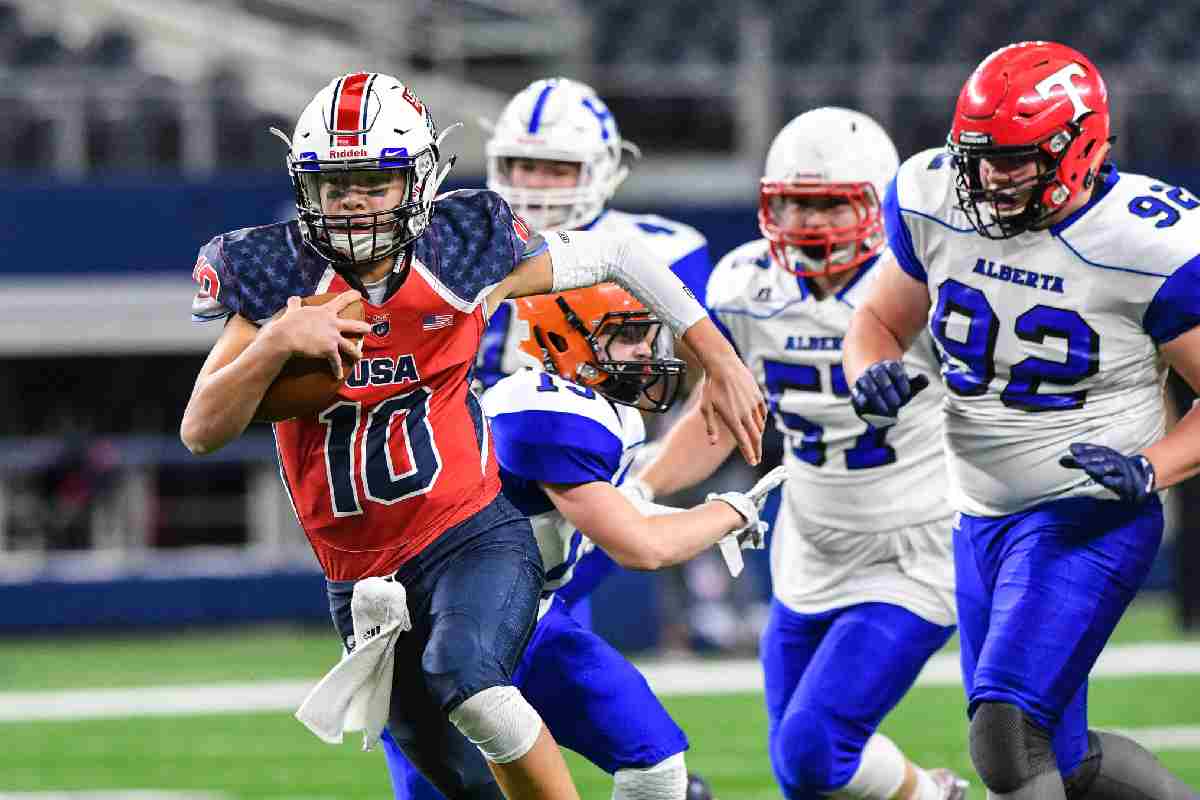
American Football Team vs Canadian Football Team Lineups
American Football Team vs Canadian Football Team Lineups
At first glance, an American NFL team and a Canadian CFL team might look identical. Helmets, pigskins, and end zones are all there. But if you look at the team sheet—the lineup—you immediately spot a crucial difference: 12 men on the field for Canada, 11 for the U.S. This isn’t just a quirk; it’s the tip of the iceberg in a fundamental philosophical divide that shapes every play, every roster, and every game strategy.
This guide will break down the “A-N Football Team vs C-N Football Team” lineups from the ground up, explaining not just how many players, but who they are, why the systems differ, and how these rules create two distinct, thrilling versions of football.
The Core Difference: Roster and Active Player Rules
| Feature | American Football (NFL) | Canadian Football (CFL) |
|---|---|---|
| Players on Field | 11 | 12 |
| Total Roster Size | 53 players | 45 players (plus a practice roster) |
| Game-Day Active | 48 players (from the 53) | 44 players (all can play) |
| Import & National Players | No citizenship quotas | Ratio: 21 National (Canadian), 20 American (Import), 3 Global |
The Key Insight: While the CFL has fewer total roster spots, it must carefully manage a national ratio (often called the “Canadian content” rule). This ensures a majority of starters in key positions are Canadian, profoundly impacting roster construction and salary cap strategy. The NFL has no such rules, focusing purely on talent acquisition.
Breaking Down the Lineup: Positions and Roles
The extra player in the CFL isn’t just an extra body; it’s strategically placed.
-
The 12th Man in the CFL: Typically, this extra player is used on offense. You’ll often see an additional slotback (a hybrid receiver/running back) or an extra offensive lineman. This aligns with the CFL’s pass-heavy, wide-open style of play.
-
Positional Names & Roles: While core positions (QB, RB, WR, LB, DB) are similar, nuances exist.
-
Defensive Line: In the CFL, the “rush ends” are often in a wider alignment due to the wider field.
-
Backfield: CFL defensive backs must cover the extra receiver and the vast width of the field, demanding exceptional speed and spatial awareness.
-
Special Teams: With only 3 downs to gain 10 yards (vs. the NFL’s 4), punting is more frequent, making special teams units even more critical in the CFL.
-
How Rules Dictate the Lineup and Strategy
The lineup differences are a direct result of the rulebook:
-
The Field: The CFL field is 110 yards long and 65 yards wide (vs. NFL’s 100 yds x 53.3 yds). More space + 12 players = a game tailored for speed, passing, and open-field plays.
-
Three Downs vs. Four Downs: This is the single biggest strategic driver. With only 3 downs to gain 10 yards, CFL offenses cannot afford to waste a down on a short run. This necessitates a lineup with more receivers and pass-blockers, influencing the entire offensive roster construction.
-
The “Waggle” (Pre-Snap Motion): In the CFL, offensive backs can be in motion toward the line of scrimmage before the snap. This allows the extra slotback to gain a full-speed head start, making the passing game even more dynamic.
Business of the Lineup: Roster Construction Philosophy
From a business and management perspective (key for BusinessesField.com), building these two types of teams involves different models:
-
NFL Model: With a larger roster and no nationality rules, the focus is on deep specialization and managing a massive salary cap. Teams have dedicated players for nearly every situation.
-
CFL Model: With a smaller roster and strict ratio rules, the focus is on versatility and value management. A player who can play multiple positions (especially a “National” who can start) is incredibly valuable. General Managers must be adept at finding talent within a constrained framework, making scouting and development crucial.
Frequently Asked Questions (FAQ)
Q: Why does the CFL have 12 players?
A: It’s a historical tradition that evolved alongside the larger field and the 3-down system. The extra player facilitates the wide-open, passing-oriented style that defines Canadian football.
Q: Can an NFL player easily play in the CFL, or vice versa?
A: While the skills are transferable, the adjustment is significant. An NFL linebacker must learn to cover more space; a CFL quarterback is accustomed to a faster-paced, pass-first attack. The different roster rules also mean many players’ contracts are dependent on their citizenship status in Canada.
Q: Which league has “better” athletes?
A: It’s a debate of specialization vs. adaptability. The NFL has greater size, depth, and top-end specialization due to its vast resources. The CFL, with its wider field and motion rules, often features athletes with exceptional speed and spatial awareness. They are different games demanding different athletic peaks.
Conclusion
Comparing an “A-N football team vs C-N football team” lineup reveals more than a headcount. It reveals two distinct strategic blueprints. The NFL’s 11-man, 4-down game is a battle of intricate set plays and physical dominance. The CFL’s 12-man, 3-down game is a ballet of motion, space, and quarterback daring.
Understanding these lineup differences is the key to appreciating the unique strategic depth and business challenges of each great North American football league.