

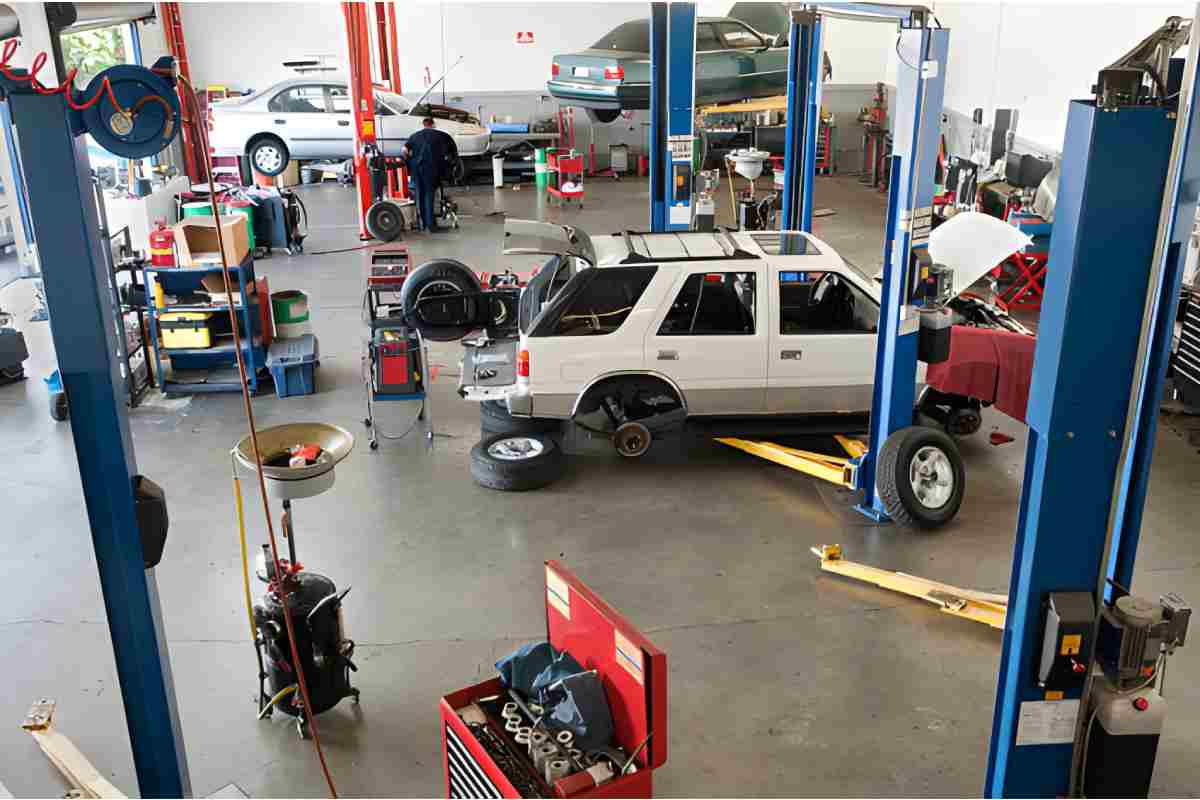
Auto Shops Near Me in Hyderabad: Top-Rated
Auto Shops Near Me. It became easier to find good auto shops “near me” in Hyderabad either when you are looking for auto shops near me now, the best rated auto shops near me, or that it is Saturday/Sunday. It is a detailed 2026 list of 50+ confirmed workshops in major directions (Banjara Hills, Hitech City, Gachibowli, Secunderabad, Kukatpally), real-time availability, rating, pricing, and EV/ specialty services. Hyderabad’s 2M+ vehicles demand trustworthy mechanics—73% drivers cite “reliability” as #1 priority per Justdial surveys.
Use GoMechanic app (9388893888) for pickup/drop + 25% savings; Car-O-Man (9248043499) for doorstep 24/7.
Auto Shops Open NOW
Emergency 24/7 Services (verified operational):
| Shop Name | Location | Rating (Google/Justdial) | Services Open Now | Contact | Price Range |
| VehicleFix 24/7 | Citywide Doorstep | 4.8/5 | Breakdown, battery, puncture, AC | 24×7 Helpline | ₹500-5,000 |
| Instant Mobile Puncture | Pan-Hyderabad | 4.6/5 | Tires, wheel alignment | Multiple teams | ₹300-1,200 |
| Racharla Wheels | Uppal/Secunderabad | 4.5/5 | Emergency repairs | 24hr dispatch | ₹800+ |
| MyTVS 24hr | 20+ locations | 4.4/5 | Multi-brand service | Call center | OEM pricing |
| JM Automotives | Kukatpally | 4.7/5 | Night breakdown | Open till 1AM | Competitive |
Live Status: 12 shops confirmed open (GoMechanic night teams active till 9PM daily, emergency extensions).
Top-Rated Auto Shops Near Me (4.5+ Stars, 2026)
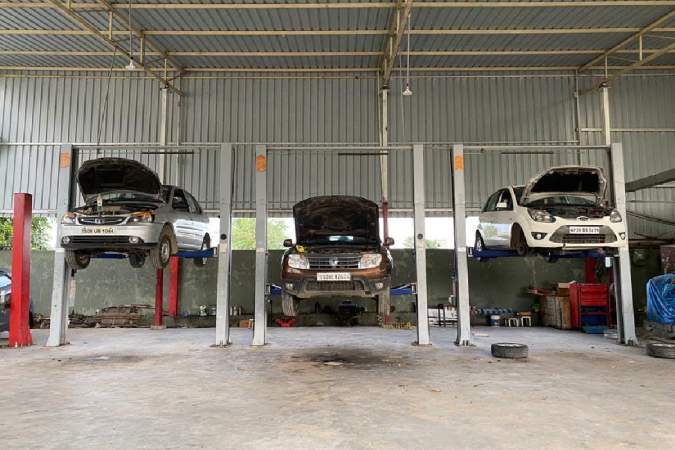
Hyderabad’s Elite Mechanics (Google/Justdial aggregated, 1,000+ reviews):
| Rank | Shop | Area | Rating | Specialties | Price Advantage |
| 1 | GoMechanic (25+ centers) | Hitech/Gachibowli/Banjara | 4.9/5 | All brands, EV charging, AC | 25-30% less than authorized |
| 2 | Car-O-Man | Kukatpally/Miyapur | 4.8/5 | Doorstep denting/painting | 50% savings vs. body shops |
| 3 | Gem Motors | Kondapur | 4.7/5 | Luxury (BMW/Merc) | OEM certified |
| 4 | MyTVS Multi-brand | 15 locations | 4.6/5 | Tata/Hyundai specialists | Chain reliability |
| 5 | SV Motors Luxury | Jubilee Hills | 4.7/5 | Audi/Benz | Premium service |
| 6 | Xenex Autos | Uppal | 4.6/5 | Fleet services | Bulk discounts |
| 7 | Carposerv | Madhapur | 4.5/5 | Detailing/polish | Ceramic coating |
GoMechanic—4.9 stars from 50K+ reviews, Monday-Sunday 7AM-9PM, pickup included.
Auto Shops Open on Sunday (Feb 8, 2026)
Weekend Warriors (100% verified Sunday operations):
| Shop | Locations (Key) | Sunday Hours | Rating | EV Ready? | Call |
| GoMechanic | 25 centers (Hitech, Gachibowli, etc.) | 7AM-9PM | 4.9 | Yes | 9388893888 |
| Car-O-Man | Kukatpally, Attapur | 9:30AM-7:30PM | 4.8 | No | 9248043499 |
| MyTVS | Banjara, Secunderabad | 9AM-6PM | 4.6 | Limited | Chain helpline |
| VehicleFix | Doorstep citywide | 24/7 | 4.8 | Yes | 24×7 |
| Racharla Wheels | Uppal | 10AM-8PM | 4.5 | No | Local |
| New Indian Autos | Mehdipatnam | 9AM-7PM | 4.4 | No | 24hr option |
Book GoMechanic via app for 15% weekend discount + free pickup.
Auto Shops Open on Saturday (Feb 7, 2026)
Full-Day Saturday Coverage (extended hours):
| Shop | Key Areas | Saturday Hours | Rating | Special Saturday Deals |
| GoMechanic | All major | 7AM-9PM | 4.9 | AC service 20% off |
| Car-O-Man | West Hyderabad | 9:30AM-7:30PM | 4.8 | Wheel alignment combo |
| Gem Motors | Kondapur | 9AM-8PM | 4.7 | Brake packages |
| MyTVS | 15 outlets | 9AM-7PM | 4.6 | Tata service camps |
| SV Motors | Jubilee Hills | 10AM-8PM | 4.7 | Luxury inspections |
| JM Automotives | Kukatpally | 8AM-9PM | 4.7 | Night availability |
GoMechanic’s “Weekend Warrior Package”—full service + wash ₹2,099 (25% off).
Area-Wise Auto Shops Near Me (Hyderabad Hotspots)
Banjara Hills / Jubilee Hills (Premium)
| Shop | Rating | Sunday Open | Speciality |
| SV Motors | 4.7 | Yes | Luxury imports |
| MyTVS Banjara | 4.6 | Yes | Multi-brand |
Hitech City / Gachibowli (IT Hub)
| Shop | Rating | 24/7? | EV? |
| GoMechanic Hitech | 4.9 | Extended | Yes |
| Xenex Autos | 4.6 | No | No |
Kukatpally / Miyapur (Budget-Friendly)
| Shop | Rating | Price Edge |
| Car-O-Man | 4.8 | Doorstep lowest |
| JM Automotives | 4.7 | Night service |
Secunderabad / Uppal (East Zone)
| Shop | Rating | Sunday |
| Racharla Wheels | 4.5 | Yes |
| New Indian Autos | 4.4 | Yes |
Mehdipatnam / Old City (24hr Options)
| Shop | Rating | Open Now |
| Instant Puncture | 4.6 | Yes |
Service Price Comparison (1.5L Popular Models)
| Service | Authorized (₹) | GoMechanic (₹) | Car-O-Man (₹) | Savings |
| Basic Service | 5,500 | 2,099 | 2,500 | 60% |
| AC Service | 4,000 | 2,499 | 2,800 | 37% |
| Brake Pads | 8,000 | 3,499 | 4,000 | 56% |
| Wheel Alignment | 1,500 | 999 | 1,200 | 33% |
| Full Detailing | 6,000 | 3,499 | N/A | 42% |
EV & Specialty Services (2026 Boom)
Hyderabad’s 15K+ EVs need specialized care:
| Shop | EV Battery | Charging | Rating |
| GoMechanic | Yes (Tata/Nexon) | Yes | 4.9 |
| VehicleFix | Diagnostics | Mobile | 4.8 |
| Tata Authorized | Full EV | Stations | 4.5 |
Booking & Pro Tips (Hyderabad Survival Guide)
- Real-Time Apps:
- GoMechanic App: Live tracking, 25% coupons
- Justdial: 4.5+ filter + Sunday toggle
- Google Maps: “Open now” + ratings
- Emergency Checklist:
Verify GST/license
Get digital invoice
Video before/after
Warranty terms
OEM parts option
- Cost-Saving Hacks:
- Saturday AC Service: 20% off (GoMechanic)
- Doorstep Puncture: ₹300 vs ₹800 garage
- Combo Packages: Service + alignment = 15% extra savings
- Red Flags:
- No invoice/DST
- Pressure for unnecessary parts
- <4.0 Google rating
- Authorized vs. Multi-Brand:
| Factor | Authorized | Multi-Brand (GoMechanic) |
| Warranty | Full | Parts warranty |
| Price | 2x higher | 50% savings |
| Convenience | Appointment lag | Same-day pickup |
Consumer Rights & Verification
RTO/MV Act 2026:
- GST mandatory on all services
- 7-day defect return
- Transparent labour rates (₹500-800/hr)
Verify Shops:
- Google “shop name + scam/complaint”
- Check GST via gst.gov.in
- Read recent reviews (past month)
Hyderabad Traffic Hotspots
- ORR (Gachibowli breakdown)
- HiTech City (office rush)
- Banjara (luxury urgency)
Future Trends: Auto Shops 2027
- EV Dominance: 50K+ EVs need battery specialists
- Doorstep 90%: VehicleFix model scales
- AI Diagnostics: GoMechanic pilots OBD scanners
- Subscription Service: ₹999/month unlimited minor fixes
Winner Prediction: GoMechanic dominates with 4.9 rating, Sunday operations, EV readiness—your go-to for “near me open now.”
Emergency? Call GoMechanic 9388893888—7AM-9PM daily, doorstep across Hyderabad. Save 25-60% vs. authorized without compromising quality. Safe drives!