

Ecommerce Startup Costs: How Much Do You Need?
Last Updated: September 9, 2026
Ecommerce Startup Costs. Compared to launching a traditional brick-and-mortar shop, a startup ecommerce company may be less expensive, but it still needs to be financed properly. Your initial expense budget might involve building a website, purchasing inventory, paying suppliers, set aside for marketing, packaging, processing and sending out orders, registering of your company, purchasing software and system, and other operational costs.
The amount you will need will ultimately depend on your business model. Dropshipping for example can be started with a relatively small budget but if you want to build a private-label or inventory ecommerce business then you will probably need far more.
Get to grips with what the major costs will be up front so that you can steer clear of cash-flow problems and put together a reasonable ecommerce budget.
I can tell you only about the expenses from my experience of running an eCommerce business providing reading practice. There are also a number of factors involved: I will briefly list the costs, with reasons why they exist.
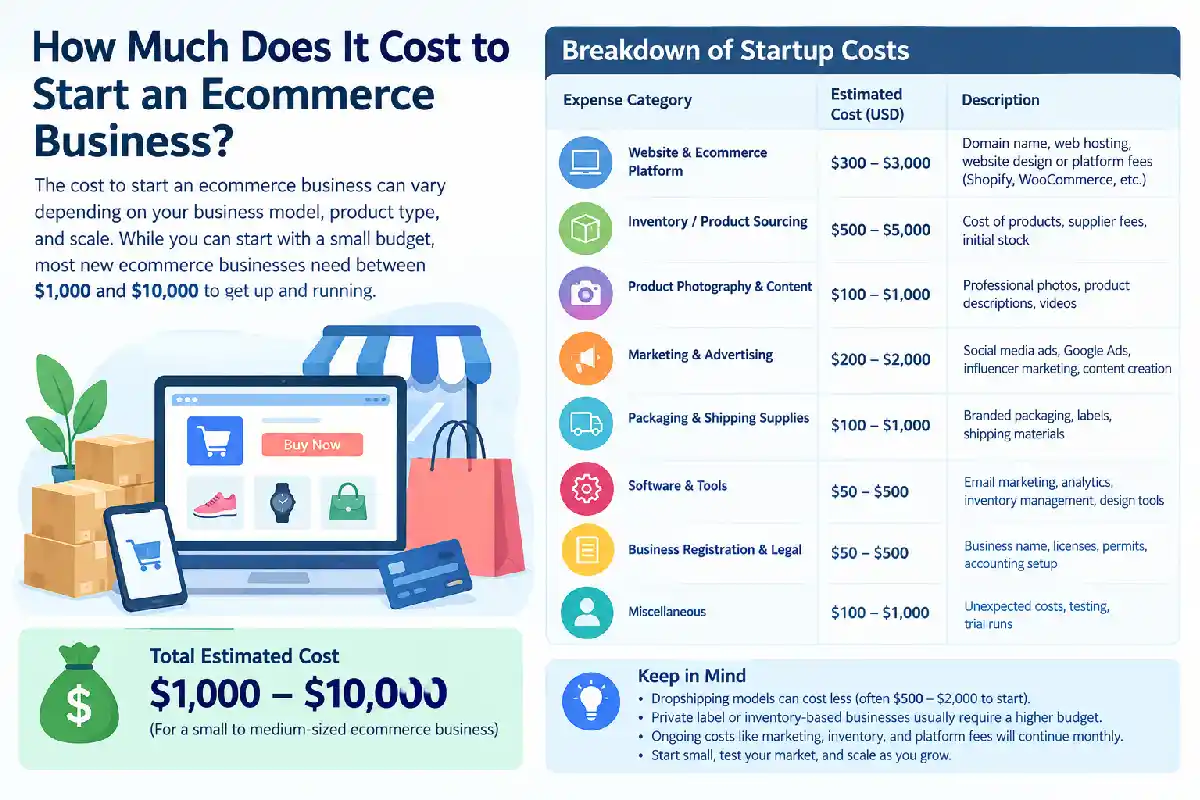
No one-size-fits-all startup cost exists for an e-commerce company. A small online retailer can start with several hundred dollars. A business that is buying inventory, producing custom goods, and heavily investing in marketing could be several thousand dollars or more.
How Much Does It Cost to Start an Ecommerce Business?
There is no single startup cost that applies to every ecommerce business. A small online store can potentially launch with a few hundred dollars, while a business purchasing inventory, developing custom products, and investing heavily in marketing may require several thousand dollars or more.
Your initial costs generally fall into five categories:
- Website and ecommerce platform
- Product inventory and suppliers
- Marketing and advertising
- Packaging and shipping
- Business and operational expenses
A lean business could first only launch a tiny product catalog, a basic ecommerce website, a natural referencing and a limited stocks. Once sales will boost, then it can put back the benefits into advertisements, additional products, IT, stocks…
The most essential rule is not to use up all your cash before earning it. Maintain some working capital to cover unforeseen expenses and future endeavors.
Ecommerce Website and Platform Costs
Your ecommerce website is one of the most important investments because it serves as your digital storefront.
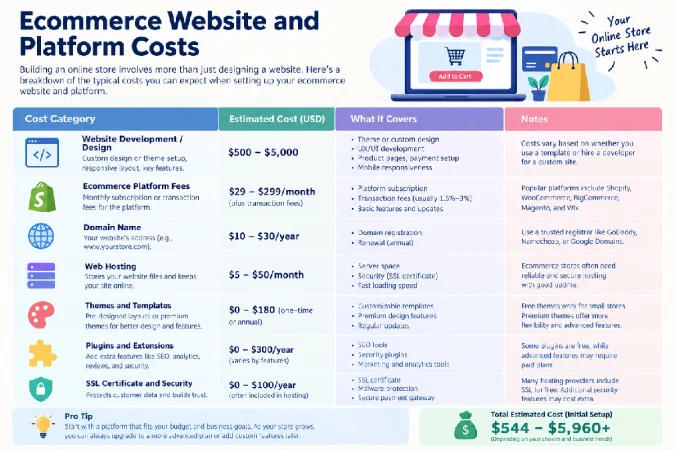
The basic website expenses can include:
- Domain registration
- Ecommerce platform subscription
- Website hosting, if required
- Website theme or template
- Payment processing fees
- Apps and plugins
- Professional design or development
- Security and maintenance
Platforms like Shopify, WooCommerce, and other ecommerce tools have varying pricing and options. A beginner is often able to get started with a professional template rather than paying for a fully custom website.
Generally, a simple store can be started with minimal expense, while a more customized website with high-level functionality can be quite expensive.
Include transaction and payment-processing costs, which are usually a percentage of each sale. These charges may have a more dramatic impact on profits as sales numbers build up.
Compare platform features and fees prior to making a selection monthly fees, transaction processing charges, payment options, customizing, inventory management, and integrations, tiag, number or customers on the site.
Product Inventory and Supplier Costs
Inventory is often one of the largest startup expenses for ecommerce businesses that purchase products in advance.
Your inventory budget may include:
- Initial product purchases
- Minimum order quantities
- Samples
- Supplier setup costs
- Import duties and taxes
- Freight and transportation
- Product customization
- Packaging
- Storage
Buy too much before knowing if anyone is really interested. Buying only a small initial order or testing the market will help protect you from financial disaster if no one is interested.
However, if you make it yourself or use private label, you might need to pay for product development, molds, packaging design, labelling and quality testing.
Dropshiping saving the purchase of the stock because most are bought from suppliers when an order has been made. But it is not free and there is still payments to be made for supplier fees, product, shipping, returned goods, payment companies and marketing.
While estimating inventory needs, do not only take into account the cost of the product from your supplier. Compute the landed cost, the total cost of receiving and preparing the product for sale.
For example:
Product Cost + Shipping + Duties + Packaging + Other Fees = Landed Cost
Understanding landed cost gives you a much more accurate picture of your potential profit.
Ecommerce Marketing and Advertising Costs
Building an ecommerce website does not automatically generate customers. Marketing is therefore one of the most important ongoing expenses.
Common ecommerce marketing costs include:
- Search engine optimization (SEO)
- Social media marketing
- Paid search advertising
- Social media advertising
- Influencer marketing
- Email marketing
- Content creation
- Product photography and video
- Affiliate marketing
- Promotional discounts
New businesses should avoid assuming that every marketing channel needs to be used immediately. Rather you want to find out where your targeted potential customers are. You then want to test out one or two channels.
For instance, a business selling attractive products may advantage from content on social media and collaborative marketing with bloggers and specialists, while a business selling products people look for actively may advantage from SEO and search advts.
Begin with a limited marketing budget and measure key indicators including cac, conversion rate, aov and roas.
If it takes more money to get a customer than you make on his purchase, your marketing strategies need reevaluation.
Hidden Ecommerce Startup Costs to Consider
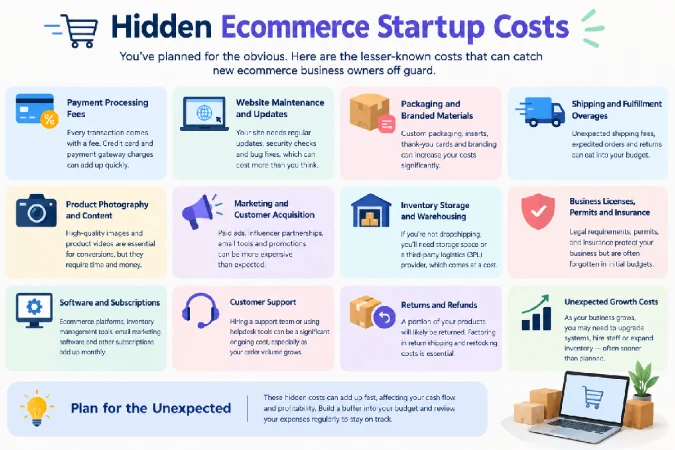
Certain expenses associated with ecommerce are not always apparent as we construct a startup budget. These ‘rabbit holes’, as they are known, have the potential to wreak havoc with cash-flow if you are not prepared.
Returns and Refunds
Tackle returns. Customers have a variety of reasons for returning your goods, not least because it is defective, the wrong size, or the packaging is damaged, or because the product isn‘t what they thought it would be. Include return postage costs with refunds and replacement items.
Packaging
Boxes, mailers, labels, tape, inserts and packaging materials can get expensive. A higher end packaging also can boost the image of your brand so be sure to add that cost into your overall product cost considerations.
Shipping
Shipping costs can dramatically affect margins. Consider domestic shipping, international shipping, expedited delivery, failed deliveries, and potentially rising carrier charges.
Software and Subscriptions
Ecommerce businesses often rely on multiple tools for email marketing, accounting, customer service, inventory management, analytics, reviews, and automation. Individual subscriptions may seem inexpensive, but together they can become a significant monthly expense.
Legal and Business Expenses
Depending on your location and business structure, you may need to budget for business registration, licenses, accounting, contracts, insurance, trademarks, and professional services.
Taxes
Taxes can significantly affect your actual profits. Keep accurate records of revenue and expenses and understand the tax obligations that apply to your business.
Product Photography and Content
High-quality images, videos, descriptions, and promotional graphics can improve conversion rates. If you don’t create them yourself, professional content production becomes another expense.
How to Create an Ecommerce Startup Budget
A practical ecommerce budget should separate one-time startup costs from recurring operating costs.
One-Time Costs
These might include:
- Business registration
- Domain purchase
- Website setup
- Initial inventory
- Product samples
- Branding
- Photography
- Initial packaging
- Website customization
Recurring Costs
These may include:
- Ecommerce platform fees
- Software subscriptions
- Advertising
- Inventory replenishment
- Payment processing
- Shipping
- Storage
- Accounting
- Customer support
You should also create an emergency reserve. Ideally, don’t allocate every dollar of available capital to your initial launch. Having additional working capital gives you flexibility when sales are slower than expected or unexpected expenses occur.
Final Thoughts
How much does it cost to start up an ecommerce business? The answer depends on what you intend to sell, how you want to run your business, your inventory management, technology needs, and marketing channels. A lean startup store can be launched with a relatively small budget, but a more inventory-heavy or private-label type business is likely to have a much higher capital investment.
The solution is not just finding the lowest cost way to start. As he explains, “should be constructing a startup budget that maximizes the balance of low-cost startup, a great product and great customer experience with minimum scaled growth.”
Before taking off, determine how much your small business startup will cost, then know your expected monthly costs, bottom-line product margins, advertising dollars needed to land sales, and how many sales you‘ll need to break even. With this practical approach to your finances, you can determine how much capital you actually need and avoid many of the cash-flow problems that cause new ecommerce businesses to struggle.