

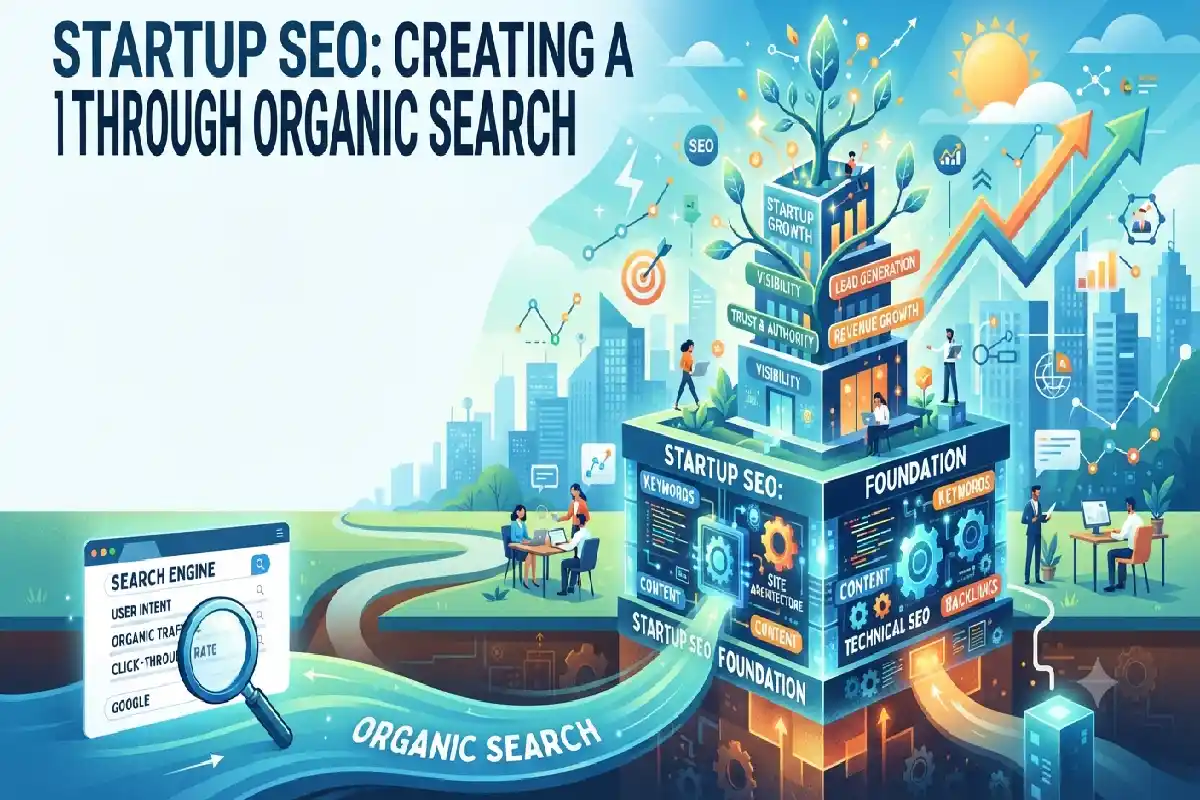
Startup SEO: Creating a Foundation Through Organic Search
Last Updated: September 26, 2026
Search engine optimization, or “SEO” is a form of long-term marketing strategy designed to allow a start-up to have more visibility as users search for information, products or services online. While marketing campaigns that rely on advertising “cost money, and require constant investment in order to keep your site visible” organic search can continue to generate visitors long after optimization has taken place.
SEO can be highly valuable for startups and others because it effectively gives you self-sustaining discovery. But SEO for startups is much more than “what will I put into blog articles by including keywords”. Startup SEO involves: figuring out the problems your clients have, providing helpful content, making your site friendly to search engines, building an internal linking structure, earning relevant mentions and measuring how organic visits contribute to your bottom line.
Find Search Topics Linked to Customer Problems
The first step in startup SEO is identifying what potential customers search for.
Instead of beginning with a list of popular keywords, start with customer problems.

Ask:
- What problems does the target customer experience?
- What questions do they ask before buying?
- What solutions are they researching?
- What terminology do they use?
- What alternatives are they comparing?
- What information would help them make a decision?
For example, a startup selling project management software might target topics such as project planning, team collaboration, task management, workflow automation, and project management templates.
Use different types of search intent
Search intent describes what a person is trying to accomplish with a search.
Common categories include:
Informational intent: The user wants to learn something.
Examples:
- What is project management?
- How does inventory management work?
Commercial investigation: The user is researching potential solutions.
Examples:
- Best inventory software for small businesses
- Project management tools comparison
Transactional intent: The user is ready to take an action.
Examples:
- Buy accounting software
- Project management software pricing
Navigational intent: The user is looking for a particular website or brand.
A startup should build content for several stages of the customer journey rather than targeting only high-volume informational keywords.
Prioritise relevance over search volume
A keyword with thousands of searches is not automatically valuable.
A smaller topic that attracts people with a strong need for the startup’s solution may produce more business value.
Consider each topic based on:
- Customer relevance
- Search intent
- Business value
- Competition
- Ability to create a genuinely useful resource
- Potential to lead to a product or service
This helps startups avoid producing large quantities of traffic that have little connection to their target market.
Use customer language
Sales calls, support conversations, surveys, reviews, community discussions, and customer emails can reveal phrases customers actually use.
These phrases can provide useful ideas for:
- Blog topics
- FAQ pages
- Product pages
- Comparison pages
- Guides
- Landing pages
Customer language can also improve the clarity of website copy.
Map Keywords to Useful Pages and Articles
Once search topics have been identified, map them to specific pages.
Keyword mapping means deciding which page should target which primary topic.
A simple content map might look like this:
| Search Topic | Search Intent | Suggested Page |
| What is inventory management? | Informational | Educational article |
| Inventory management software | Commercial | Product category page |
| Best inventory software | Commercial | Comparison guide |
| Inventory software pricing | Transactional | Pricing page |
| How to manage inventory | Informational | Detailed guide |
This approach prevents multiple pages from competing unnecessarily for the same topic.
Create useful pillar pages
A pillar page provides comprehensive information about a broad topic.
For example, a startup selling financial software could create a guide covering small-business financial management.
Supporting articles could then address:
- Cash-flow forecasting
- Expense tracking
- Financial reporting
- Budgeting
- Financial ratios
These pages can be connected through internal links.
Prioritise pages that support the business
Not every keyword deserves an article.
A startup should consider creating:
- Product and service pages
- Category pages
- Use-case pages
- Comparison pages
- Educational guides
- Case studies
- Frequently asked questions
The content should have a clear purpose.
An article that attracts relevant visitors but gives them no logical next step may generate traffic without contributing to business growth.
Create content for people first
Good SEO content should answer the user’s question clearly and completely.
Avoid:
- Keyword stuffing
- Repetitive paragraphs
- Artificially long articles
- Unnecessary introductions
- Content created only to target search volume
Instead, organise content with useful headings, examples, tables, explanations, visuals, and practical next steps where appropriate.
Fix Essential Crawling and On-Page Issues
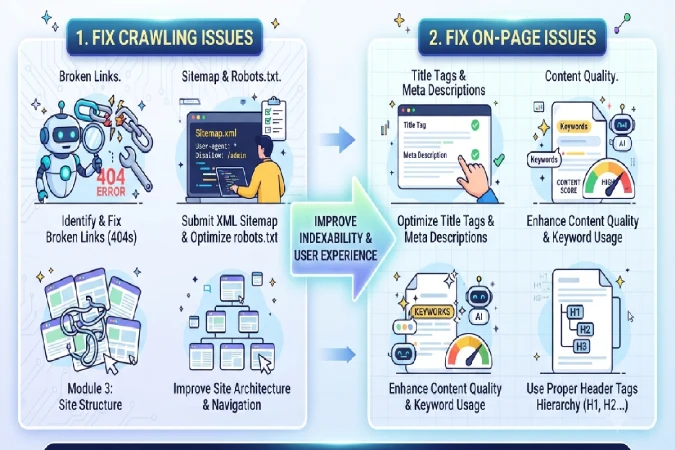
Search engines need to be able to discover, crawl, understand, and index a website’s important pages.
Technical SEO does not need to be excessively complicated at the beginning. Start with the fundamentals.
Make important pages crawlable
Check that important pages are not accidentally blocked from search engine crawlers.
Review:
- Robots.txt
- XML sitemap
- Noindex directives
- Canonical tags
- Redirects
- Broken links
- Duplicate pages
An XML sitemap can help search engines discover important URLs.
Improve website structure
A clear site structure helps both users and search engines understand how pages relate to each other.
For example:
Homepage → Product → Feature → Use case → Supporting guide
Keep important pages reasonably easy to reach from other relevant pages.
Optimise page titles and headings
Each important page should have a clear title that accurately describes its content.
Headings should create a logical hierarchy.
A typical structure might include:
H1: Main page topic
H2: Major sections
H3: Supporting points
Headings should help readers navigate the page rather than being used solely as keyword placements.
Improve page experience
Users should be able to access and interact with pages easily across devices.
Pay attention to:
- Mobile usability
- Page loading performance
- Readability
- Navigation
- Intrusive elements
- Image optimisation
- Secure HTTPS connections
A technically accessible website provides a stronger foundation for organic search growth.
Optimise important on-page elements
Relevant pages may benefit from clear:
- Page titles
- Meta descriptions
- Headings
- URLs
- Image alt text
- Internal links
- Structured content
SEO optimisation should remain natural. Search engines increasingly rely on context and page meaning rather than simple keyword repetition.
Build Relevant Internal Links and Earn Mentions
Internal links connect pages within your own website.
They help users discover related resources and provide search engines with additional context about the relationship between pages.
Create a logical internal linking system
Suppose a startup publishes an article about “How to Reduce Inventory Costs.”
That article could link to:
- Inventory management software
- Inventory forecasting guide
- Stock management checklist
- Product features
- Related case studies
Similarly, those pages can link back to the relevant guide.
Use descriptive anchor text where appropriate so readers understand what they will find after clicking.
Avoid excessive or artificial linking
Internal links should be useful to the reader.
Do not add dozens of links simply to manipulate rankings. Prioritise links that help users move naturally through related information.
Earn relevant external mentions
External websites can mention or link to your startup’s content for many legitimate reasons.
Useful approaches include:
- Publishing original research
- Creating useful industry resources
- Producing data-driven reports
- Contributing expert insights
- Developing free tools or templates
- Participating in relevant industry publications
- Building relationships with complementary businesses
The goal should be earning relevant attention rather than acquiring large numbers of unrelated links.
Focus on quality and relevance
A passing link from a well known industry publication may prove more significant than hundreds of meaningless links.
Do not employ approaches such as purchasing cheap links, manipulating link neighborhood, or linking to unrelated sites simply for optimization.
Build resources that are worth people‘s time to refer to.
Measure Search Visibility, Leads and Conversions
SEO should be a means to an end rather than the end itself. It is about achieving business goals.
While rankings are valuable diagnostic information, they are not, in and of themselves, an end.
Track organic search traffic
Monitor:
- Organic sessions
- Organic users
- Landing pages
- Search queries
- Geographic performance
- Device performance
Look for trends rather than focusing excessively on daily fluctuations.
Monitor search visibility
Useful SEO indicators can include:
- Search impressions
- Clicks
- Click-through rate
- Average search position
- Indexed pages
- Ranking changes
These metrics can show whether search visibility is improving.
Measure conversions
The most important question is whether organic visitors take meaningful actions.
Depending on the startup, conversions might include:
- Contact forms
- Product demonstrations
- Trial registrations
- Newsletter subscriptions
- Purchases
- Account registrations
- Consultation requests
For example, a page generating 1,000 visitors and five qualified leads may be less valuable than a page generating 200 visitors and 20 qualified leads.
Connect SEO to revenue where possible
If analytics and CRM systems are configured appropriately, startups can follow the customer journey from organic discovery to lead and eventually to revenue.
This provides a better understanding of which SEO topics are contributing to business growth.
Review content performance
Every few months, review important content.
Ask:
- Is the page still accurate?
- Has search intent changed?
- Are competitors providing better information?
- Are there missing sections?
- Are internal links still relevant?
- Is the page generating useful conversions?
Some pages may need updates rather than complete replacement.
Build an SEO Foundation That Compounds
Startup SEO works best when treated as an ongoing system rather than a one-time project. Begin with customer problems and search intent. Create valuable pages on relevant topics for the products offered by the startup and for its target audience. Make sure the search engines are able to crawl and understand those pages. Link together related pages internally and gain valuable external mentions by creating truly useful information. Then track not just visibility and traffic but also leads, customers, and conversions.
One of the biggest mistakes startups can do when it comes to SEO is treating it like a competition to write as many articles as possible. Fewer but more relevant and structured resources can become a better base than several hundred less valuable pages.
Over time, valuable content will drive search traffic, provide answers to customer questions, help to conduct sales conversations, and enhance the digital presence of the startup. Improving the connection between customer’s needs, website’s content, technical aspects, and results will be the key to building the organic search base for sustainable growth.
Conclusion
Startup SEO isn‘t about getting content up and running regardless of quality or targeting every popular keyword out there. Startup SEO is about creating a useful, clean website that matches customer problems with solutions, products and services. If you understand search intent and match your content to that intent you will be well on the way; if you cater for the way your website should be structured and interlink related pages you will be well on the way; if you provide high-quality information across your site then you‘ll be the way forward:
Measurement of SEO should be based on business results as well. Focus on what your customers and business require, strengthen the core technical components, produce valuable content and resources to promote and then analyze results. In the long-run, this is an effective way of establishing a more powerful organic presence that can achieve growth without unrelenting dependence on paid promotion.