

How to Lead High-Performing Teams in 2026 (Proven Playbook)
Last Updated: September 15, 2026
Forming a high performing team isn’t simply one of those exercise classes for Human Resources. Having an effective and high functioning team actually affects your company’s bottom-line. The outcome ultimately raises the bar on what the rest of your business can strive for in terms of performance, new ideas, and profitability as you continue to raise the standards of your company s overall reputation.
The following is a handy guidebook for leading high-achieving teams in modern times.
1. Set Crystal-Clear Outcomes
People‘s performance improves when they realize the importance of their work.
Focus on the outcomes that can be measured. Do not assign to people, the following outcomes.
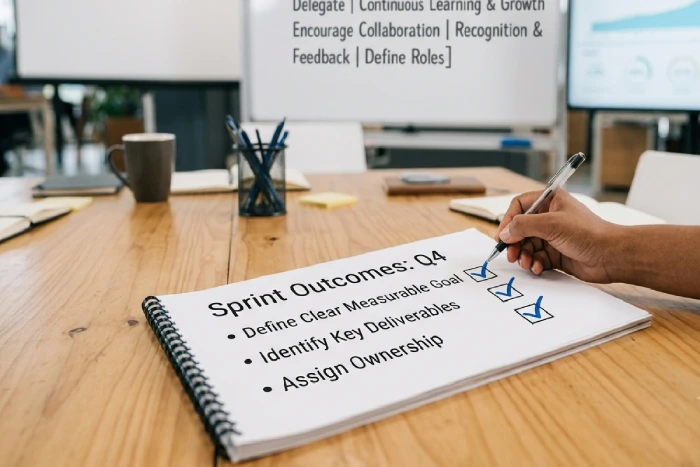
Example:
- Able to improve the number of traffic one has to the website.
- Increase organic traffic to Grow by 20% in Q4 and keep high conversion rate.
Working under clear expectations, teams own their role and responsibilities, spending less time in clarification and more time focused on deliverables.
2. Hire for Learning Ability
Technical skills are rapidly evolving. What remains is the key skill of being able to learn, adapt, learn how to solve problems.
Look for people who:
- Learn by yourself
- Keep feedback to be constructive.
- Adjust to shifting priorities
- Own up.
Skills are trainable, curiosity and accountability are more difficult to instill.
3. Use AI as a Team Multiplier
By 2026, AI has become another standard productivity tool available in most jobs.
Encourage your team to use AI for:
- Drafting documents
- Research
- Followed by the minutes of the meetings.
- Data analysis
- Generate ideas
- Automated support for frequent activities
4. Replace Micromanagement with Accountability
Top performers desire autonomy.
Rather than checking every step, agree on:
- Goals
- Deadlines
- Success metrics
- Check-in points
Concentrate on results rather than getting distracted with every step.
5. Build Psychological Safety
Teams are more effective when people can:
- Ask questions
- Making errors.
- Attempt to provide a constructive counter to the topic of debate.
- Make a suggestion or give advice
- Make sure you identify risks early.
By starting the conversation, you can help identify issues earlier and make more informed choices.
6. Keep Meetings Purposeful
Before scheduling a meeting, ask:
- Is this worth discussing?
- Is there an asynchronous way to deal with it?
- Is everyone‘s invited required?
When meetings are needed:
- Share an agenda first.
- Provide definitive solutions and follow-up to action items.
- Limit who is attending to those who must be there.
7. Make Feedback Continuous
Know not to hold on to your feedback for an entire year.
A simple framework:
- What worked?
- Any suggestions for improvement?
- What is the better method?
People learn more quickly from frequent, specific feedback.
8. Recognize Contributions
Recognition doesn‘t have to be money.
Effective recognition is:
- Specific
- Timely
- Genuine
- Elsewhere related to impact
For example:
Your redesign has significantly reduced the time-to-action, surpassing the 20% target, thus enabling customers to get to work quicker.
This would have the effect of reinforcing every behavior that you want to reoccur.
Team Building Strategies for Leading High-Performing Teams in 2026
High performing teams don‘t develop naturally they are created through specific leadership, effective communication and an environment of psychological safety. As work changes due to hybrid work and AI-supported cooperating, team building approaches should focus on developing bonds while maximizing performance:
1. Establish a Shared Purpose
People become more effective when they know how they fit into the overall picture.
Action steps:
- Clearly state the objectives of the team.
- Link your individual accountabilities to business results.
- Set and monitor goals to regularly communicate progress toward them.
2. Build Trust Through Transparency
In every team, trust is the foundation.
How to strengthen trust:
- Make significant news en mass.
- Justify any important decisions you have taken.
- Promote open dialogue and attentive listening.
- Follow through.
3. Encourage Open Communication
Generate an atmosphere in which people are comfortable offering their ideas, voice their concerns and provide feedback.
Best practices:
- Have frequent on-to-one conversations.
- Use collaborative tools for knowledge exchange.
- Allow each team member to participate.
- Deal with conflict quickly and positively.
4. Leverage Individual Strengths
All employees possess diverse abilities and viewpoints, they believe the employing country has the capability.
Strategies:
- Identify where the coaches are strongest and where they need further development.
- By setting tasks to be done which are within their power and interest.
- Foster peer mentoring and knowledge exchange.
- Rotate responsibilities so that you develop a broad range of experience.
5. Foster Collaboration, Not Competition
Healthy collaboration generally beats internal competition over the long term.
Ideas include:
- Cross-functional projects.
- Pair working or peer reviews.
- Shared team goals
- Groups working together to solve a problem
Team Performance Metrics
Focus on productivity and quality along with collaboration and employee happiness. Overemphasising output can lead to perverse incentives. Use a combination of lagging and leading indicators.
Key Metrics to Monitor
| Metric | What It Measures |
| Goal Achievement | Percentage of objectives or OKRs completed |
| Productivity | Tasks, projects, or deliverables completed on time |
| Quality | Error rates, rework, customer complaints, defects |
| Customer Satisfaction | CSAT, NPS, client feedback |
| Collaboration | Cross-functional participation and knowledge sharing |
| Employee Engagement | Survey scores, participation, morale |
| Innovation | New ideas implemented and process improvements |
| Retention | Employee turnover and retention rates |
Best practice: the best approach is to check the performance on a monthly basis. It is more valid to compare on a trend basis rather than on a data point.
Team Motivation Techniques
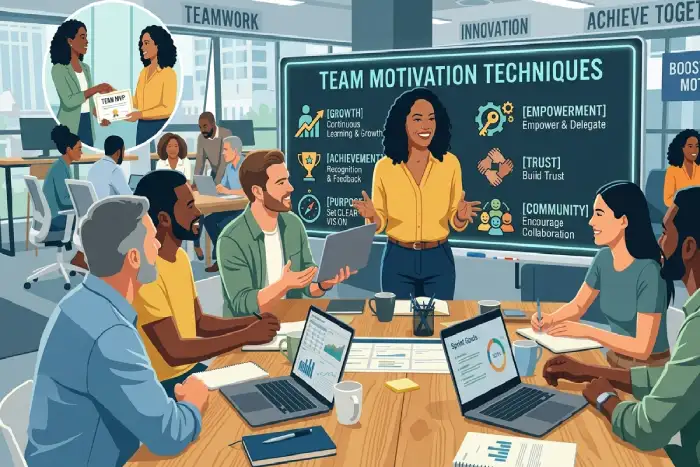
Engagement is driven by motivation through meaningful work, recognition, development and trust, not just money.
Effective Motivation Strategies
- Establish attainable yet demanding goals.
- Recognize accomplishments quickly and specifically.
- Offer chances for learning (training) and career advancement.
- Allow your people to have responsibility over how they do their work.
- If you do have a team, get the team involved with decisions.
- Cherish victories and researches accomplishments.
- Provide ongoing coaching and positive reinforcement.
- Relate daily job tasks to the larger mission of the organization.
What to Avoid
- Micromanagement
- Inconsistently recognized
- Uncertain objectives.
- Working one‘s high performers to capacity
- Employee voice overwhelmed.
Psychological Safety at Work
Psychological safety has been defined as “a shared belief among team members that it is safe to speak up, ask questions, admit errors, and provide suggestions without fearing embarrassment or punishment”.
Why It Matters
Teams with strong psychological safety are more likely to:
- Report problems early (prior to discussing the paper with others).
- Hard work.
- Work well with others
- Prepare and adjust to change
How Leaders Can Build It
- Encourage respectful disagreement.
- Ask for input from quieter team members.
- Treat mistakes as learning opportunities where appropriate.
- Listen actively without interrupting.
- Respond to questions with curiosity rather than criticism.
- Model openness by acknowledging your own uncertainties or errors.
Signs of a Psychologically Safe Team
- Frequent knowledge sharing
- Healthy debate without personal conflict
- Employees ask for help when needed
- Honest discussions during retrospectives
- Constructive feedback flows in all directions
Team Accountability
Accountability : A team that is fully accountable has clear roles and everyone‘s contributions are accountable for; commitments are kept; of commitments are fulfilled.
This is achieved when Each team member is clear about their responsibilities; Each team member accepts ownership for their commitments; Team member delivers agreed outcomes.
How to Build Accountability
- Set out clear roles and responsibilities.
- What else do you need to do?. Make objectives with concrete expectations and deadlines.
- Identify who owns each critical task.
- Schedule frequent progress meetings.
- Tackle problems early rather than Allow problems to escalate.
- Acknowledge those who always perform.
- Review the results and learn lessons on them after projects
Accountability Framework
- Expectations: Are there objectives? What needs to be done?
- Ownership: Who is it that takes control?
- Support: How are the resources accessible?
- Evaluation: what should the criteria for success be?
- Review: What we learned & what could be improved?.
Conclusion
How to manage a high thriving team in 2026 is not just about imposing the team with an ambitious vision, but also about creating a climate in order for other to succeed. Developing self-sufficient and inspired teams and organizations through monitoring essential performance indicators, holding tension of being the motivator.
Sincerity in achieving psychological success and psychological security, motivating teams’ responsibility and ownership, expecting even super human performance, promoting synergic resilience, establishing fair hunting grounds, collaborating with committed team members, and managing couples working together can cultivate an engaged, collective, adaptable, resilient, and inspired team.
Once workers realize they are accomplishing significant mission, feeling valuable and appreciated, and gaining the ability to accomplish through others, then leaders would have to be resilient enough to focus the organization on innovative approach and long lasting sustainability.