

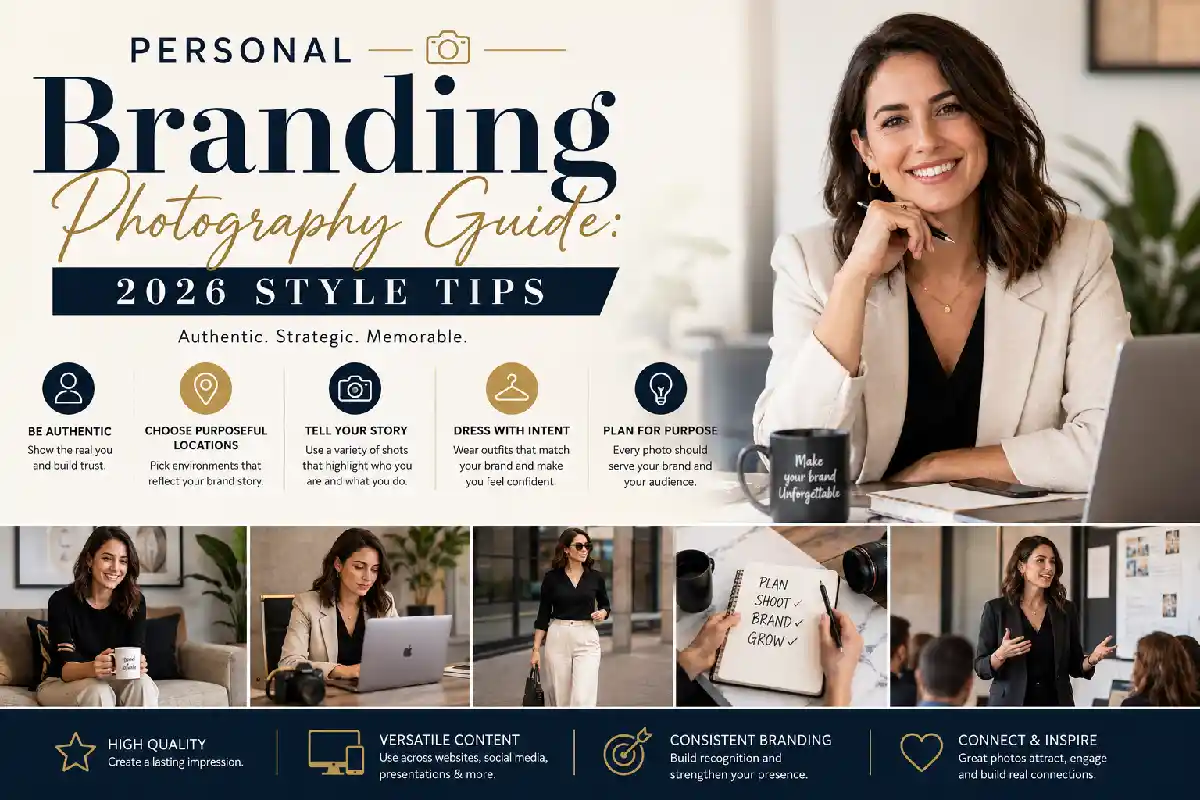
Personal Branding Photography Guide: 2026 Style Tips
Last Updated: September 15, 2026
Personal branding photography isn‘t just about having a professional headshot anymore. By 2026, your powerful personal brand images will require that they speak for you before the first word is even uttered.
If you are a founder, consultant, creator, coach, freelancer, exec or solopreneur a good photo will elevate your website, linkedin, social media, presentations and marketing. It adds a level of professionalism and memorability.
Here‘s a handy walkthrough for developing a personal branding style that looks modern, real, and planned for success.
What is Personal Branding Photography?
Personal branding photography: Series of professional photos aiming to visually communicate your unique personality, skills and expertise, lifestyle and business image.
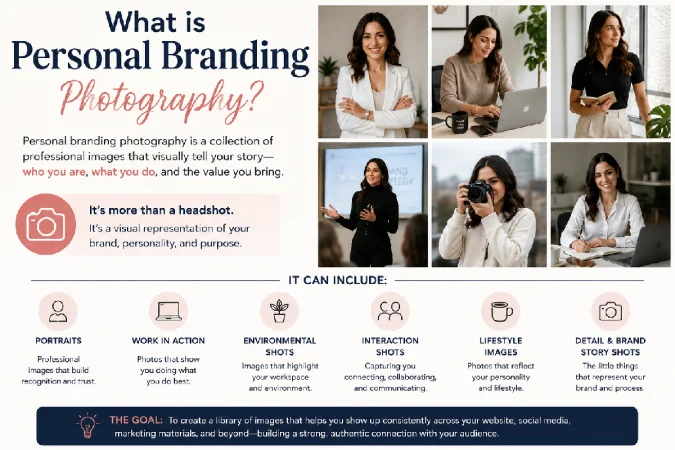
Unlike a traditional corporate headshot, a personal branding session can include:
- Portrayed as professionals
- Working-at-your-desk images
- Pictures from the recording sessions.
- Client or collaboration shots
- Product/service imagesa.
- Lifestyle photography
- Speech or presentation photo
- Creative environmental portraits
- Authentic interaction shots.
- Social-media-optimized vertical images
The end isn‘t really to create 300 fabulous photos. It‘s to create a consistent body of images that tell your brand story.
Why Personal Branding Photography Matters in 2026
People are seeing you online before they see you in person. Your picture might be on your website, your linkedin page, on twitter, instagram, a newsletter, podcast site, speaker bio or in a google search.
This is why it is important to maintain visual consistency in your personal branding.
A strong photography strategy can help you:
- Build trust
- Make your business more humane
- Be memorable.
- Search Management: Gain a strong foothold in popular search tools.
- To distinguish yourself from the rest
- Express yourself personality.
For one-person businesses especially, you are often the most recognizable part of the brand.
2026 Personal Branding Photography Trends
Photography styles evolve rapidly, however there are a few styles which are especially valuable for contemporary personal brands.
1. Authenticity Over Perfection
Formally posed, heavily retouched corporate portraits are remote from real work more image than substance.
That’s now the norm for personal branding photography in 2026.
That could mean:
- Natural expressions
- Real working environments
- Genuine interactions
- Movement
- Imperfect but believable moments
- Relaxed poses
- Environmental portraits
The objective isn’t to look unprofessional. It’s to look professional without looking artificial.
Instead of pretending to work at a desk for every photograph, actually work during part of the shoot.
Write.
Talk.
Review something.
Make a call.
Sketch an idea.
Interact with a client or colleague.
Those actions create photographs that feel more believable.
2. Editorial-Style Portraits
Personal branding photography is borrowing visual language from editorial magazines.
Think:
- Strong compositions
- Interesting lighting
- Intentional wardrobe
- Architectural backgrounds
- Negative space
- Sophisticated color palettes
- More cinematic framing
This approach can be particularly effective for founders, authors, consultants, executives, designers, and thought leaders.
You don‘t always have to be in a lavish setting.
Any basic studio, office, hotel, library, cafe, or architectural space can appear as something striking when taken according to the artist‘s desire.
3. Environmental Portraits
A finished painting of someone‘s face in the background of a plain setting.
An environmental portrait can tell them what you do.
For example:
- A designer could be photographed surrounded by sketches and prototypes.
- A consultant could be photographed reviewing strategy documents.
- A chef could be photographed in the kitchen.
- A photographer could be photographed working with equipment.
- A founder could be photographed inside their workspace.
The environment becomes part of the storytelling.
4. More Movement, Less Posing
Static poses can quickly become repetitive.
Instead, ask your photographer to capture movement:
- Walking
- Turning toward the camera
- Writing
- Speaking
- Looking through notes
- Using a laptop
- Adjusting a product
- Talking to another person
- Entering a workspace
Movement creates visual variety and makes photographs feel less staged.
5. Vertical-First Photography
A major practical consideration for 2026 is mobile-first content.
Many personal-brand photographs will eventually appear on:
- YouTube thumbnails
- Reels
- Stories
- Short-form video
- Mobile websites
- Newsletter
Personal Branding Photography Wardrobe Tips
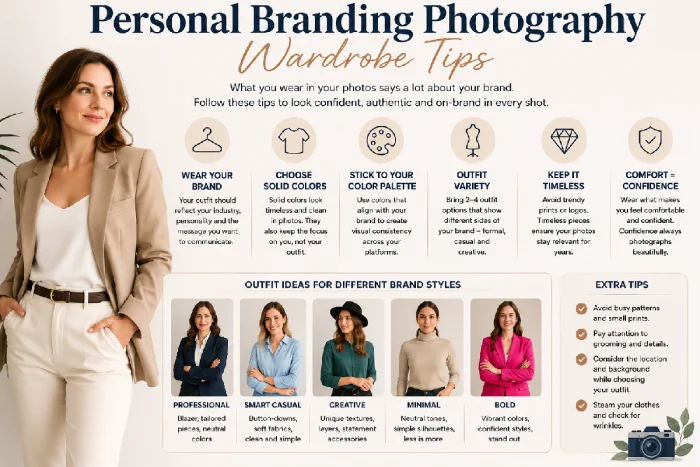
Your wardrobe should support your positioning rather than compete with it.
Choose Three Looks
A typical branding session can include:
Look 1: Signature professional
Your most recognizable business outfit.
Look 2: Relaxed professional
Something more approachable and conversational.
Look 3: Lifestyle or creative
A look that shows personality outside formal work.
Think About Your Brand Colors
If your brand uses particular colors, consider incorporating them subtly through:
- Clothing
- Accessories
- Backgrounds
- Props
- Furniture
- Locations
You don’t need to wear your brand color from head to toe.
Subtle repetition can be more sophisticated.
Choosing the Right Locations
Your location should reinforce your story.
Office
Best for:
- Consultants
- Executives
- Founders
- Agency owners
- Professionals
Studio
Best for:
- Clean portraits
- Website hero images
- Speaker profiles
- Editorial-style branding
Café or Restaurant
Useful for:
- Creators
- Writers
- Coaches
- Lifestyle professionals
- Entrepreneurs
Outdoors
Great for:
- Fitness professionals
- Travel creators
- Coaches
- Outdoor brands
- Personal brands with an energetic identity.
Lighting Tips for Personal Branding Photography
Lighting dramatically affects the personality of an image.
Natural Light
Natural window light can produce soft, approachable portraits.
It’s particularly useful when you want your photography to feel:
- Warm
- Authentic
- Relaxed
- Modern
Dramatic Lighting
More directional lighting can create a premium, editorial appearance.
This works well for:
- Speakers
- Authors
- Executives
- Creative professionals
- Luxury brands
Consistency Matters
If you’re building a photography library over several sessions, try to maintain some consistency in:
- Light quality
- Color temperature
- Contrast
- Skin tones
- Editing style
Essential Personal Branding Shots
A successful branding session should produce different types of images, not 30 versions of the same headshot.
Consider capturing:
1. Hero Portrait
A strong image for your homepage, LinkedIn profile, or about page.
2. Close-Up Portrait
Useful for profiles and social media.
3. Environmental Portrait
Shows you in your professional environment.
4. Working Shot
Shows you actually doing something related to your work.
5. Candid Shot
Relaxed and natural.
6. Walking Shot
Useful for websites and social posts.
7. Interaction Shot
Shows collaboration, conversation, or client work.
8. Detail Shot
Hands, tools, notebooks, products, equipment, or other elements associated with your work.
9. Negative-Space Image
Leave significant empty space around you so designers can add headlines or calls to action.
10. Vertical Portrait
Optimized for mobile and social platforms.
Don’t Forget the “Brand Story” Images
Some of the most valuable images aren’t traditional portraits.
Photograph the things that make your business recognizable.
For example:
- Your notebook
- Your workspace
- Your favorite tools
- Your product
- Your creative process
- Your books
- Your computer setup
- Your meeting environment
- Your packaging
- Your presentation materials
These images can become supporting visual content throughout your website and social channels.
Personal Branding Photography for LinkedIn
Your LinkedIn image should generally prioritize clarity and recognition.
A good profile image should:
- Clearly show your face
- Use flattering lighting
- Have a clean background
- Reflect your professional positioning
- Look current
- Avoid excessive filters
- Still resemble you in real life
But don’t stop with your profile photo.
Use your broader branding library for:
- LinkedIn posts
- Articles
- Featured content
- Speaker announcements
- Professional milestones
- Case studies
- Company updates
This creates a more recognizable visual presence.
How many photos do you need?
A practical benchmark for a branding session is roughly 30 60 usable pictures, the exact number depending on the complexity of your business and how often you publish.
You can use some of them now, and save the others for later.
Alternatively, develop a graphic collection to reinforce your message for the next few months.
A single photography session can potentially provide assets for:
- Website pages
- Social posts
- Blog articles
- Email newsletters
- Presentations
- Podcast profiles
- Speaker bios
- Press features
- Advertisements
- Digital products
AI and Personal Branding Photography in 2026
AI tools can help with:
- Background clean up
- Image organization
- Cropping
- Resizing
- Basic retouching
- Content variations
- Creative concepts
Conclusion
Personal branding photography is no longer just about having a great headshot. In 2026, it is about telling a visual story of who you are, what you do and what you stand for, in one image.
The best method is to be genuine while using strategy. You want to select locations that speak to the work you do, clothing that represents the person you are while showing the clients you work with and images that showcase who you are as a person behind the business. Film a variety of environmental and lifestyle shots mixed in with actual portraits so you have fresh content for your portfolio regardless of the platform you are on.
Most importantly, avoid jumping on the photography bandwagon. Develop visual styles that are true to you and resonate with your potential audience. If your photographs appear more natural, familiar, and on-brand, they could be among your most effective tools for gaining online trust.