

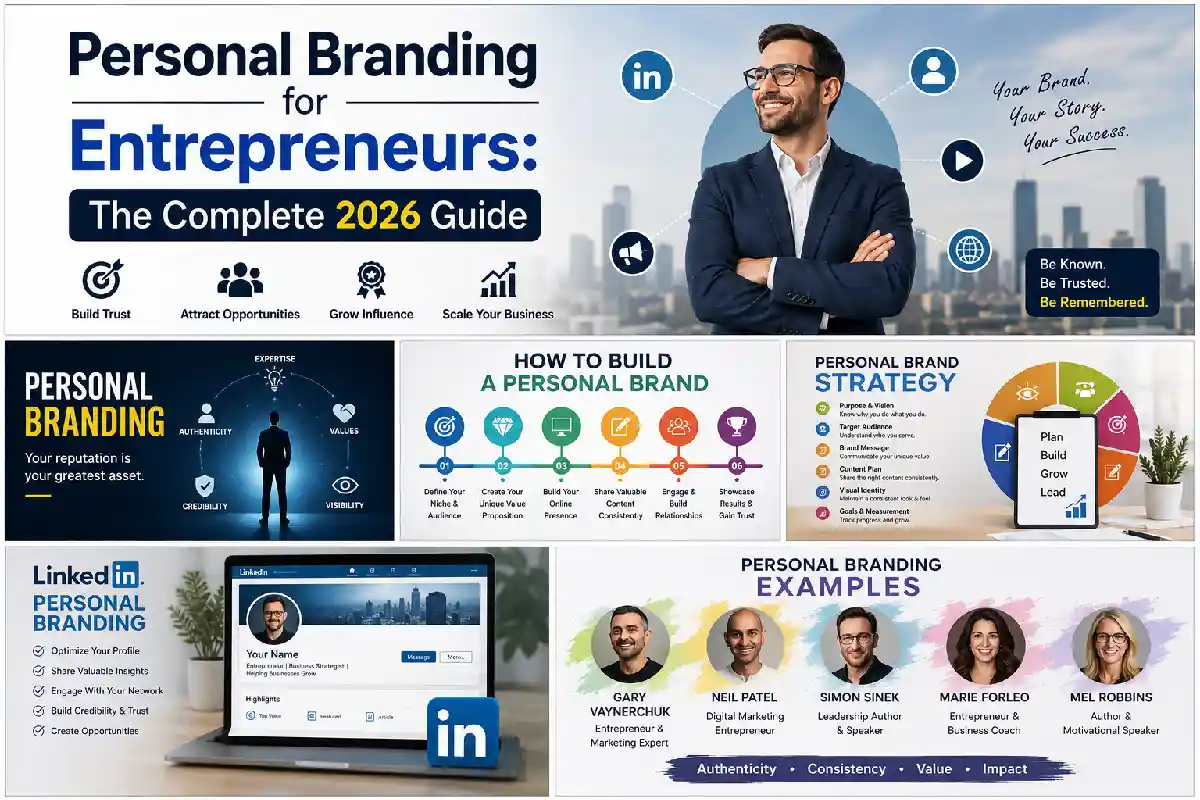
Personal Branding for Entrepreneurs: The Complete 2026 Guide
Last Updated: September 15, 2026
Personal branding for an entrepreneur means the process by which an entrepreneur intentionally develops a unique professional image that reflects who they are, what they believe, and the value they provide to customers. Entrepreneurs today sell themselves as much as they sell their business.
What is a Personal Brand?
It is the attributes, skills, experiences, and personality that you bring forth as your brand to others, business-wise. Consider your personal brand as your reputation. What do others think of you? and what you stand for?
Right, whereas a company brand is specifically for the organization, your personal brand goes with you. It’s there whether you want it to be or not in your LinkedIn profile, in the projects you leave behind, in the way you communicate and how people who have worked with you refer to you to other people.
Individuals’ purpose of using a personal brand also varies according to the stage of their careers. A freelancer (I, myself) needs a personal brand to brand itself and to compete in a highly competitive market. Entrepreneurs use personal brands for building credibility prior to having a well-known company. Even traditional employees can gain a personal brand when networking moving jobs or trying to get a position.
Your personal brand should reflect all your skills and behave in a way to showcase them. It should include your home skills as well as your professional skills, your body language, your values you demonstrate in your daily work.
The best personal brands are not contrived; they feel genuine. They‘re who you really are not who you think you are supposed to be.
Why Personal Branding Matters
- A well-developed personal brand can help you:
- Earn the trust and respect of your target audience.
- Set yourself apart from others.
- Draw in excellent customers and clients.
- Enhance opportunities to speak, engage with media and partner.
- Build up your client‘s loyalty.
- Make marketing more agreeable by appearance become people first rather than… company.
Key Elements of a Personal Brand
Your Purpose
- Why you have set up your business.
- The mission that inspires your work.
Your Expertise
- Skills/knowledge which establish you as an expert.
- Measurable industry accomplishments.
Values
- Guides on what you do.
- The purchase decision is driven by ethics, transparency and customer focus.
Your Story
- Personal stories of experiences that established you on your road to becoming an entrepreneur.
- Difficulties you have already faced and skills you have gained.
Your Online Presence
- Professional website.
- LinkedIn profile.
- Social media platforms.
- Blog, podcast, or YouTube channel.
Benefits of Personal Branding for Entrepreneurs
| Benefit | Impact |
| Increased trust | Customers buy from people they trust. |
| More leads | A recognizable brand attracts qualified prospects. |
| Higher authority | Positions you as an industry expert. |
| Better networking | Opens doors to partnerships and collaborations. |
| Premium pricing | Strong brands can often charge higher prices. |
| Long-term business growth | Builds loyalty beyond individual products or services. |
How to Build Your Personal Brand
- Determine your individual scope and audience.
- Develop a visual identity be consistent in your visual presentation.
- Providely valuable content on a general basis.
- Tell real, honest stories about your own journey as an entrepreneur.
- Get involved with social media and support your audience.
- Have a voice at events or webcasts.
- Publish articles and thought leadership content.
- Gather testimonials. Create case studies and display success stories.
- Maintain unified messaging and branding.
Common Mistakes to Avoid
- Trying to please everybody.
- Fact or the same message being presented in different formats or at different levels (methodological, process, or product).
- Concentrating simply on selling rather than on educating.
- Duplicate use of unique features, promoting copying of competition other than you.
- Failing to consider audience response and participation.
What is Personal Branding?
Personal branding is the conscious effort to influence how others perceive you by highlighting your skills, expertise, values, personality, and accomplishments.
Your personal brand is what others say about you when you‘re not in the room.
Personal branding refers to how you communicate and position yourself as a brand whether it is face to face or online.
Why Personal Branding Is Important
A strong personal brand can help you:
- Establish credibility and trust.
- Materially distinguish on a highly competitive market.
- To attract career or business opportunities.
- Build a professional network.
- Enhance your power and domain.
- Build relationships with your readers.
Key Elements of Personal Branding
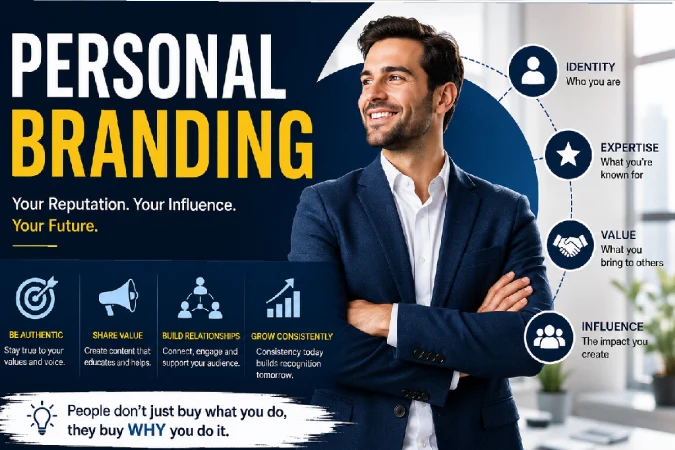
- The identity – Who you are and what you believe in.
- Expertise – Your skills, knowledge, and experience.
- Values – Those ideas that ethicize your standards of behavior.
- Personality– your natural voice and how you communicate.
- Visibility The frequency with which you communicate/share your expertise online (e.g., Twitter, blogs, videos, public speaking).
Personal Branding vs. Business Branding
| Personal Branding | Business Branding |
| Focuses on an individual | Focuses on a company or product |
| Builds trust in a person | Builds trust in a business |
| Highlights personality and expertise | Highlights products, services, and company values |
| Often continues throughout a career | May change with the business |
How to Build a Personal Brand
Identify your objectives and target group.
- Discover what you are good at.
- Develop uniform family and personal profiles on professional networking sites,
- Consistently post interesting information.
- Connect with your viewers.
- Build your credibility with testimonials, certifications, and actual results.
- Some tips to keep in mind: Keep researching and practicing.
Benefits of Personal Branding
- More promising career prospects
- Gain higher credibility through KBA knowledge
- Stronger network connections
- Increased chances to speak and work together.
- Increased trust of customers or employers
- Long-term developments of the professional
Personal branding is the process of developing a powerful and authentic image of yourself in your profession. No matter if you are an employer, employee, freelancer, student, or entrepreneur, personal branding helps you gain trust, showcase your skills and abilities, and opens opportunities by being memorable.
What is the function of a single brand in the creation of an owned audience?
So why should you consider building an owned audience? Well, social media platforms control your reach, the rules and what you see. Your email newsletter, website and lead magnets are an assurance of direct access to your potential clients. This is especially critical when algorithms change, reach on social drops or your perfect prospects are not online so often!
Long-term, a newsletter is a more dependable channel for thoughtfulness, distilled ideas and personal relationships (best to have people subscribe, rather than followers on Linkedin). Dominate your site as your center of influence. Your owned assets should be your bio, content, products, reports, case studies, media appearances, and lead catches. When applying your name into a search engine or you have an ai tool interview you about your specialization, owned assets should make your context evident and prepared.
A simple “owned” system would be one newsletter per month, one lead magnet, one founder bio page, one flagship guide and one clear call to action to book a consultation. To make this work effectively I suggest you couple your newsletter with a resource such as a personal branding case study so that people have something to do when they have read your email.
Personal Brand Strategy
Personal brand strategy is a plan for how you want the world to see you and the value you bring to your field. Instead of hoping that people get who you are and what you do, it helps you develop credibility, authority and trust by focusing all your words and deeds in the same direction.
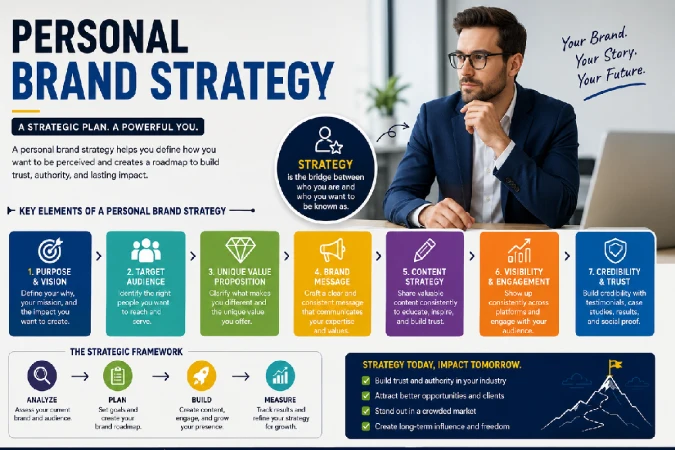
Key Components of a Personal Brand Strategy
Know your audience: Who do you want to reach? Consider who your target market is, what problems they are trying to solve or the type of information they are searching for.
Create a Clear Brand Message: Develop a solid message that can be consistently communicated to others representing your expertise, your purpose, and your personality.
Establish a Cohesive Visual Identity: Include a professional headshot or logo. Maintain consistent use of your brand style such as colors, fonts, and branding elements, over your website and social media sites.
Design a Content Plan: Appropriate to your brand, distribute blogs, videos, podcasts, e-newsletters or social media bites to educate, motivate, and show your thought leadership.
Enhance Your Online Profile: Improve your presence on LinkedIn, your personal webpage, and other professional forums to reflect your skills and knowledge.
Build Credibility: Establish credibility with case studies, testimonials, certification, awards, media, quantifiable results etc.
Measure and Improve: Follow metrics such as engagement levels, website hits, an increase in followers and the number of leads generated in order to optimize your approach as you go.
A strong personal brand strategy enables you to become more noticeable, draw in higher quality opportunities and position yourself as a reputable expert within your industry. With sincere and sustainable action you can develop a personal brand that sustains you throughout your professional or business life.
LinkedIn personal branding
You should have good meaningful content on your profile that is being consistent. It is a good way to get across your attractive skills, interests etc.
Use your LinkedIn not only as a posting tool, but as a trusted demand shaping and trusting channel; this particular LinkedIn Personal Branding would effectively lock your profile positioning, hot talking points, founder‘s POV, comments, newsletter, documents and web links into a holistically visible system.
According to linkedin, advertisers can reach more than 1 billion professionals globally. This could be useful for B2B founders as before deciding business, customers, investors, partners, employees, and competitors will check each other on linkedin.
LinkedIn personal branding
Profile Clarity: Your profile needs to immediately tell your ideal client who do you help, what do you help them solve and why should they work with you. Your headline, banner, About and Featured sections should be a landing page for your ideal client, not a resume.
Content Pillars: Pick three areas/content that you know well and can easily blog about for a year without sounding repetitive. These pillars should come from you, the questions your buyers are asking, and your category‘s direction. Don‘t switch topics at the first ponytail trend.
Founder Opinions : Make sure your arguments are well-reasoned so your audience may choose more effectively. Based opinions should be insightful, constructive, and provide a well-founded argument. Don‘t offer bland motivation, incoherent leadership advice, or rhetorical soundbites that conflict with your professional credibility.
Strategic engagement: Comment on posts from customers, partners, analysts, journalist and category voices. Well thought through comments will generate more momentum over the fast than posting into emptiness. Use references and give real life examples, or give practical disagreement rather than just empty cheerleading.
Website Link: A major site connection – to your potential clients and readers is a simple linking promotion of large chunks of Onesidenvisions, published on LinkedIn, to your related guides, reports, case studies and service pages – strengthens the crucial link between, you, as founder personality, your company‘s subsidiary and your owned authority assets.
If you, or members of your internal team, are struggling to keep this ongoing flow of communication focused and regular, then the ghostwriting services of Scribblers India can turn your founder thinking into regular LinkedIn articles, newsletter pieces and website pages.
Personal Branding Examples
Countless professionals have established robust personal brands simply by reaching out and sharing their knowledge, beliefs, and opinions. A few prominent ones include:
Gary Vaynerchuk – Created a worldwide community by providing actionable lessons on running a business, digital marketing, and entrepreneurship via video content, podcasts, and social media.
Neil Pate l– Gained recognition as a credible SEO and internet marketing expert by creating educational articles, blogs, and free marketing resources.
Simon Sinek –A sought-after leadership speaker, author of bestsellers and the creator of “Start With Why”
Marie Forleo – Established a powerful personal brand by offering business coaching and motivational online classes targeted at entrepreneurs.
Mel Robbins – established credibility by writing books, podcasting, and with ready-to-use advice on life improvement and productivity.
All of the above examples seem to work because personal branding depends on being authentic, and providing consistently created content, expert value and long-term engagement with the audience.
Conclusion
In 2026, personal brand equity is a crucial tool for entrepreneurs and entrepreneurs-to-be: it is a competitive advantage that provides a strategic edge, gain trust, establish credibility and creates sustainable business value. Because AI-generated content obfuscates reality, people will prefer connecting with real people over anonymous brands in a world awash with information in 2026.
Spend time defining what you uniquely offer to the world, generate high-quality content around your unique content and story, establish a solid online presence and develop genuine professional relationships. With a strong personal brand, you will be able to attract the best customers, win new opportunities, engage with new professional and personal relationships and grow your business for the future.
Frequently Asked Questions (FAQs)
1. What is personal branding?
Personal branding is by designing and maintaining your professional reputation by documenting your skills, experience, values, personality and accomplishments. It can help to your obtain potential people to perceive you, trust you and remember you.
2. Why is personal branding important for entrepreneurs?
Personal branding enables entrepreneurs to build credibility, distinguish themselves from competitors, draw customers, gain position within their industry and generate ongoing business.
3. How do I start building my personal brand?
Begin by discovering your niche. Then determine who your ideal clients or customers are. Next establish a reputable and branded online presence. Offer useful, free information. Connect with others. Lastly showcase your skills and abilities through tangible results in the real world.
4. What are the key elements of a strong personal brand?
A strong personal brand is characterized by having clear objectives, proven experience and expert knowledge, true personal values, an interesting personal account, streamlined core message and maintained presence on relevant professional networks.
5. How can LinkedIn help with personal branding?
You can use LinkedIn to highlight your work experience, produce thought leadership material, network with other industry professionals, gain recommendations from colleagues, and position yourself as an expert in your industry.
6. What is the difference between personal branding and business branding?
The development of branding can either be targeted to a person (Personal branding) or to a company‘s product/service/direction etc (Business branding).
7. How long does it take to build a personal brand?
It takes time to develop a powerful personal brand. Through persistent work in creating content and engaging with your community, you might notice positive shifts in a few months, but that kind of recognition can usually be achieved over one to two years.
8. What are the biggest personal branding mistakes to avoid?
Some frequent errors are messages that are not consistent, trying to please all, only a sales focus, no engagement with the audience and copying other people rather than promoting your unique qualities.
9. Can personal branding help me generate more business?
Yes. An effective personal branding can boost your visibility, establish trust, result in more high-quality leads, reduce your networking efforts and in a lot of cases, you can command higher prices for your products or services.
10. Do I need a website for personal branding?
You can indeed be built on social media only, but your own website is like your own planet where 100 per cent of your content, portfolio, case studies, email database and reputation is under your control.