


Entrepreneur Success Stories: Lessons From Top Founders in 2026
Last Updated: September 15, 2026
By 2026, entrepreneurship will have ceased to be about starting a company and will be about new ways of solving real problems, being able to adapt instantly, developing AI applications responsibly, and building a business that your client really trusts. Here’s what the most successful entrepreneurs do every day, and you can too:
In this guide, you will read about entrepreneur success stories and find out what you can take from them to help you with your own business in the future.
Why Entrepreneur Success Stories Matter
Reading about successful entrepreneurs helps you:
- Learn from real experience. Don’t make expensive mistakes.
- Understand how businesses have surmounted one difficulty after another.
- Uncover new methods for growth.
- Have the strength to hold during tough times.
- Encourage you to keep going.
Instead of mimicking everyone else’s path, these stories can serve as guides that enable you to formulate your own principles according to your goals.

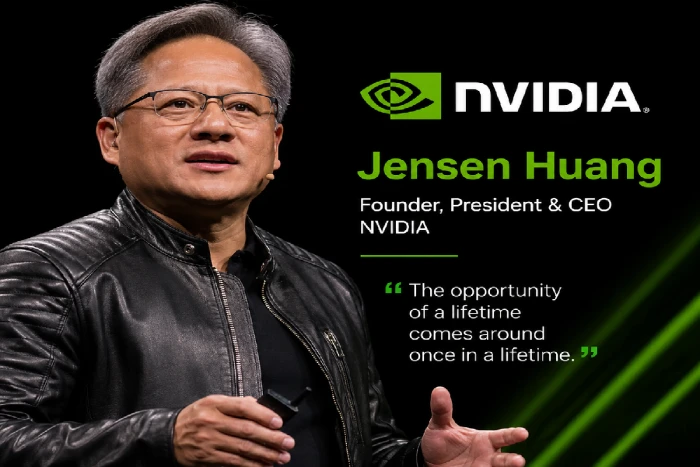
1. Jensen Huang (NVIDIA): Stay Ahead of Industry Trends
Jensen Huang took NVIDIA from its roots as a graphics chip company to become a leading AI technology business worth billions.
Key Lessons
- Look ahead get involved with emerging technologies.
- Keep innovating even when in a high period.
- Build products the support entire ecosystems.
- Consider the long term rather than focusing on making quick money.
Key insight: Great opportunities arise from doing the groundwork many years ahead of the company cresting at the right time.
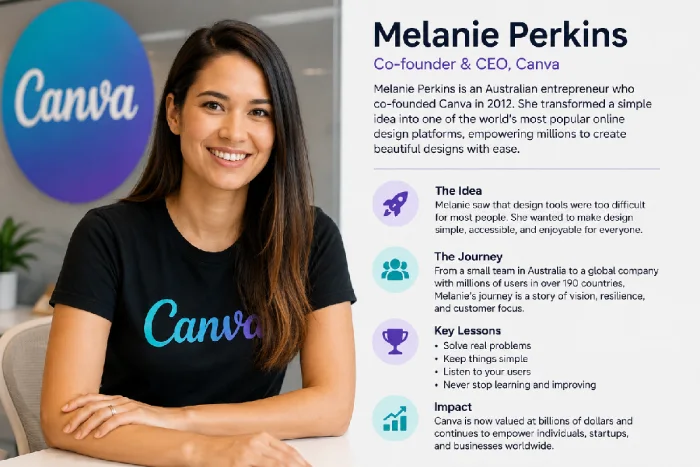
2. Melanie Perkins (Canva): Solve Everyday Problems
Melanie Perkins
What Melanie Perkins did to create Canva was revolutionize something that was only possible with the right training, skills, and software: graphic design.
Lessons Learned
- Simplicity is key. Provide as few products as possible.
- It is imperative; we should always be customer-centric.
- Pay attention to user feedback.
- Others point out that we should always do better to generate more and better research and knowledge.
- Only then can our profession grow steadily in impact and size.
Business Insight: Removing complexity from the customer experience allows a business to grow more quickly.
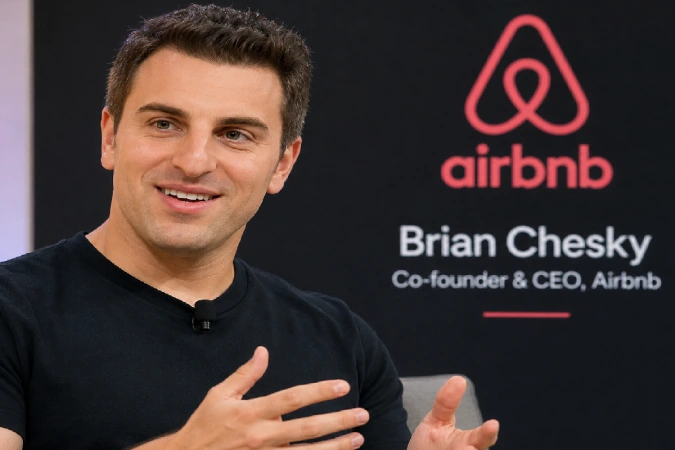
3. Brian Chesky (Airbnb): Adapt During Crisis
Brian Chesky
Airbnb had a pivot in travel during global travel disruptions to long-term stays, remote workers and flexible travel.
Entrepreneur Lessons
- Be flexible in changing markets.
- Remember, the more you push away from what the customer needs you, the more it is going to cost you.
- Tinker with reinvented business models when needed.
- Prepare for crisis build resilience in advance.
Main Point: More often than not, it is one’s ability to adapt to the unforeseen that can spell the difference between survival and demise.
4. Whitney Wolfe Herd (Bumble): Differentiate Your Brand
Whitney Wolfe Herd entered the market by providing a different platform to a highly competitive landscape.

Success Principles
- Do not copy competitors, differentiate.
- Designate a concise mission as a brand.
- I‘m getting to know my customers deeply.
- Give first place to community.
Technical lesson. A competitive position often counts more than the largest marketing budget.
5. Tobias Lutke (Shopify): Empower Customers
Tobias Lutke
How did Shopify become a global number one e-commerce solution? By making all entrepreneurs successful.

Important Lessons
- Develop tools that make business more simpler for businesses to operate.
- Think long-term customer success.
- Enhance product constantly.
- Make a huge investment in innovation.
Key point: As your customers expand, your business will grow with them.
Common Habits of Successful Entrepreneurs
Across industries, many founders share these habits:
| Habit | Why It Matters |
| Lifelong learning | Markets evolve constantly. |
| Customer obsession | Happy customers drive sustainable growth. |
| Smart risk-taking | Calculated risks create new opportunities. |
| Data-driven decisions | Facts outperform assumptions. |
| Strong leadership | Great teams build great companies. |
| Adaptability | Markets change faster than ever. |
| Consistency | Small improvements compound over time. |
Business Lessons Every Entrepreneur Should Apply
- Solve Real Problems
The best businesses start with customers’ pain, not product ideas.
- Start Before Everything Is Perfect
The high-profile successes have typically been launched with a small, functioning ‘core’ set of features. They then iterated through customer feedback and further refinement.
- Build Strong Teams
Founders can‘t scale on their own. Hiring people with talent and giving them power hastens growth.
- Focus on Long-Term Value
Short-term gains seldom produce a viable business. Only ongoing triumph with customers is a source of sustainable growth.
- Use Technology Wisely
Automation, AI, analytics and the cloud have the potential to boost productivity but not in isolation.
Mistakes Successful Entrepreneurs Avoid
Even accomplished founders emphasise avoiding these common pitfalls:
- Overlooking customer opinions.
- Too much at once.
- Ignoring cash flow.
- Falling behind developments in the market.
- The competition to find the “right” culture.
- Choosing based on instinct.
Daily Success Habits
Many high-performing entrepreneurs make time for:
- Prioritising clarity about what truly matters.
- Reading industry news.
- Looking at business indicators.
- Customer interactions.
- Gaining new skills.
- Networking with peers.
- Learning from my own failure and success.
If they stick to it, they will often deliver the long term results.
How to Apply These Lessons to Your Business
Begin with one important problem your users have, test your idea with full-scale users, quantify the results, adapt your solution and only then expand once you have a process that works. Keep investing in education, technology, and your people as your business grows.
More truthfully, (to the extent that any of us can take one step at a time) success simply is the result of many small, disciplined steps over a significant time period:
Entrepreneur Success Stories
The stories of entrepreneurs inspire hundreds of thousands of potential entrepreneurs worldwide by showing that with nothing but a great idea, determination, and the desire to find solutions to a real problem, entrepreneurs can build world-class corporations. The story of the entrepreneur is a story of trial and error, of innovation and of overcoming of setbacks.
No matter if you are starting your first new business, expanding a small business, or just need some motivation, by analyzing the experiences of successful entrepreneurs, you can learn strategies to avoid the pitfalls and make your business work.
Why Entrepreneur Success Stories Matter
Success stories are not only motivational stories but can be learning tools too. They educate entrepreneurs by showing:
- The origin of successful businesses.
- 10 Methods founders persisted through failures
- Ways to draw more people in.
- Leadership skills, among them decision-makingÿ, organizational skills,
- Methods for scaling businesses sustainably
- The criticality of innovation and flexibility
While each entrepreneur‘s path is unique; there are principles common to their ultimate aspiration of sustained success.
Lessons From Entrepreneur Success Stories
1. Start With a Real Problem
Most successful businesses address common needs rather than producing products for which there is no market.
Lesson: Figure out what customers are trying to do wrong understand their pain points before developing your product.
2. Take Action Before Everything Is Perfect
Most successful businesses didn‘t go to market with a perfect product. They had an initial version that then evolved over time by listening to customers.
My school of thought is: Strive. Progress is better than perfection!
3. Embrace Failure as a Learning Opportunity
All successful entrepreneurs fail. They happen to them all the time, but they never give up. Instead, they learn from failure to improve their plan of action.
Word of insight: Each error teaches you an important business lesson.
4. Build Strong Relationships
Another characteristic of successful entrepreneur is having a team of talented employees, mentors, investors and faithful customer.
Lesson: The real key to business is people, not product or service.
5. Keep Innovating
Markets are ever-evolving market change is driven by factors such as innovations in technology, shifting customer needs and weaker/stronger competition.
Lesson: Firms that keep innovating stay competitive for decades.
Startup Case Studies
Startup case studies offer concrete evidence of how successful companies are created, expanded and survived. They detail a company’s development in terms of tactic, obstacles, and business moves and shed light on appropriate methods of business development for other entrepreneurs. By studying the development of any bootstrapped or venture-backed startup, experts and aspiring entrepreneurs alike can learn from common startups mistakes, proven business growth techniques, and solid business choices.
Why Startup Case Studies Matter
Learning from successful startups provides entrepreneurs with insights on the reality of starting up. Entrepreneurs may benefit from case studies as they reveal story of what really happens, the reasons behind the success and how founders handled the surprises.
Key benefits include:
- Business Models that are successful to relavant target.
- Acquiring knowledge about effective customer acquisition methods
- Explore best practices for product development
- Enhancement of decisions, with the help of real examples.
- The top three mistakes first time entrepreneurs make.
- Getting inspired by other successful founders
Common Patterns in Successful Startup Case Studies
Despite operating in different industries, many successful startups share similar characteristics.
| Success Factor | Why It Matters |
| Customer-first mindset | Creates products people genuinely need. |
| Continuous innovation | Keeps businesses competitive. |
| Strong leadership | Guides teams through challenges. |
| Market validation | Reduces the risk of failure. |
| Scalable systems | Supports long-term growth. |
| Adaptability | Helps businesses respond to changing markets. |
Founder Journey
A founder journey kicks off with the finding of a problem that needs to be solved and the corresponding conversion of that problem into a feasible business. Every entrepreneur has his or her own specific journey; however, they often encounter similar specific stages such as validating a business idea, creating a minimum viable product (MVP), securing initial clients, modifying a business model based on market feedback, and so on. However, entrepreneurs have to face many challenges on that path, such as the lack of funding, big competitors, the selection of an appropriate team, fulfilling evolving customer requirements.
Conclusive remarks on the successful founder. They know that you can learn all your life; successful founders learn from failures; they use the data and they are flexible in relation to changes in the market. When the company is growing, they become leaders, they offer elegant solutions and they develop a successful system.
At the end of the day, it is never about simply starting a business. It is about addressing genuine issues, providing solutions for consumers, and maintaining a strong business that can adapt to the dynamic nature of the market this is what forges a successful founder. And this is what ensures that a business ultimately flourishes is persistence, creative problem-solving, strategic cognition, and relentless innovation.
Self-Made Success Stories
These success stories of self-made entrepreneurs show that to transform an entrepreneur’s dream into a successful business entails a lot of patience, resilience and hard work. It is different from entrepreneurs who inherited large established business or major startup fundings from family or well-wishers. Self-made entrepreneurs succeed because they dedicate a lot time and energy into understanding customer problems and providing solutions.
Self-made entrepreneurs often start in their garage or basement with very few resources or industry experience and modest funding. They spot opportunities, test their ideas, and increase their businesses in value to customers. They beat the odds of funding, plagued product failures, and fierce competition to make further improvements.
All these motivating journeys have multiple similar characteristics. All prosperous self-made entrepreneurs embrace specific goals, sustain the discipline in their financial management, acquire constant education, and develop effective bonds with their customers and staff. Instead of achieving a speedy achievement of their fields, all of them persist in their efforts for a best outcome.
For most of the beginning entrepreneur, these “self-made” stories can be quite valuable as lessons, not only of motivation, but also of risk-taking, accepting change, responding to customer feedback and sticking in tough times. One thing the stories all have in common, is that no matter where you start, success is a matter of what it takes to get there.
Inspirational entrepreneurs
Inspirational entrepreneurs are about business owners who set up more than simply an enterprise. They identify a venture and drive it forward with vision and perseverance and have a willingness to take on the challenges that arise. Inspirational entrepreneurs motivate others, not just by generating financial results but also by creating interesting products, new products, employment, and by providing solutions to important issues for its customers and community.
Numerous entrepreneurs who have become inspirational began their careers with very little money and resources and faced numerous problems like a shortage of finance, market competitors, failure of their products etc. But these entrepreneurs took these problems not as a drawback but a learning process where they could conquer all these issues and then develop something innovative and better. With their dedication and setting a clear vision, they scaled down their dream to come up with their ventures that have been serving millions of clients across the globe.
Inspirational entrepreneurs – Difference
The difference with motivational entrepreneurs is the way they think. They look for their company’s vision and goals, they value the unique needs of the customer and then continuously innovate and upgrade its products and services. It also build robust teams, innovative working environments and corporate cultures that inspire creativity and cooperation. They don‘t think of a quick sale, but long-term value and the trust of the consumers.
Entrepreneurs can look to inspirational entrepreneurs, any of those mentioned above to learn valuable lessons when trying to start their own business. They can learn about the importance of finding a real opportunity and jumping at the right moment, taking risk, learning from previous failures and being flexible as industries change and adapt, in order to create a successful business.
In the end inspirational entrepreneurs of the past and present will always wish to tell today and tomorrow’s entrepreneurs to keep going no matter where you started. Their stories will inspire entrepreneurs of every decade to aspire to the same goals, believe in their ideas, and build organizations that have a real impact on the lives of their customers, employees, and society as a whole.
Conclusion
Stories of entrepreneurs highlight that there is no recipe of how to build a successful business. Nevertheless, the most successful founders all have the common traits of being curious, persistent, customer-oriented, adaptable and always eager to learn.
No matter if you’re starting your first business or growing a successful business, the advice of today‘s entrepreneurs can help you rise above your competitors, avoid pitfalls, and create a sustainable business. The winners in 2026 will be founders who stay flexible, adopt technology carefully, and pursue constant innovation.
Frequently Asked Questions
What are entrepreneur success stories?
Success stories of entrepreneurs provide actual experiences of entrepreneurs who managed to create successful firms and achieved extraordinary results through innovating, perseverance and entrepreneurial decision-making. Highlight the problems entrepreneurs faced in their venture, the solutions they chose and suggestions for future entrepreneurs.
Why should entrepreneurs study startup case studies?
Case studies of startup companies are also useful as instructive examples of the processes by which companies start up, expand and innovate. These guide entrepreneurs in their understanding of customer acquisition, product development, funding, scaling and pitfalls to avoid.
What qualities do successful entrepreneurs have in common?
Most successful entrepreneurs share several key qualities, including:
- Effective leadership qualities and skills.
- Customer orienting attitude/ Customer first attitude
- Flexibility and adaptation to market developments.
- Resilience in the face of setbacks (adversity)
- Continuous learning.
- Strategic decision
- Opportunities to innovate.
How can I start my entrepreneurial journey?
Start by discovering a real problem that can be solved. Then test this idea with market research, design an MVP to test it with customers, take the customer feedback, develop your product and once it is tested and the kinks are worked out then expand.
What can I learn from founder journeys?
Founder journeys offer many lessons in persistence, perseverance, problem solving, leadership, business, and understanding of fluctuating markets. They show that a successful business is the result of expertise and ongoing refinement; never overnight.
What are the biggest mistakes new entrepreneurs make?
Common mistakes include:
- Vanishing before testing market demand
- Overlooking customer‘s comments.
- Inadequate management of cash flow
- Scaling too fast
- Trying to write for everyone rather than for a particular audience
- Ignoring marketing and branding
- Not keeping up with changes in the industry.
Why are self-made success stories inspiring?
“Self-made self-starter” entrepreneurs maintain that one can succeed in starting and growing a business without the assumptions of a large bank account and previous business experience, by virtue of one‘s own work ethic, discipline, work habits, persistence, and long hours.
How do inspirational entrepreneurs build successful businesses?
Inspirational entrepreneurs tend to be customer oriented, seeking to identify a relevant customer problem and using corporate resources to introduce new products or services that satisfy this need; inspiring teams to work towards a change and/or an idea that contains longer term values; using a broad, overall worldview to develop continuous innovations for growth and avoiding gains focusing on short period.
How important is entrepreneurship innovation?
Innovation is crucial, as customer demands, technology, and the market constantly change. By innovating their offerings and business model it is possible for entrepreneurs to stay ahead of the competition and succeed.
What role does AI play in entrepreneurship in 2026?
AI enables entrepreneurs to automate repetitive tasks, analyze customer data, personalize marketing, enhance customer support, optimize operational efficiency and make data driven decisions. But the good entrepreneurs who succeed in business use AI as a tool to complement and extend human expertise and not as a substitute to it.
Can I become a successful entrepreneur without outside funding?
Yes. Numerous thriving businesses originate from bootstrapped startups that rely on self funds or early income. Through strong customer-centric approach, strict control of cash flows and re-investment of earnings, business builders can establish sustainable enterprises.
What is the most important lesson from entrepreneur success stories?
Ultimately, the most important lesson was that good entrepreneurs learn from their failures. Since entrepreneurs who are focused on their customers, adaptable, constantly learning and innovating over time are more likely to succeed in the long run, learning from your failures is an essential part of entrepreneurship.