

Business Accounting and Bookkeeping Basics for Small Businesses
Last Updated: September 15, 2026
Business bookkeeping and accounting are the backbone for any small business that wants to remain profitable, highly organized and ready for tax season. If you’re starting up a new service-based or side business, learning these principles early on will help prevent costly errors and make expansion less painful.
The meaning of Accounting and Bookkeeping
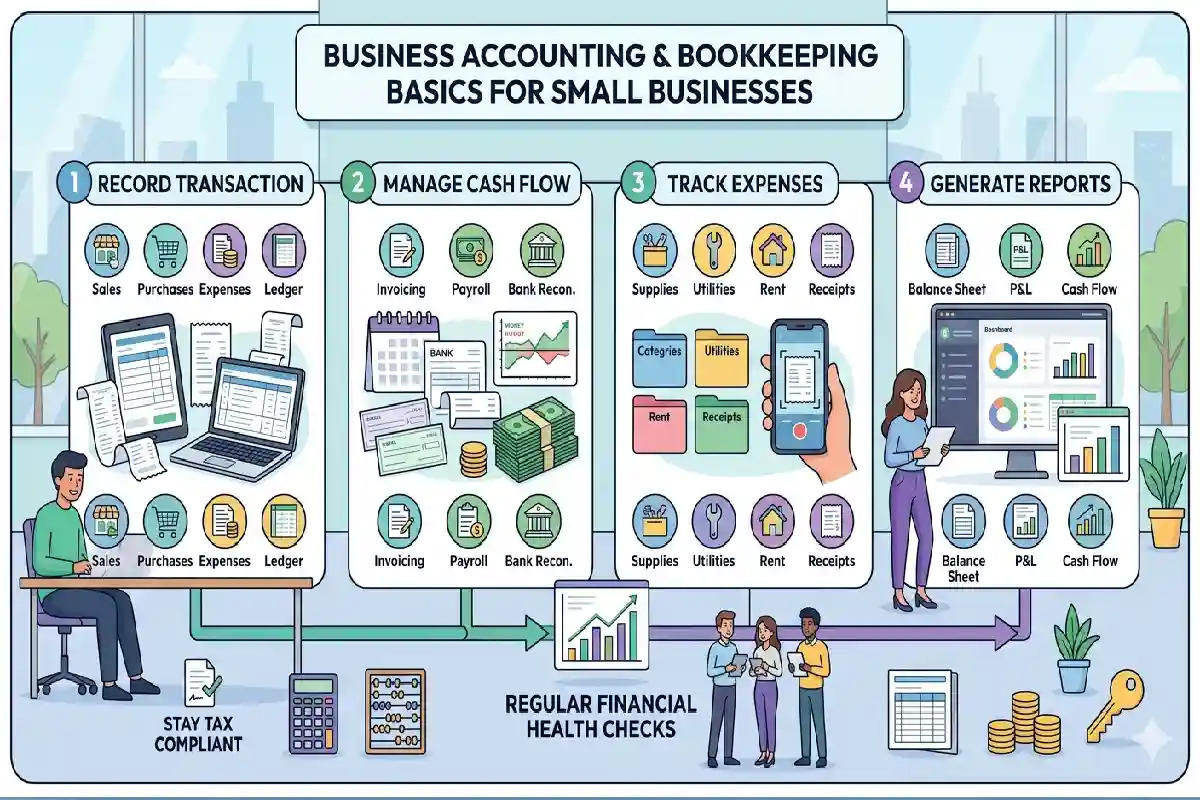
Bookkeeping is the daily collection of your income, costs, invoices, receipts and payments. Accounting is a step further; it looks at the data and helps you understand how well your business is doing in terms of profit, cash, tax and performance. (Bookkeeping is keeping things tidy and accounting is turning the tidy data into decisions.
Both are important for small businesses, as a company can be profitable yet still encounter problems if its numbers are not being managed correctly. Whereas many competitors in this field focus on providing information about the various software or service packages available, the most valuable content (like this blog) first covers the fundamentals.
Why this in 2026
In 2026, SMBs are increasingly dependent on accounting applications, automation, and outsourced bookkeeping help because the squeeze on time, compliance, and cash flow is greater than it’s ever been. The latest industry content indicates a marked move in the direction of software-led bookkeeping, AI-driven finance flows, and comparison shopping behaviour. This makes it significantly interesting content for those who haven’t yet made up their minds between do-it- yourself, software, or professional bookkeeping support.
Basic bookkeeping tasks.
A small business should track these core items consistently:
- Sales and Revenue
- Business expenses.
- Customer invoices.
- Vendor bills.
- Deposits to and withdrawals from the bank.
- Payroll records.
- Tax documents.
- Loan and credit card payments
Proper maintenance of these records can make tax filing easier and decision-making clearer when they are regularly updated. It can also help avoid missed deductions, duplicate payments and errors in reporting.
Accounting basics every owner should know
The most important accounting basics for small businesses include:
- Profit and loss.
- Cash flow.
- Balance sheet.
- Accounts payable.
- Tax deductions.
- Financial projection.
A business might appear well, but if customers don’t pay promptly or costs are increasing too fast then the business fails and this is exactly what accounting exists for.
Comparison of Top Tools
Below is a basic comparison table you may wish to include in the article to help the reader decide.
| Option | Best for | Strengths | Limitations |
| QuickBooks | Small businesses needing a full accounting system | Broad feature set, widely used, strong reporting | Can feel complex for beginners |
| Xero | Growing businesses and service companies | Clean interface, good integrations, easy collaboration | Some users may need time to learn it |
| Zoho Books | Budget-conscious businesses | Affordable, good automation, strong ecosystem | May not fit every advanced workflow |
| FreshBooks | Freelancers and service providers | Simple invoicing and time tracking | Less robust for complex accounting |
| Outsourced bookkeeping | Busy owners who want done-for-you support | Saves time, professional accuracy | Monthly cost is higher |
The competitor pages in this space sometimes list the same leading software brands; however, as the comparison material is what users are searching for before they decide which software to buy.
Best configuration for Small Companies
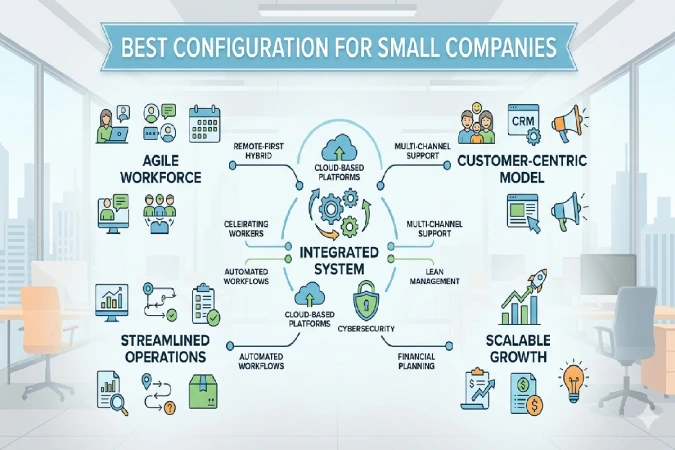
The simplest set-up would be the best one.
- Invoice, miscellaneous recording of expenses, tax summaries and perhaps a little spreadsheet.
- A local service business might need software in conjunction with a monthly bookkeeping service
- A non-established company may require software, reconciliation, reporting and tax planning.
If you want the article to feel practical, include screenshots of:
- Dashboard setup.
- Bank feed connection.
- Creating an invoice.
- Expense classification.
- Profit and loss report.
- Tax summary page.
These visuals create a culture in readers’ mind; which motivates them to read it faster and spend more time on the page.
Simple Tax Planning
For businesses, tax planning begins with your books. If your income and expenses aren‘t well kept, you lack insight into deductions, estimated taxes and filing deadlines. Good record-keeping assists in tax planning by delineating business from personal expenses, tracking deductible items and keeping source documents.
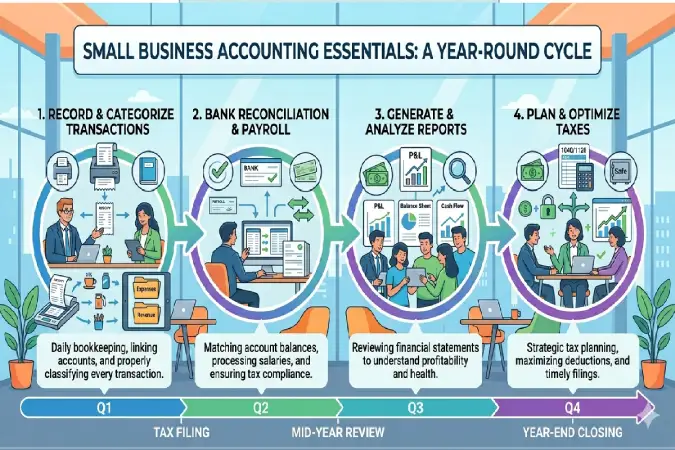
There is a simple rule: Take notes week by week, check so accounts monthly, and check tax when quarterly. This way, the business will be ready, not in a rush at the end of the year.
Common mistakes to avoid
Small business owners often make the same bookkeeping mistakes:
- Using personal funds for business purposes.
- Leaving the task of keeping records and organizing receipts until tax season.
- Not having bank accounts that clear.
- Not saving all receipts.
- Working with spreadsheets once they have been outgrown.
- Allowing unpaid invoices to go unpaid.
Those errors are cheap and very common. The sooner a firm corrects them, the easier it will be to scale up without becoming overwhelmed by cash.
Troubleshooting section
If bookkeeping is daunting, stick to three habits: record all transactions, reconcile all bank accounts, check reports monthly. That’s enough to eliminate most common beginner errors.
If your books are already a mess, don’t attempt to correct everything immediately. Start with the last 3 months, split business and personal, and go from there.
If you are unsure whether to DIY or outsource, use this rule:
- DIY if your transactions are simple and few.
- Use software if you find structure and automation appealing.
- Get bookkeeping services if the value of your time exceeds the monthly fee.
FAQ
Any distinction between accounting and bookkeeping?
Bookkeeping is recording transactions; accounting is analysing those transactions and using them to help with planning, taxes, and operations.
What is the best accounting software for a small business?
The most popular software can run far into the hundreds, but some of the more common ones are QuickBooks, Zoho Books, FreshBooks and Xero.
Are bookkeeping services essential for small businesses?
Not all the time, but often, the more often taxes, invoices etc. are made the more need a bookkeeping service.
How often do small business records need to be updated?
Best is weekly updates, with monthly reconciliation and quarterly financial review.
The significance of tax planning for business:
Tax planning gets prepared in order to lower surprises, enhance cash flow, and also run the business in the most correct ways.
Conclusion
Business accounting and bookkeeping are much more than administration; they are systems, protecting profit, aiding decisions and enabling less painful tax seasons. In 2026, this area‘s top content should blend novice learning, software reviews, actionable setup tips and simple-to-follow cues and Plan outlines for small business owners. The article here is designed to perform well both informational and commercial Search.