

Auto Insurance Coverage: A Complete Guide to Types, Costs, and Discounts
Last Updated: September 21, 2026
Auto insurance shields drivers from the costs associated with accidents, theft, damage to the vehicle and injuries. As you shop for your first policy or as you review your existing policy, it is a good idea to learn about the different types of auto insurance you may need.
Liability, Collision, and Comprehensive Coverage
A number of coverage types are common among auto insurers.
Liability coverage includes coverage for injuries or property damage that you cause to another person in an accident. Type of coverage in this category generally includes bodily injury liability and property damage liability. Covers liability are required by law in most states but the minimum limits vary.
Or it might pay for the damage repairs or replacement to your car if it hits something else, whether it‘s another car or an object collision coverage this type of coverage might be suitable if you drive a newer and more expensive car.
All-round protection Car, provides cover for damage other than collision. Incidents may include theft, malicious damage, fire, falling objects, hail, flooding or hit by an animal.
There are other optional policy additions such as un/underinsured motorist coverage, medical payments coverage, personal injury protection, roadside assistance, etc.
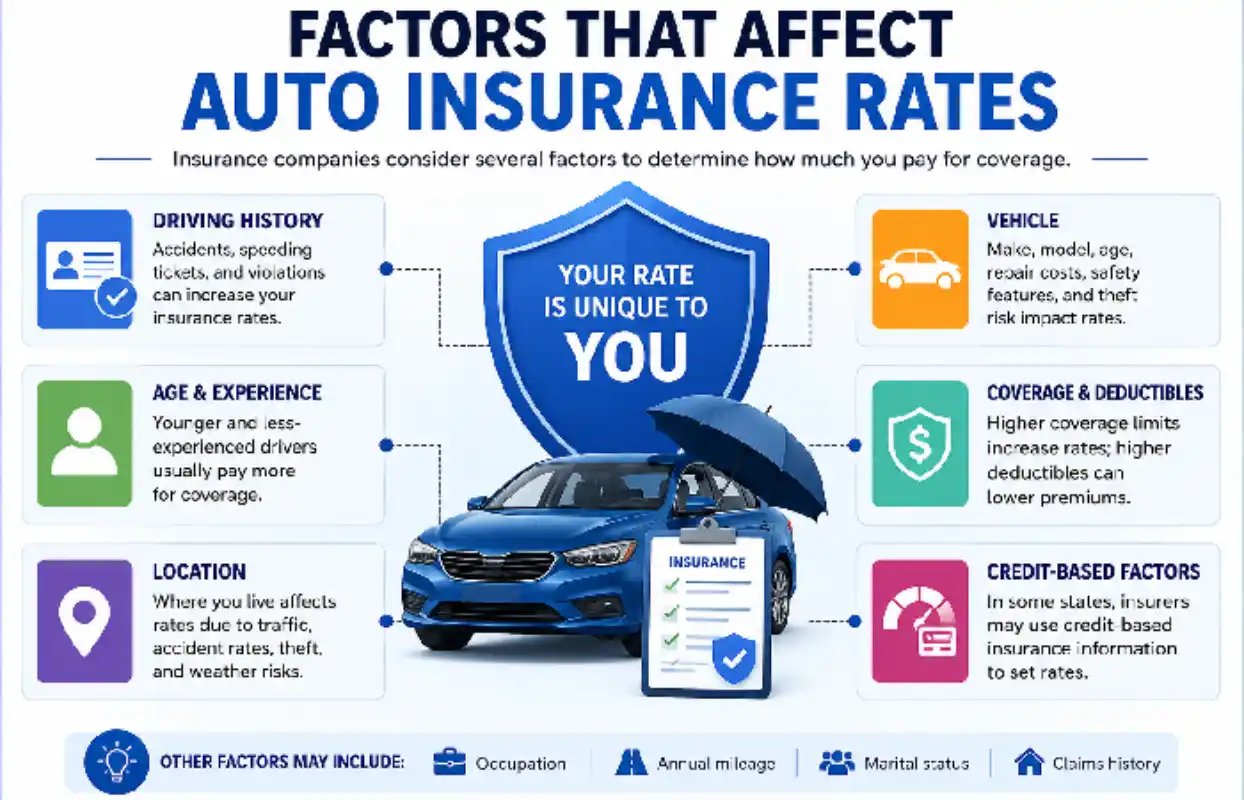
Factors That Affect Auto Insurance Rates
There are many others that insurance companies use to work out the cost of it. What they take into account are:
Driving history: Accidents, speeding tickets and other violations tend to raise your premiums. If you have a clean driving history they work in your favor
Age and driving experience: In general, younger, less experienced drivers pay higher premiums, due to the insurer‘s view that they are a higher risk group.
Vehicle: The type of vehicle is likely to have a number of affects on the price of cover; the make and model, the safety features of the car, the repair costs associated with the vehicle, the value of the car and the likelihood of it being stolen.
Place of residence-The location in which you reside impacts premiums as by their nature insurers look at the volume of traffic,fatal accidents, theft and weather related risks.
Coverage limits and deductibles: Higher coverage limits usually increase premiums, while choosing a higher deductible can lower the premium. However, you will pay more out of pocket when making a covered claim.
Credit-based insurance factors: In some locations, insurers may use credit-based insurance information when permitted by law. Rules vary considerably by jurisdiction.
Full Coverage vs. Minimum Coverage
Minimum coverage generally means purchasing the legally required liability insurance. It can be less expensive, but it may provide little or no protection for damage to your own vehicle.
Full coverage is not a standardized insurance product. The term commonly refers to a policy that combines liability coverage with collision and comprehensive coverage. It can provide substantially broader protection, but it usually costs more.
For example, if you cause an accident and only have liability coverage, your policy may help pay for the other driver’s covered losses, subject to your policy limits. Damage to your own vehicle may not be covered.
With collision and comprehensive coverage, your own vehicle may also be protected against qualifying damage.
When choosing between the two, consider your vehicle’s value, financial situation, lender requirements, emergency savings, and tolerance for risk. Drivers financing or leasing a vehicle may be required by their lender to maintain collision and comprehensive coverage.
Auto Insurance Discounts to Claim
Many insurers offer discounts that can reduce premiums. Availability varies by company and location, so it is worth asking your insurer which discounts apply to you.
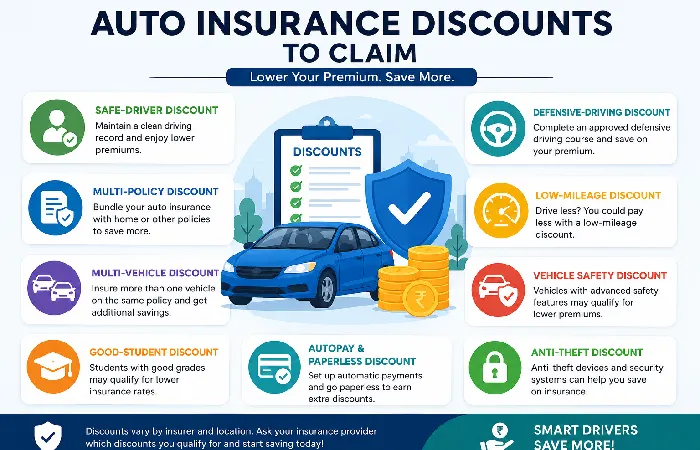
Common opportunities include:
- Safe-driver discounts for maintaining a clean driving record
- Multi-policy discounts for combining auto insurance with another policy
- Multi-vehicle discounts for insuring multiple vehicles
- Defensive-driving discounts where approved courses qualify
- Low-mileage discounts for driving fewer miles
- Vehicle safety discounts for certain safety equipment
- Anti-theft discounts for qualifying security devices
- Good-student discounts for eligible students
- Automatic-payment or paperless-policy discounts offered by some insurers
Don’t assume discounts are automatically applied. When reviewing your policy, ask your insurer to check whether you qualify for any new savings opportunities.
Filing an Auto Insurance Claim
After an accident or covered incident, taking the right steps can make the claims process easier.
- Prioritize safety. Move to a safe location when possible and contact emergency services if anyone is injured or the situation requires police assistance.
- Document the incident. Take photos or videos of vehicle damage, road conditions, relevant signs, and the surrounding area when it is safe to do so.
- Exchange information. Collect appropriate contact and insurance information from other involved drivers and witnesses.
- Report to your insurer. (I.e., as soon as possible, and give them specific, factual information about what the incident was).
- Document everything. Save claim numbers, estimates for repairs, receipts, correspondence and any other documents.
- Coordinate with the claims process. Your insurance company could send an inspector, ask for more details, or direct you on how to get an estimate for repairs.
Know your deductible and the terms of your policy before making a claim. Although relatively easy repairs that cost only a little more than your deductible will have a different financial impact than an expensive loss, your insurance company‘s reporting requirements and claim handling procedures may differ, so follow your policy and insurer instructions.
How to Choose the Right Auto Insurance Coverage
The amount of liability protection you feel comfortable maintaining should be established first, then if collision and comprehensive coverage apply to your (s) should be considered. The least costly policy is not necessarily the best policy.
Compare quotes with the same coverage limits and deductibles before making an apples-to-apples comparison. Read over exclusions, optional coverages, claims service, and insurer reputation not simply the quoted premium.
There are also situations in which you might need different coverage. If you purchase a new car, relocate, get a new driver, or alter your miles per year or loan amount, it‘s time to reassess.
Final Thoughts
Understanding auto insurance is a case of understanding when protection is necessary and when it is not. (Liability can protect you from certain instances of you being responsible for something, and collision and comprehensive can protect your vehicle from other causes of damage.) Knowing how insurance providers determine their rates, and taking top advantage of all discounts available will help you keep the cost of your auto insurance down.
Re-evaluate your policy periodically and check your coverage whenever your situation changes. Having an appropriate policy for your vehicle, budget, and risk sensitivity can be cost effective and advantageous.