

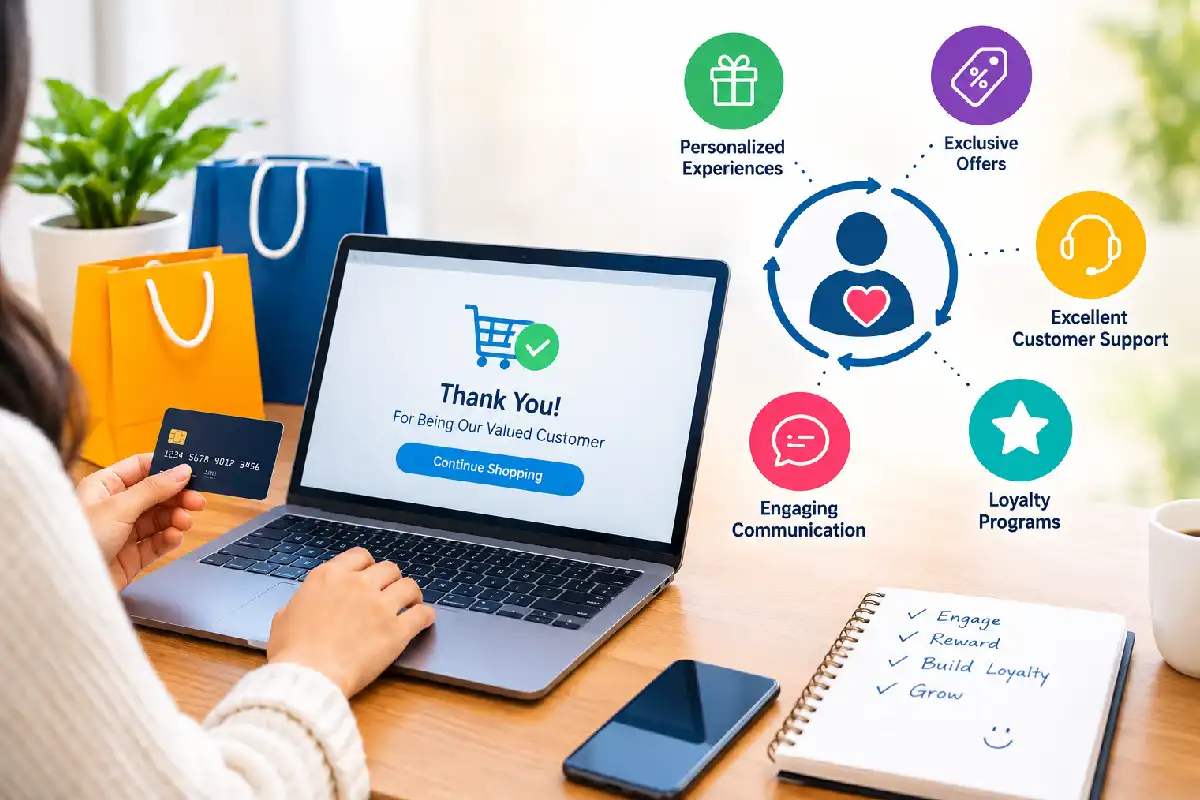
Ecommerce Customer Retention Strategies That Work
Last Updated: September 13, 2026
Customer retention is more important than customer acquisition in an ecommerce environment. It is all about getting customers to come back to buy from you repeatedly, keep them interested in your product and shape them into long term customers.
A strong retention strategy can lead to increased customer lifetime value, higher profitability, and a dependable set of repeat customers. Why keep investing in bringing in new customers when ecommerce brands can develop a relationship with existing ones?
There are other strategies to increase the number of retained customers, such as customizing recommendations and corresponding offers, designing loyalty programs, providing good quality customer service and keeping good communication on the after-sales period.
Definition of Customer Retention in Ecommerce:
Customer retention for ecommerce is a measure of how well an online business meets its customers’ needs in order to acquire and retain them over a long period of time.
A one-time buyer is great, a repeat customer who buys time and time again can generate huge value for the business. Customer retention aims to make sure that early one-time buyers become repeat customers and brand advocates.
Important factors that influence ecommerce retention include:
- Product quality
- Customer service
- Pricing and value
- Shipping and delivery experience
- Personalized communication
- Loyalty rewards
- Website experience
- Easy returns and refunds
- Post-purchase support
Customer retention begins the moment your customer completes their transaction. Be sure your confirmation email, helpful product information, delivery notifications, and follow up message all entice the customer to continue shopping with your company.
How to Increase Ecommerce Repeat Purchases
To gain cumulative sales, more than just a promotional email to the customer; you need to give the customer a reason to come back.
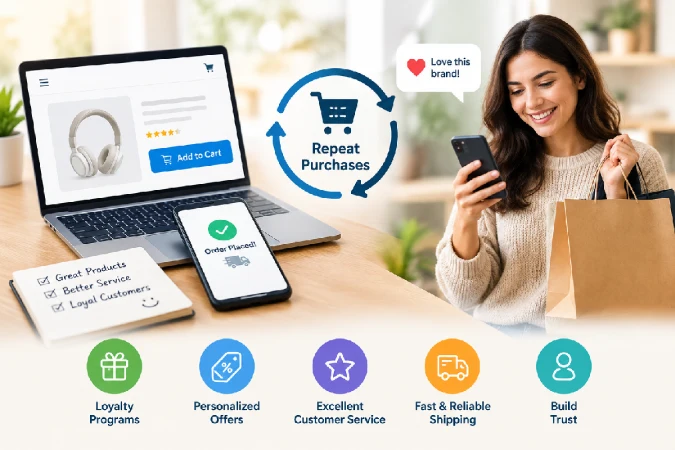
1. Deliver a Great Customer Experience
Customers come back more when buying is easy. Provide straightforward product descriptions, make checkout quick and define delivery time.
Short turnaround time from adding a new promotional offer through to implementation within a store environment can be another reason to generate trust.
2. Use Post-Purchase Marketing
Don‘t halt your contact after an order is received. Follow up with helpful information about the product, maintenance instructions, suggestions for related products, or an invitation to review an item.
For example, a skin care store could send customers instructions on how to use a product they have just bought and follow up with suggestions for other products.
3. Create Replenishment Reminders
Certain items are just better when bought repeatedly. For resale brands in sectors like cosmetics, food and drink, supplements and cleaning products, this is an opportunity to alert the customer they are about to run out, and stock up.
A timely reminder makes repeat purchase easy, and also ensure the brand stays visible.
4. Offer Personalized Recommendations
Suggest things that customers do actually want or need by using history on previous purchase patterns, by products they have browsed, and by items that are most relevant to them.
Relevant recommendations are able to increase re-purchase level without the customers feeling that they are receiving irrelevant ads.
5. Give Customers Exclusive Benefits
Returning customers can be tempted to buy again through early access, promotions, free delivery spend limits or exclusive deals for members.
You aim to ensure that your clients can believe that sticking to purchasing from your company would still have even more value.
Ecommerce Loyalty and Rewards Strategies
A good loyalty program encourages buyers to return again and again.
A basic loyalty program might award points for purchases. More advanced programs can reward customers for different types of engagement.
Possible rewards include:
| Loyalty Strategy | Example Benefit |
| Purchase points | Earn points for every purchase |
| Referral rewards | Get rewards for referring friends |
| Birthday rewards | Receive a special birthday offer |
| VIP tiers | Unlock better benefits after reaching spending levels |
| Early access | Shop new products before general customers |
| Exclusive discounts | Receive members-only promotions |
| Free shipping | Free delivery after reaching a loyalty threshold |
Also, they need to be simple to understand. Rewards if not clear to customers about how points are earned or redeemed may lead to less impact to the program.
Apart from rewarding purchasing behaviour, businesses should also acknowledge other actions customers might take such as writing a product review, referring the business to friends or maintaining a frequent loyalty card.
How Personalisation Can Improve Customer Retention
Personalized experiences: Personalized experiences allow e-commerce companies to customize the experience for the user.
Customer data enables brands to personalize recommendations, offers and communication rather than applying the same message equally to all recipients:
Examples include:
- Product recommendations based on previous purchases
- Personalized email campaigns
- Recently viewed product reminders
- Offers based on shopping behavior
- Birthday or anniversary messages
- Recommendations based on product categories
- Personalized replenishment reminders
For instance, a customer who regularly subscribes to fitness magazines could be recommended a new line of gym clothes instead of a promotion for a completely different item.
Personalization may also be applied to the Web site itself. Returning visitors will be able to view the products they recently browsed, receive tailored recommendations, special offers or products connected to an order they placed before.
The point is that customer data should be handled with care. Customization should be about convenience and benefit in the shopping experience, not about intrusive marketer domination.
Other Ecommerce Customer Retention Strategies
Although loyalty and personalization are both significant factors, retention is primarily contingent upon the customer experience.
Provide Excellent Customer Support
Quick and professional handling of problems will lead to repeat customers. Provide one-stop service by offering easy-to-access support through channels your customers frequently visit.
Make Returns Easy
A complicated return process can discourage future purchases. A clear and reasonable return policy can reduce friction and increase customer confidence.
Build a Community
Social media, user-generated content, online communities, and customer stories can help shoppers feel connected to your brand.
Ask for Feedback
Customer feedback can reveal problems that may otherwise cause shoppers to leave. Surveys and product reviews can help businesses identify opportunities to improve.
Surprise Loyal Customers
The good incentives: Infrequent unexpected gifts, special privileges, and personalized thank-you messages can enhance consumer relationships and loyalty.
How to Measure Ecommerce Customer Retention Rate
You can‘t improve customer retention without measuring it.
Ecommerce customer retention rate: this is the measurement used by businesses to establish the
A common formula is:
Customer Retention Rate = [(Customers at end of period – New customers gained) divided by Customers at beginning of period] times 100
E.g., just as beginning a period with 1,000 customers, gaining 300 new customers, and ending with 1,100 customers.
The calculation would be:
(1,100400) ÷ 1,000] × 100 = 80%
It held onto 80% of its original client base. of its original customer base during that period.
Other important retention metrics include:
- Repeat purchase rate: the proportion of customers] who buy more than once.
- Customer lifetime value (CLV): Represents the potential lifetime revenues of a customer.
- Purchase frequency: How many times customers buy.
- Avertissement de moyen de commande (AOV): Medium amount purchased during a sale.
- Churn rate: Percentage of customers end buying from the time period.
- Customer retention rate: Proportion of customers retained over a period.
Monitoring these numbers over a period of time will show ecommerce businesses if the retention campaigns are really effective.
Conclusion
Ecommerce Customer Retention Strategies are important for maintaining a valid online business. Customer acquisition brings customers to your business, but retention allows you to maintain a series of loyal customers.
The first step is to create an excellent customer experience. Follow this up with building relationships with customers through post sale communication, customized up-sell and cross-sell recommendations, customer loyalty reward programs, re-sell reminder and provision of high quality customer service.
Finally, measure your customer retention rate, repeat purchase rate, lifetime value of customers, purchase frequency and churn to find out what worked in your favor.
The best ecommerce brands aren’t obsessed with getting the first sale. They build experiences so compelling that customers will want to keep coming back.