

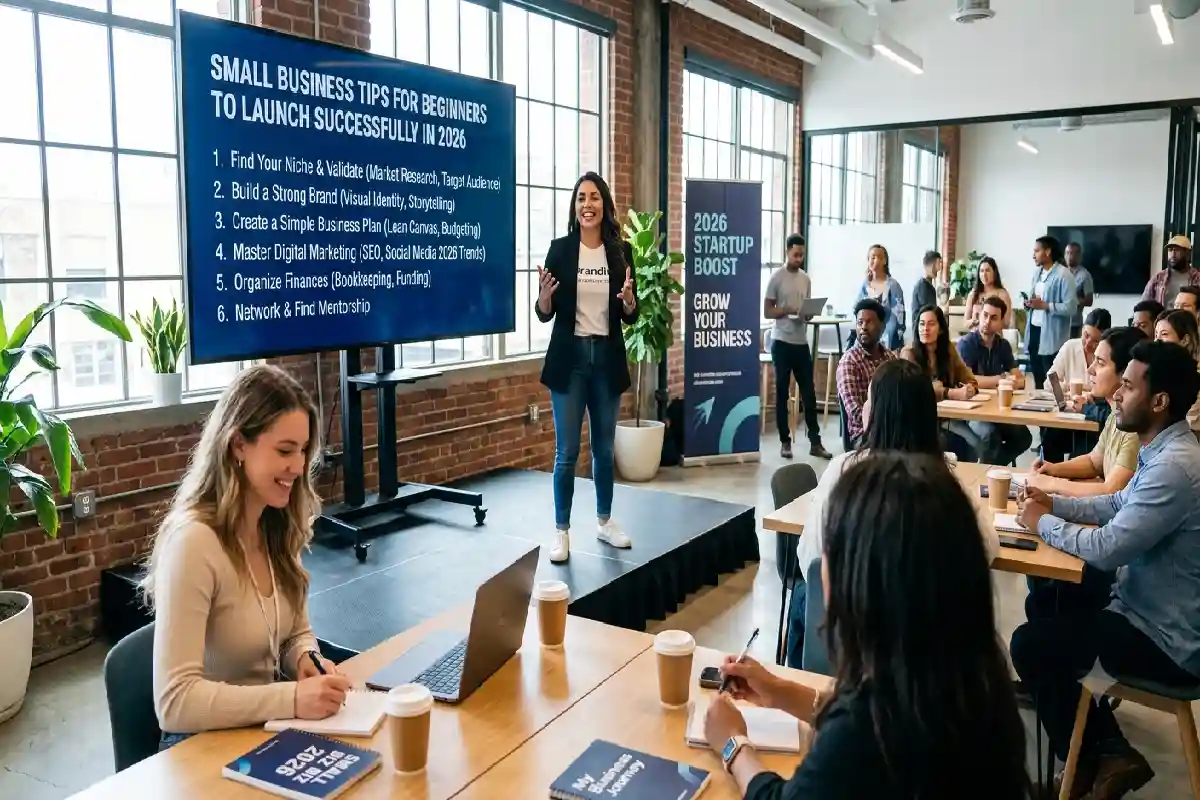
25 Small Business Tips for Beginners to Launch Successfully in 2026
Last Updated: July 12, 2026
In 2026, it will be less painful and more comforting than before to launch a small business and you will succeed if you equally embrace disciplined planning, digital, and the customers that you always focus on. To all first-timers, here is your first 25 how to guide to fast launch.
1 5: Started and Verified
Was Georeferenced Acknowledgements. The map displayed on which the vectors were based allows developers to build upon using characteristics such as outcy attribute to search the database for similar objects. Pretty much integrating a GIS into a database.
- Begins with a problem to solve. Good companies solve one, real pain point for one niche- not the widely defined “everyone”. Define who you help and how you can help solve this problem better, more intelligently or longer then anyone else.
- Validate before you buy in. Before sinking capital into branding, inventory, or a gorgeous website find out if people care about your idea by talking 10 to 20 people through rapid-fire surveys or by testing a scaled-back version of your offering (pilot product/package/ pre-sell).
- Describe your vision, mission statement and goals. Identify the product you are creating, why you are creating it and where you hope your business will be in 6 – 12 months time. Your new business will lack direction without clear goals and objectives.
- Begin with a small niche be very laser-focused about your niche. For instance, instead of saying, “content marketing,” specify “ai tools for neighborhood clinics” or “best skin care content for busy executives.” That‘s outstanding, create an expertise with speed of ranking, and improve your offer.
- Summarize your business model in one page. Write the value proposition, your customer group, your revenues, your price structure, your key activities. It will help to have a clear focus and to share your project with partners or mentors.
6–10: Legal, Money, and Operations

- Separate personal finance from business be go for current account and get a GST number if possible. It is a proof of the already existing business, makes thing easier and existing a credibility.
- Reduce “start-up” overheads and monitor constantly. Free “free” items, avoid frivolous moving parts. Purchase only as much as is necessary to run the business (domain name, simple website, essential equipment, modest stock) and keep detailed accounts from the very beginning.
- Get systems in place for the beginning. How can you get new clients? How are you going to deliver your product/service? How will you accept payments? How will you support and service your clients? How will you manage returns? Systems will allow you to scale without chaos. Go digital first and stay lean.
- Use easier-to-get (free/cheap) tools online. Website (Carrd, WordPress), designing (Canva), payment (Razorpay, Instamojo), automation (Zapier, Make. Instead of custom-building tech.
- Plan for compliance from the moment you open your doors. Find out what major filings you will have to make (proprietor-ship, LLP or LLC), what taxes are applicable and what licenses you will have to operate in your industry. If you fail to comply when it counts, it will be expensive.
11–15: Product, Pricing, and Offer Design
- Create a simple to copy proposal for your business. Ensure that you make your proposal crystal clear and outline in detail what you are proposing and how it is formatted as well as the duration of the delivery. Customers cannot understand poor contracts, and will be less willing to buy.
- Price for value rather than time or cost. Your charge should be based on the outcomeyou have acheived, you bring to the party versus existing rates. Provide a goodbetterbest provision for peoples budgets.
- Take the first offering a no brainer. Give a free trial or low cost package for a thorough review/testimonial. This way you lower the barrier for early adopters and get some social proof immediately.
- Choose one key product/service. Don‘t devote your time to 10 ideas. Get one main solution now. When your sales grow and your operation is prepared, then you can build other diversified ones.
- Bring customer comments into the sales process. As you close each sale or complete each project, ask your customers what pleased them, what didn‘t and what they would like you to have which you don’t, and then respond to those comments quickly to get your packaging, pricing and pitching right next time.
16–20: Marketing and First Customers
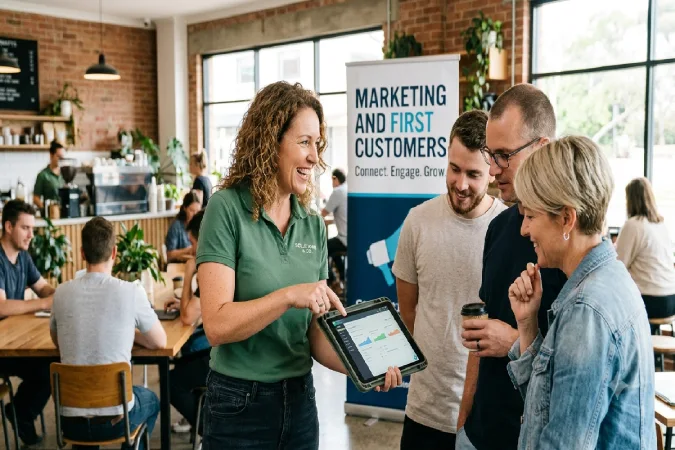
- Pick your core marketing channel. Don‘t be scattershot pick one channel where your ideal customers are already hanging out. Maybe it‘s Instagram (want to visualize your products), or LinkedIn (b2b), YouTube (for learning).
- Start implementing Content marketing and SEO strategy right from first day. Generally have a website that delivers valuable content answering the queries that your targeted market is likely to have (“how to” “best tools for.” “best practices”). An excellent article will give you results for years.
- Tips on How to Get First 20 Customers. Genuine referrals are my preferred way. Reach out to friends, relatives, customers, and local residents that may be interested in your for sale merchandise. Send a tailored email message explaining what you are selling and asking for either a referral or a sample.
- Use the audiences of others. Collaborate with relevant companies or creators for joint live, swaps, webinar or giveaway. Tapping into someone else‘s audience rapidly enhances trust and reach.
- Collecting and publishing testimonials. Happy customers are one of your best marketing tools. Short videos, before and after images and case studies are perfect for your Website and social media pages.
21–25: Growth, Data, and Mindset
- Keep an eye on those key figures. Choose the 4 5 that influence your bottom-line the greatest: leads, conversion rate, average order size, re-order rate, profit margin. Measure these to identify where to focus your attention and budget.
- Tweak your offer with numbers and proof, not with emotion. If you are not getting results on a channel or product after proper testing, test the offer, creative, headline or audience. Think of your business as a growth engine, not a one time endeavor.
- Utilize AI to expand the amount you do. Utilize it to make content for social medias, emails marketing, and even for entry level customer service. It would be like having a 5 people team with just you in a oneman business.
- Preserve your time and resources. Refuse new ” ideas” that don‘t align with the heart of what you‘re offering. Don‘t divert your attention to new bright, shiny objects so you can sign up your first 10-20 paying customers.
- Build for consistency, not for virality. Keep posting, keep following up on your leads, and keep giving. Your small daily actions will sum to thousands of dollars and hundreds of true fans.
Conclusion
Whether you are to start a small business in 2016 or not, I truly think it is feasible for everyone if you‘re willing to start small and measure fast and keep on. Follow these 25 tips validate, lean systems, get your first customers, focus on data driven growth I swear you can create a business that could last over time.
It is not about a perfect idea or case of viral event; it is about solving a problem, bringing some actual value and showup every single day. Start right where you are, right with what you have. Use your first 20 customers to be a platform toward something great and big.