

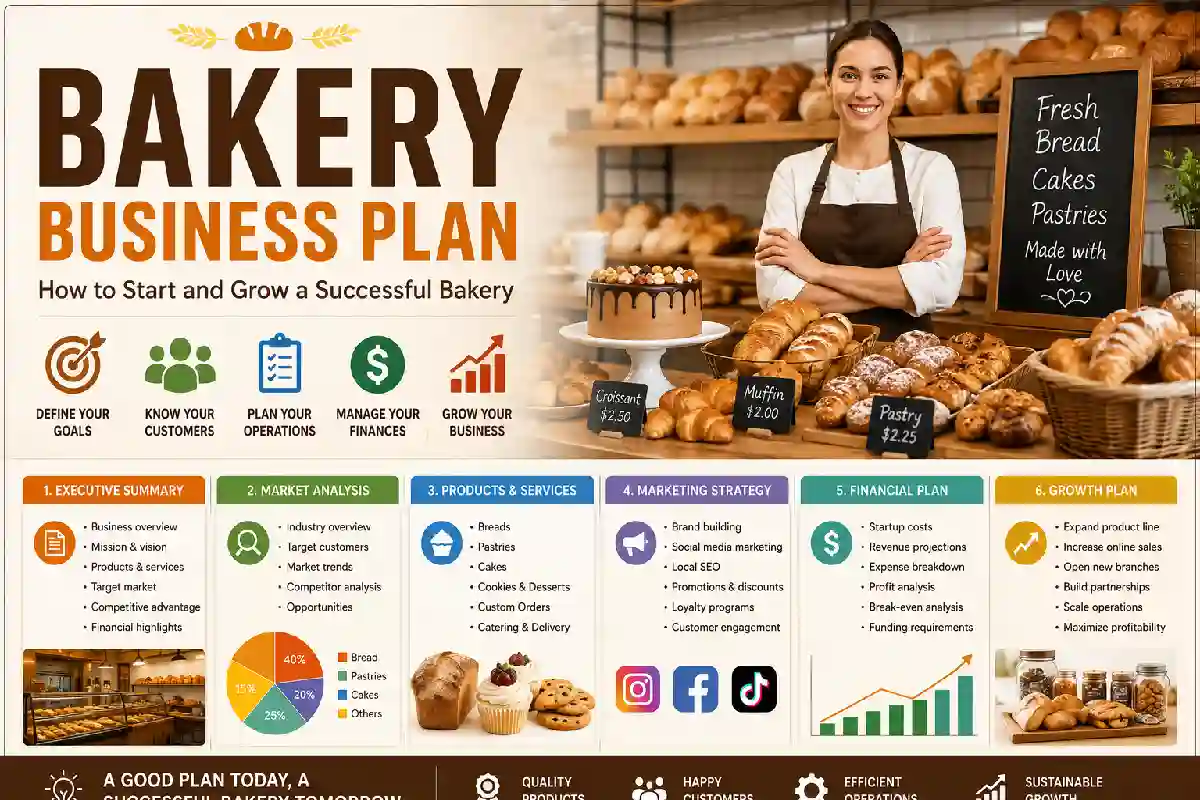
Bakery Business Plan: How to Start and Grow a Successful Bakery
Last Updated: September 15, 2026
Bakery Business Plan is the Foundation for Your Sweet Dreams If you have the heart of a baking pro and are looking to combine your skills with the allure of entrepreneurship, your first stop is this ultimate Bakery Business Plan. With your delicious and one-of-a-kind menu and the knowledge of who you are serving and how you will do it, the sky really is the limit.
The business of bakeries is perfectly tailored to passionate and doughy entrepreneurs. Whether you intend to create and sell fresh breads and pastries to your neighbors or have plans to bake specialty goods for a devoted crowd of foodies at your own artisan bakery, or would like to launch a cake studio or offer on-demand designs, your Bakery Business Plan should give you everything you need to define your goals, measure your startup cost, get investors on board and successfully establish a strong organizational foundation.
From marketing approaches and operational plans to market research and startup expenses, learn the elements that make a solid bakery business plan.
What is a bakery business plan?
A bakery business plan is a formal document that lays out your bakery’s specific aims, proposed products, identified market, anticipated earnings, planned advertising techniques and operational functions. It can function as a road map when initiating and developing your bakery; additionally, it will enable lenders and investors to review your business’s potential.A good bakery business plan should generally consist of the following:
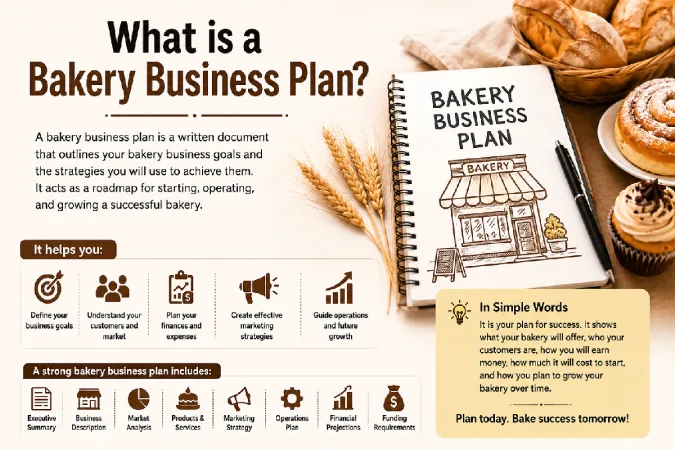
A strong bakery business plan typically includes:
- Executive summary
- Business description
- Market analysis
- Products and services
- Marketing strategy
- Operations plan
- Management structure
- Financial projections
- Funding requirements
- Risk analysis
Why You Need a Bakery Business Plan
A business plan is much more than paperwork. It helps you make informed decisions and avoid costly mistakes.
Benefits include:
- Clarifies business goals
- Identifies your target market
- Estimates startup costs accurately
- Improves financial planning
- Attracts investors and lenders
- Guides daily operations
- Measures business performance
- Supports long-term expansion
Without proper planning, even excellent bakers may struggle to build a profitable business.
How to Start a Bakery Business
When starting a bakery business. There are several more factors to consider besides merely baking. You’ll have to consider financing and business planning to be successful. Fortunately, whether you’re starting a business bakery for profit or operating one in your kitchen for fun, you can be well on your way with just a few key steps.
Step 1: Decide the type of bakery you want to open.
There are many different types of bakery businesses you can start.
Decide the best way for you to reach your ideal audience.
- Home-based – ideal for custom cakes, online sales, or getting your foot in the door at a relatively low start-up cost.
- Retail Bakery – one where customers walk in to buy your baked goods.
- Café – the baking business is paired with a place to eat, enjoy coffee, and relax.
- Wholesale bakery – your main customers are restaurants, coffee shops, and other businesses that serve food.
- Speciality bakery – focusing on niche items like vegan goods, gluten-free goods, artisanal breads, or custom cookies.
Step 2: Perform market research before beginning
Your ideal customers will determine the success of your business, and doing a bit of research is beneficial.
- What You Want to Offer,
- Who Wants It,
- What The Price Range Is,
- Who The Competition Is, And
- How Your Business Could Fit into the Market.
Step 3: Develop a business plan
If you’re looking to attract investment, you’ll want to develop a thorough business plan. Even if you’re not seeking investors, you should put one together to serve as your business roadmap.
This should include an
- Executive Summary
- Business Description
- Products And Services Description
- Market Analysis
- Management Team
- Marketing Strategy
- Financial Projections.
Step 4: Register Your Business
You’ll want to go through the official process of setting up shop to be legit.
Business registration
- Food business license
- Health permits
- Tax registration
- Fire safety approval
- Business insurance
Step 5: Select the Right Location
Location is of high priority for retail or brick-and-mortar shops, and may not be an issue for online businesses.
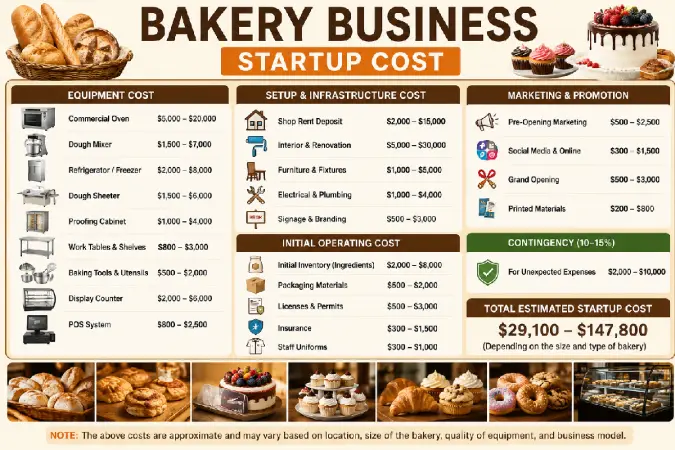
Bakery Business Startup Cost
Small Business Administration: The Right to Open a Bakery and Other Restaurant Business Facts – Entrepreneur
Essential Bakery Equipment
| Equipment | Purpose |
| Commercial Oven | Baking bread, cakes, and pastries |
| Dough Mixer | Mixing dough efficiently |
| Proofing Cabinet | Dough fermentation |
| Dough Sheeter | Rolling dough evenly |
| Refrigerators | Ingredient storage |
| Freezers | Frozen inventory |
| Display Cases | Product presentation |
| Work Tables | Food preparation |
| Baking Trays | Baking multiple items |
| Cake Decorating Tools | Cake finishing |
| POS System | Sales and inventory management |
| Packaging Supplies | Customer takeaway orders |
Pricing & Revenue Strategy for your Bakery.
Pricing is one of the factors that impact a bakery’s overall success. Prices should allow for your costs while also being palatable and profitable for customers.
Calculating the product cost
- Ingredient
- Labor
- Packaging
- Utilities
- Rent
- Equipment depreciation
- Marketing expenses
| Cost Component | Amount |
| Ingredients | $1.20 |
| Labor | $0.80 |
| Packaging | $0.30 |
| Utilities | $0.20 |
| Total Cost | $2.50 |
Revenue Streams
In addition to serving customers at your store, you may want to increase your bakery sales through:
- Daily bakery sales
- Custom cakes
- Wedding cakes
- Corporate orders
- Catering services
- Coffee & beverages
- Online orders
- Delivery services
- Wholesale Supply
- Baking classes
Marketing Strategies for Bakery Businesses
A fantastic bakery also needs fantastic marketing strategies!
Build a Strong Brand Identity. Your brand should include:
- Professional logo
- Beautiful storefront
- Branded packaging
- A consistent colour scheme
Use Social Media
For your bakery, focus on sharing these content ideas:
- Freshly Baked Goods
- Video Of The Baking Process
- Tutorials Of Cake Decorating
- Customer Testimonials
- Holiday Sales
- Special Offers
Using platforms like Pinterest, Instagram, and TikTok will allow your beautiful treats to be seen by the world.
Bakery Financial Forecast and Growth Plan
Financial planning is an important part of determining if a bakery business will continue to profit.
Revenue Forecast
The revenue is the income the business earns. Use the following to estimate the total sales:
- Daily customers
- Average sale value
- Number of days the business is open
- Seasonal customer trends
For instance:
| Metric | Monthly Estimate |
| Daily customers | 120 |
| Average purchase | $12 |
| Operating days | 30 |
| Monthly revenue | $43,200 |
Monthly Operating Expenses
Here is a general outline of potential monthly bakery operating expenses:
- Employee salaries and wages
- Ingredients
- Utilities
- Packaging Insurance
- Marketing efforts
- Equipment repairs & maintenance
- Bank loan repayment
Break-Even Analysis
The break-even point is the minimum sales revenue you need to achieve to avoid losses.
Breaking this number down is useful for determining sales targets for the month. Managing your bakery’s cash flow.
Cash Flow Management
Keep cash flow healthy by:
- Tracking your inventory.
- Reducing your food waste.
- Negotiating prices and terms with your suppliers.
- Accepting advanced payments on custom orders.
- Keeping a healthy emergency cash reserve.
Long-Term Growth Plan
If your bakery is doing well, consider ways to expand your business:
- Opening new bakery locations
- Creating a fully operational e-commerce store
- Shipping orders nationwide
- Supplying your goods to supermarkets and other businesses
- Offering coffee and beverages
- Creating your own baking subscription box
- Selling branded baking mixes
- Franchising your bakery
Key Performance Indicators (KPIs)
Measure your bakery’s success using the following metrics:
- Monthly sales growth
- Gross profit margin
- Net profit margin
- Customer retention rate
- Online sales as a percentage of overall revenue
- Average order value
- Inventory turnover
- Food waste percentage
- Customer satisfaction scores
A well-planned bakery business can be a very profitable venture!
Conclusion
Your bakery business plan will be a navigational guide to help you as you travel through the terrain of opening your bakery. This is a step-by-step guide that helps you discover how to determine goals, know and understand who you want as a customer, account for all start-up expenses, and launch a well-rounded bakery. Understanding which business model fits you, what equipment to purchase, how to correctly price your items, how to market the items, and create financial projections will be the key to the journey you are starting.
In building a strong, devoted clientele and creating a reputable establishment, you need to offer top-tier product, adhere to business practices, and give customers what they need.
As the bakery continues to develop and evolve consider looking to anticipate market fluctuations, offer new products frequently, expanding to include the online market or wholesale bakery options, maybe consider a cafe, or even another bakery in another neighborhood! With financial strategy, inventiveness, and a dedication to the consumer, your bakery can be grown from a small venture to a profitable and thriving business.