

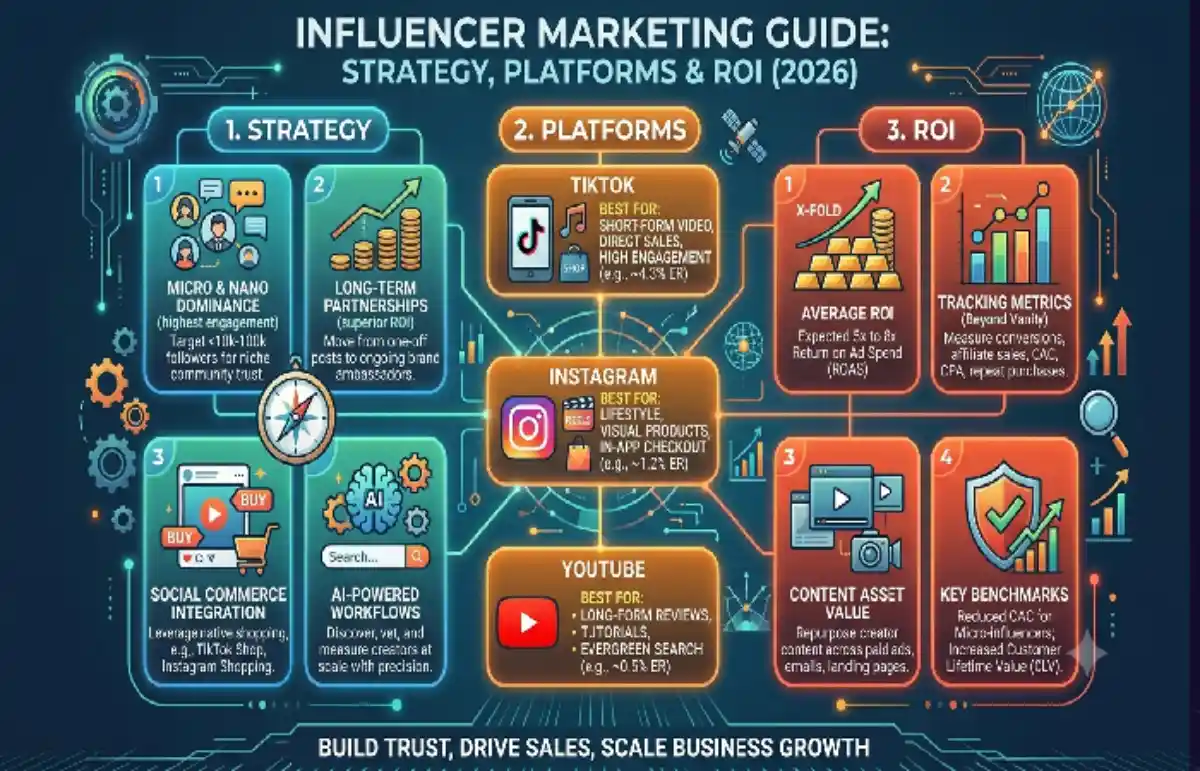
Influencer Marketing Guide: Strategy, Platforms & ROI (2026)
Last Updated: September 15, 2026
As marketers know, a good influencer can be a powerful tool. Influencer marketing is effective for targeting a narrow audience or niche with your messaging. Combined with your social media strategy, it can be used to improve campaign roi in order to increase brand awareness and sales.
Collaborating with Influencers can mean your brand will receive more of the influencer‘s creative and unique voice. Influencers are most often creative with a knack for crafting engaging content that your audience will appreciate.
How to Locate Influencers (Without in the process)
Start with your audience and goals rather than “ready-made” numbers of followers.
Stage 1: Identify whom and what to target, understanding the reasons for consumption (Awareness, Consideration, or Conversion). Identify important information about your persona (demographics + psychographics: what values/ interests, which platform they use).
Step 2: Build a Creator Shortlist (Two options: Free and Paid Ways). Use both options: Social Listening Tools (Brandwatch, Sprout Social, Hootsuite): Search for keywords/hashtags related to your niche to find influencers mentioning your niche/brand.
Search Engines & Blogs: Do a Google search on”[your Niche] best influencers/blogs/YouTubers” and take a glance at the guest contributors posting on your industry’s websites.
Instagram: Explore niche hashtags, the Explore section, the “Suggested for You” tab and the content posted with your brand/niche hashtag by your competitors.
- Search hashtags like (#BookTok, #CozyGaming etc), trending tab, or browse approved creators on Creator Marketplace/ TikTok Shop.
- YouTube: use niche keywords and order by newest videos to discover how popular they are, check comments and Community tab for indicators of activity.
- Facebook: join niche Groups, browse brand Pages for influencer posts and search “People Also Like”.
- Competitor Analysis: monitor the content and success of the creators your competitors are collaborating with.
- Specific Influencer Platforms (HypeAuditor, Modash, SARAL etc.) use these for filtering in terms of niche, location, quality of it’s audience, level of engagement, export of data.
Step 3: Quickly Vet Creators
Prioritize fit and quality over sheer follower count:
- Audience Match: Will their followers match your target persona? (age/think they are they location? interest?).
- Engagement quality: comment inspection (look for real conversations not just emojis/bots), number of saves, shares, views on the video compared to the fans/followers.
- Content Fit: be aware of their tone of voice, visual style, and how comfortable they sound talking about categories/companies that are similar to yours.
- Genuineness & commitment: Ensure they actually brand-sponsor posts (#ad, #sponsored) and regularly churn out content.
Microinfluencer Marketing: Why It Works in 2026
Microinfluencers (roughly between 10,000–100,000 followers depending on the niche) are relevant in 2026 as they offer more engagement, more niche trust and a higher ROI to many DTC and B2B companies.
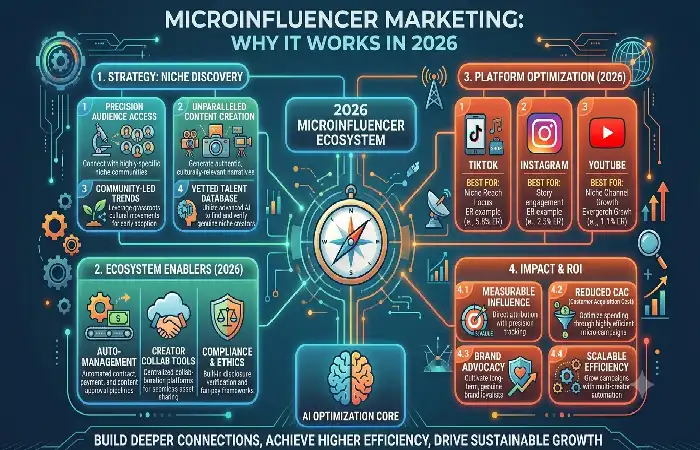
When microinfluencers are the best choice:
- You can only reach a very specific niche (say, environmental or ethically-sound grooming, indy games, specialized exercise).
- You wish to find genuine UGC that can be leveraged across Ads, Emails and product pages.
- You are entering a specific geographic market or a defined community (local food scene, regional fashion, etc.)
- You have a restricted budget but require scalable, repeatable campaigns.
Best Practices for Micro-Influencer Campaigns:
- Link personas to niches: Rather than looking at the number of followers, associate your persona (“eco-friendly Gen Z”) with a niche of creatives (“mobile creators in sustainable habits”).
- Small is beautiful. Iterate: once a first test campaign is successfully launched, then increase his budget only on creators whose audience reacts positively.
- Focus on storytelling, not selling: Push for stories from your creators about how your product has been integrated into or solved a problem in their day-to-day life.
- Give access and collaborate with them: Share access for their feedback, early launches and create content together.
- Amplify success:
- Share their post to your new channels.
- Take their top clips and run them with paid (taken out of filters, SparkAds, Partnership Ads)
- Integrate their reviews and photos into your site and email triggers.
- Unique Discount codes and links so that revenue per creator can be tracked and performance is incentivized.
Influencer Marketing Pricing: 2026 Benchmarks and Formulas
Influencers’ process is different and also depends on platform, tiers of influencers (micro/macro/mega), type of content (training/trail, product static or video, length of time of images use, countries.
Typical Rate Ranges by Follower Tier (Global, Per Post)
- Instagram: Usually collects feed posts, reels, and stories together; reels generally appear to have a higher “price” than static posts.
- TikTok: Short Form videos particularly popular formats, UGC style, are highly valued and fetch good rates.
- YouTube: Long-term integrations and dedicated videos command a premium; Shorts are mid-range.
- Snapchat/LinkedIn/Twitch: Rates are usually niche-based and will vary by campaign.
Common Pricing Models:
- Flat Fee Per Deliverable: A set price for a single deliverable (e.g. 1 Reel + 3 Stories). This is what most people use.
- Package Deals: For example, a price for a combination of items: 3 posts + 5 Stories + 1 Live.
- Performance-Based: Fixed fee plus commission on sales or leads generated from special affiliate links or codes.
- Product only/ seeding: no monetary compensation; also getting only free product – generally limited to nano/micro-influencers and very relevant partners.
- Usage Rights & Whitelisting Fees: This is an extra fee for usage of an influencer’s content in your paid ads or your website for a specified time period.
Influencer Marketing Campaign Structure that Converts
Treat your campaigns as mini-funnels, with just one key performance indicator (KPI).
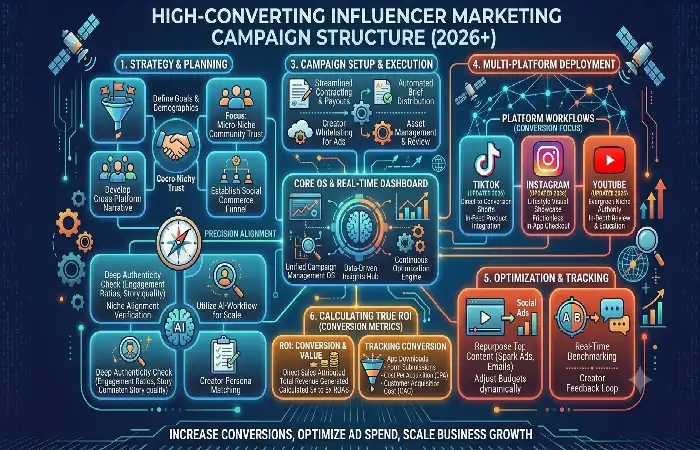
Step 1: Select Your Creator Mix and Content Formats
Pair microinfluencers with some mid-tier creators to strike the balance between reach and credibility. Match formats with your destination:
- Good Level of Awareness-Short, “High Reach” Reels/Tik Toks, Stories, YouTube tie-in.
- Thoughts: tutorials, “day in my life” vlogs, before and after shots.
- Conversion: Product demos with CTA, time sensitive offers, unboxings/hauls with codes.
Step 2: Brief Creators with Clear Guardrails
Incorporate the following into your briefs:
- Objective and Primary KPI: What is the single most important KPI for this campaign?
- Principal talking points and must include points: Must inform essential points but do not make it too factually driven.
- Do‘s and Don’ts: Mention any restrictions on claims or compliance rules, and any instructions regarding brand safety.
- Content The pieces of content you require, deadlines for each and how you intend to use the content.
- Tracking: Give each creator custom UTM parameters and discount codes to track performance effectively.
Step 3: Launch, Monitor, and Optimize
- Monitor performance at 48 hours and shift budget to higher-performing authors mid-campaign.
- Differentiate the quality of content (as it affects creative execution) from overall creator performance (how it attracts the right audience).
- Create a whitelist of the successful posts and turn them into paid advertisements to increase reach and return on ad spend efficiencies.
Measuring influencer marketing ROI (2026 framework)
Most brands don‘t even get ROI right, because they aren‘t measuring the right things; they worry about distribution such as impressions and likes rather than the business effects. Create a comprehensive measurement stack from the outset.
Begin with well-defined objectives and baselines
Establish a clear, singular goal for each influencer program, and then determine the current baseline going into your program.
Possible primary objectives:
- Awareness: reach, impressions, brand lift.
- Consideration (what users are searching for): engagement rate, traffic, addtocart, signups.
- Conversion: sales, leads, app installs, trial signups.
- Retention/LTV: number of repeat transactions, subscription renewals, average order value.
Baselines to capture (last 30–90 days before campaign):
- Brand search volume. Branded keyword traffic.
- The number of website sessions, Conversion rates, and AOV.
- Organic social mentions and sentiment.
Conclusion
Looking forward to 2026, it will not be about going after the stars, but will remain built around a scalable data-driven approach for connecting the right creators with the right objectives with the right measurement.
Successful programs typically:
- Begin with only one main objective (awareness, consideration or conversion), and build the entire campaign to that.
- Rely on microinfluencers for niche trust, authentic UGC & better ROI then scale what works
- The billboards will use transparent price by tier and platform, and performance incentives like the codes and affiliate links.
- Make sure campaigns are treated like funnels clear briefs, links with UTM parameters and unique codes, pixel-based attribution, etc. So you can determine actual CPA, ROAS, and ROI.
The brands winning in 2026 don‘t just “send the product and hope”. They trial small, measure rigorously, cut losses fast and put their money back into the creators and content formats that are proven to drive revenue.