

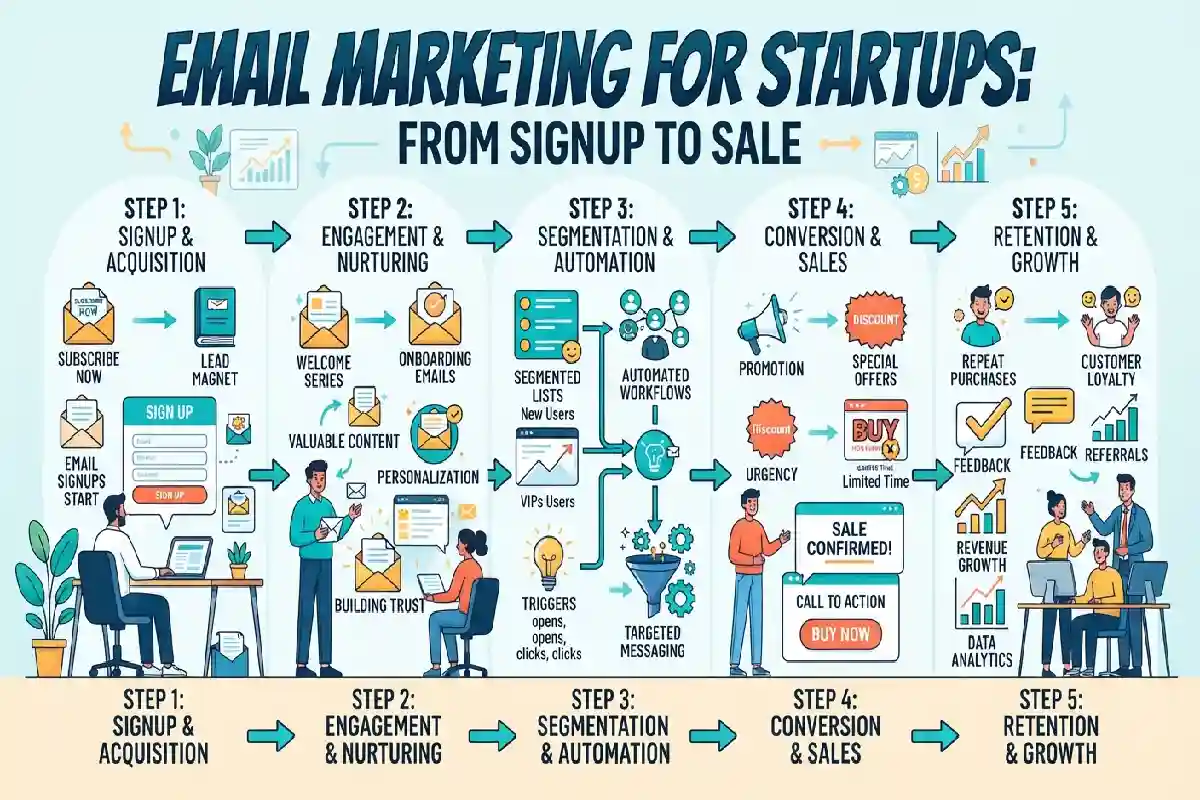
Email Marketing for Startups: From Signup to Sale
Last Updated: September 27, 2026
By far the most affordable growth channel for a startup in 2026 is still Email Marketing. Social media channels are governed by complex algorithms that steer away from a direct relationship to the user, with email, instead, the startup has a directly to their subscribers who have self-selected to receive their content.
Data from top email marketing providers repeatedly show that email over an array of channels offers the best marketing return on investment for early stage startups.
For early stage startups with tight budgets, email marketing helps close the loop and guide users through the customer journey by helping with lead nurturing, onboarding, reclaiming abandoned signups, and turning prospects into paying customers. Here‘s how to develop a startup email strategy that takes you from the first signup to the last sale.
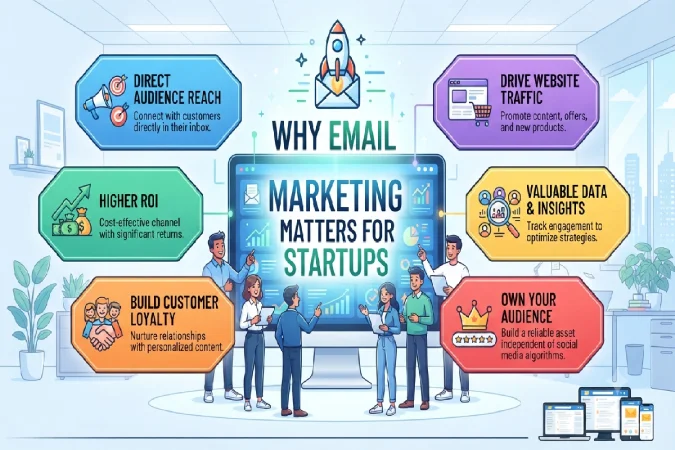
Why Email Marketing Matters for Startups
Some new ventures may face the challenge of not only acquiring customers but maintaining a relationship with these prospects to create enough trust to influence purchase decision. Email marketing for startups is considered one of the most valuable marketing channels in that regard.
Rather than social media, where algorithms decide how many people will be exposed to your message, email lets start-ups reach out directly to subscribers who have already expressed interest. Every email you send is addressed to an audience that has willingly opted in.
Startups often face three challenges:
- Limited marketing budgets
- Low brand awareness
- Need for measurable growth
Email marketing addresses all three by providing:
| Benefit | Impact on Startups |
| Direct communication | Reach subscribers without platform restrictions |
| Low cost | Affordable compared to paid advertising |
| Automation | Scales without increasing workload |
| Personalization | Improves engagement and conversions |
| Measurable ROI | Track revenue generated from campaigns |
Recommended Resources
| Resource | Purpose |
| Mailchimp | Beginner email marketing platform |
| Brevo | Email automation and CRM |
| HubSpot Marketing Hub | Advanced startup marketing automation |
| MailerLite | Budget-friendly email marketing |
Build a Permission-Based Email List
The first step to an effective startup email marketing strategy is developing the right permission-based email list. Permission-based email lists are the ones in which the customer has in fact given permission (by providing the email address) for the business to send the them marketing material. Permission-based email lists are also more likely to become customers to the business.
Building a quality email list. As well as delivering better results if “done properly” (a companies email delivery and sender reputation are heavily affected by it), gaining legitimate subscribers will often lead to better login rates than using alternative methods like scraping or buying lists.
Effective List-Building Methods
- Lead magnets
- Free trials
- Product demos
- Newsletter subscriptions
- Webinar registrations
- Resource downloads
Avoid These Mistakes
Buying email lists
Adding contacts without consent
Using scraped email addresses
Such practices can harm deliverability and raise spam complaint levels.
Best Signup Form Locations
- Homepage
- Blog articles
- Pricing pages
- Exit-intent popups
- Landing pages
Pro tip: Provide a compelling offer (checklist, template, report) that will boost your signup rate.
Segment Subscribers by Need and Buying Stage
The goals of all subscribers are not necessarily the same.
Segmentation enables startups to send the most relevant messages.
Example Startup Segments
| Segment | Goal |
| New subscribers | Education |
| Free trial users | Activation |
| Engaged leads | Conversion |
| Existing customers | Retention |
| Inactive users | Re-engagement |
Behavioral Segmentation Examples
- Pages visited
- Features used
- Email clicks
- Purchase history
- Signup source
Generally, the introductory content gets a higher probability that it is relevant to subscribers received. Therefore, the engagement and conversion rates of that content are usually much higher.
Write a Useful Welcome Email Sequence
The welcome sequence usually produces the highest response rate since subscribers are more interested right after subscribing.
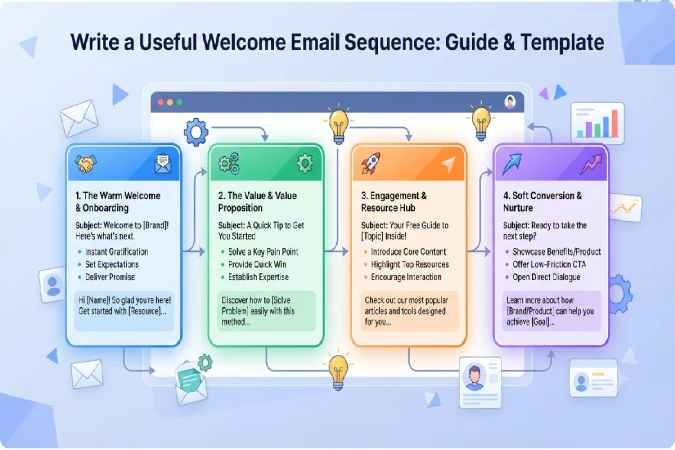
Recommended Startup Welcome Flow
| Purpose | |
| Email 1 | Welcome and set expectations |
| Email 2 | Share key benefits |
| Email 3 | Demonstrate product value |
| Email 4 | Customer success story |
| Email 5 | Strong call-to-action |
Example Sequence Timeline
0 → Welcome
2 → Product Benefits
4 → Educational Content
7 → Case Study
10 → Offer or Demo Request
Welcome Email Best Practices
- Use subscriber names
- Keep messages concise
- Focus on one goal per email
- Include a clear CTA
- Optimize for mobile devices
Plan Campaigns with One Clear Next Step
One of the greatest errors that startups commit is having several competing calls-to-action.
Every campaign should have just one next step, not multiple steps.
Examples of Strong CTAs
- Start Free Trial
- Book a Demo
- Download Guide
- Watch Webinar
- Upgrade Plan
Campaign Planning Framework
| Campaign Type | Primary Goal |
| Newsletter | Engagement |
| Product Launch | Awareness |
| Trial Nurture | Activation |
| Sales Campaign | Conversion |
| Customer Education | Retention |
Email Content Formula
- Attention-grabbing subject line
- Clear problem statement
- Practical solution
- Social proof
- Single CTA
It helped readers to stay engaged and led to a higher conversion rate.
Measure Clicks, Conversions and Unsubscribes
The list of worth monitoring by startups is larger than just open rates.
Essential Email Marketing Metrics
| Metric | Why It Matters |
| Open Rate | Subject line effectiveness |
| Click-Through Rate | Content engagement |
| Conversion Rate | Revenue impact |
| Bounce Rate | List quality |
| Unsubscribe Rate | Content relevance |
| Revenue Per Email | ROI measurement |
Startup Email KPI Dashboard
| KPI | Healthy Benchmark Range (2026) |
| Open Rate | 20–40% |
| CTR | 2–8% |
| Conversion Rate | 1–5% |
| Unsubscribe Rate | Below 0.5% |
Benchmarks are subject to the industry, target audience and the campaign; therefore, start-up businesses should compare their own historical trends of outlook progress instead.
Frequently Asked Questions
Is email marketing worth it for startups?
Yes. Email marketing is the most efficient channel for growth in startups because it is among the least expensive channels with having direct reach to prospects and customers.
What is the optimal frequency for startups to send marketing emails?
Most startups find that running one newsletter a week along with the automated lifecycle email triggered by the subscriber action works best.
What’s the first email marketing tool to try for startups?
Refreshyourself.com, MeetByBud, Leadbox.io, Allbound and Mailchimp, Brevo, HubSpot, MailerLite offer the most popular options, according to the budget, automation and the business size.
How many emails should be part of a welcome series?
A typical ‘welcome series’ contains 3–5 emails aimed at informing, creating trust and motivating the first conversion.
Which measure matters the most?
Conversion rate is usually the most important as it directly measures the success of the business.
Conclusion
Email Marketing for Startups is not just about sending out Newsletters, but a wealth of planning, writing, testing, optimizing and tracking activities starting from Permission based list creation to sophisticated segmentation, autoresponder series, and the final tripwire that generates incremental sales and profits.
Focusing on relevancy, personalized communication, and quantifiable outcomes can help startups grow their customers relationships and foster a steady revenue stream. Through conversion and campaign tracking and strong deliverability practices, email marketing can become one of the most cost-effective marketing channels.