

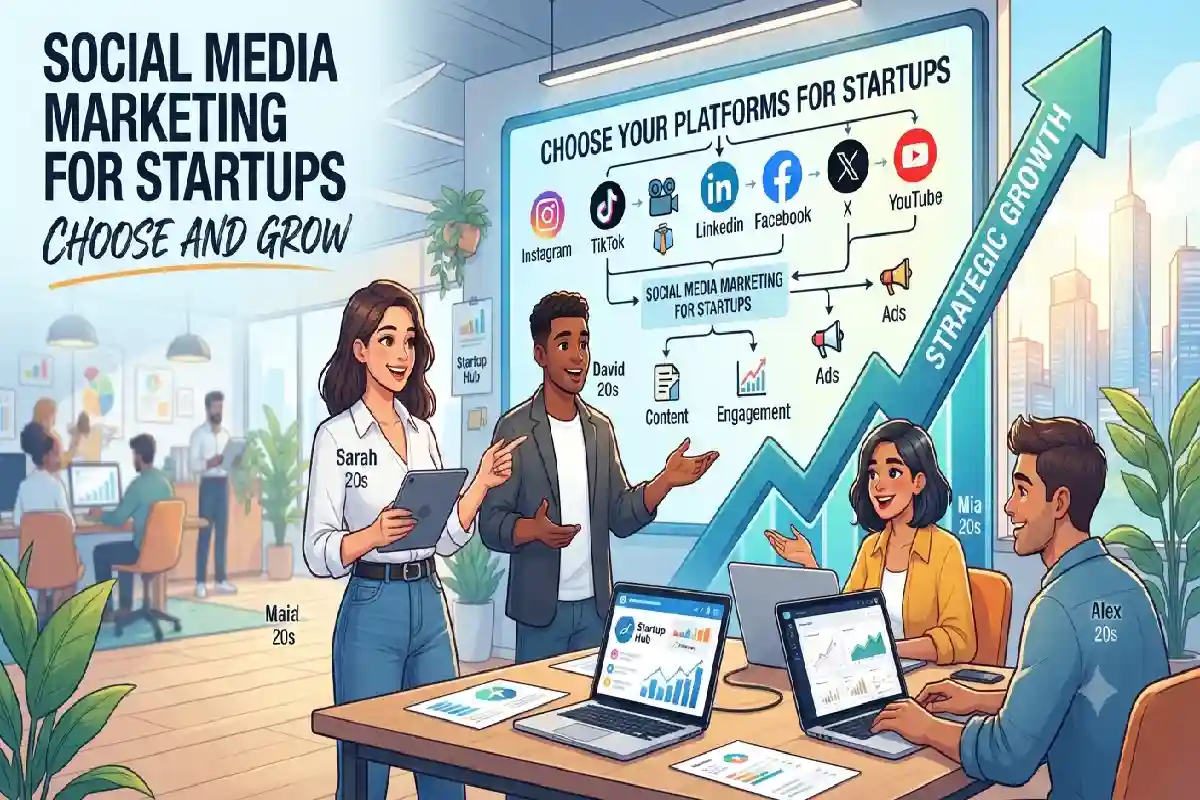
Social Media Marketing for Startups: Choose and Grow
Last Updated: September 27, 2026
Starting up a new venture is an exciting time, but building a customer base can be a real challenge if no one has heard of your brand. This is where social Media Marketing for Startups has become one of the most powerful growth techniques in the modern marketplace.
With billions of users using social media in the world, these Businesses are capable of developing brand awareness, establishing sales pipeline, and delivering customer connections without the market economies in huge as well as established firms. The secret is selecting the appropriate channels, producing marketing-oriented values and delivering outcomes regularly.
In this guide, you‘ll learn how to create a social media approach that‘s ideal for a startup and can help you grow over the long-term in 2026.
Why Social Media Marketing Matters for Startups
For many startups, awareness and customer acquisition have both been identified as the key challenges. More established companies have larger advertising budgets, and can afford to reach a larger consumers-base, this is not the case for startups and social media marketing has been a solution to this problem.
Social media is an effective tool for startups to reach their target audience and promote their product or service, building common relationships and trust over time. Any startup, whether selling SaaS, e-commerce, a mobile application, or a local services,will find social media a key channel to reach potential customers.
Benefits include:
- Increased brand awareness
- Faster customer feedback
- Lead generation
- Website traffic growth
- Community building
- Improved trust and credibility
- Cost-effective marketing
In contrast to classic advertising mechanisms, social media give startups the opportunity to communicate with prospective consumers and get an immediate feedback on their needs.
Choose Platforms Based on Customer Behaviour
Starting a social media campaign on every platform at the same time is probably the biggest mistake startups are making in social media marketing. You will think that putting content on numerous platforms will give you more recognition but in reality it is easier to produce less content for fewer platforms so that you get higher engagement. Typically successful startups concentrate on platforms that cater to their customers’ needs.
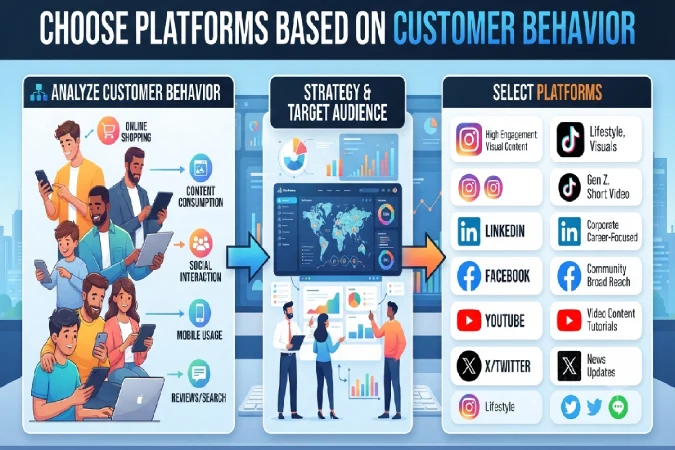
Having a clear idea of who your consumer actually is before even entering the social media world. Understand their demographic, interests and where they tend to frequent the most on the web so that the different formats of content can most effectively harness each channel. This can help entrepreneurs to drive the right traffic, increase engagement and attract better quality leads thus use of resources can be made efficient.
Platform Comparison Table (2026)
| Platform | Best For | Content Type | Startup Difficulty |
| B2B, SaaS, Professional Services | Thought leadership, case studies | Medium | |
| D2C Brands, Lifestyle Products | Reels, Stories, Carousels | Medium | |
| YouTube | Educational Products, Software | Tutorials, Reviews | High |
| TikTok | Consumer Apps, Youth Brands | Short-form video | Medium |
| Local Businesses, Communities | Groups, Events | Low |
Platform Selection Formula
Choose platforms based on:
- Customer demographics
- Content creation ability
- Product type
- Available resources
- Business goals
For example:
- SaaS startup → LinkedIn + YouTube
- E-commerce brand → Instagram + TikTok
- Local business → Facebook + Instagram
Experts unanimously advocate having one or two channels established before trying to branch out.
Set Content Themes and a Sustainable Schedule
Consistency beats volume.
The content is typically organized into themes (content pillars).
Example Content Themes
| Theme | Purpose |
| Educational | Teach customers |
| Behind the Scenes | Build trust |
| Product Demonstrations | Show value |
| Customer Stories | Social proof |
| Industry Insights | Authority building |
Sample Weekly Schedule
| Day | Content |
| Monday | Educational tip |
| Tuesday | Product feature |
| Wednesday | Customer success story |
| Thursday | Industry insight |
| Friday | Founder update |
| Weekend | Community content |
Recommended Posting Frequency
| Platform | Weekly Posts |
| 3–5 | |
| 4–7 | |
| TikTok | 5–10 |
| YouTube | 1–2 |
| 3–5 |
It is therefore important to create a schedule that is sustainable. This in turn will prevent the burnout and keep enthusiasm constant over a period of time.
Build Conversations and an Engaged Community
Many startups focus only on publishing content.
Its true value is in getting conversations going.
Community Building Tactics
- Reply to every comment
- Answer direct messages quickly
- Join industry discussions
- Host live sessions
- Create polls and surveys
- Encourage user-generated content
- Build private communities
Engagement Funnel
Post Content
↓
Receive Comments
↓
Start Conversations
↓
Build Relationships
↓
Generate Leads
↓
Create Customers
Communities strengthen brand loyalty over the long term and enhance organic reach with the platform‘s algorithms.
Test Paid Promotion with Clear Spending Limits
Organic growth is essential, but small advertising budgets can speed up the process.
Starter Budget Framework
| Startup Stage | Monthly Ad Budget |
| Early Stage | $100–$300 |
| Growing Startup | $300–$1,000 |
| Scaling Startup | $1,000+ |
Best Campaign Types
| Objective | Recommended Campaign |
| Brand Awareness | Video Views |
| Website Traffic | Traffic Campaign |
| Lead Generation | Lead Forms |
| Sales | Conversion Campaign |
Paid Promotion Rules
- Start with small budgets
- Test multiple creatives
- Run campaigns for at least 7–14 days
- Track conversions, not likes
- Scale only winning ads
Many startup marketers fail because they increase spending before validating results.
Track Qualified Traffic and Customer Enquiries
Social media success should be measured using business outcomes.

Key Metrics That Matter
| Metric | Why It Matters |
| Website Traffic | Indicates interest |
| Lead Form Submissions | Potential customers |
| Demo Requests | Purchase intent |
| Email Signups | Audience growth |
| Cost Per Lead | Efficiency |
| Customer Acquisition Cost | Profitability |
Metrics to Avoid Obsessing Over
- Likes
- Followers
- Impressions alone
- Vanity engagement
Startup KPI Dashboard
| KPI | Target |
| Website Visits | Growing monthly |
| Leads Generated | Increasing trend |
| Conversion Rate | Improving over time |
| Cost Per Lead | Declining trend |
The most successful startups measure social media as a revenue channel, not a popularity contest.
FAQ
What is social media marketing for startups?
Social Media Marketing for Startups entails utilizing social media outlets to create awareness around offerings, draw in customers, connect with consumers, and drive business success through paid and unpaid media.
Which social media platform is best for startups?
The ideal channel will be different depending on who you want to reach.9 B2B startups can perform well on LinkedIn, while consumer brands tend to do better on Instagram and Tiktok.
How much should a startup spend on social media marketing?
Most startups are trying to operate on a monthly budget of $100-$500 while building community and playing mainly on organic content.
How often should startups post on social media?
Publish contents 3–5 times a week for their best channel. Actually, for most start-ups it should be focusing on not too frequent publication but steady publishing.
How long does social media marketing take to show results?
Most startups will start exhibiting quantifiable growth within 3 6 months of regular posting, interacting, and optimizing.
Conclusion
For startups, Social Media Marketing should build around customer attitudes, regular content updates, engaging customer and measurable results. Rather than trying to be on all social media platforms and keeping up with all trends, startups should focus on a few mediums where their customers are, provide useful content and measure qualified leads and customer enquiries. In the long run, this approach will generate a strong trust relationship with customers, a reliable growth engine and build awareness of the brand.